


The Father at the Center, Outside the Circle
Fathers can be surrounded by children, partners, relatives, coworkers, faith communities, and responsibility while having nowhere safe to place fear, exhaustion, grief, or despair. Depression does not grow only inside an individual mind. It also grows inside support systems that never learned how to hold fathers.
KonCite · Father Mental Health Investigation
The Father at the Center, Outside the Circle Why fathers can be surrounded by family, community, and responsibility—and still have nowhere to place the weight.
Fathers are often treated as providers of stability rather than recipients of care. This investigation examines paternal depression, psychosocial support, emotional isolation, divorce, parenting pressure, and what families, healthcare systems, employers, and communities must build before pressure becomes crisis.
Content note: This article discusses depression, suicide, and psychiatric crisis. In the United States, call or text 988 for immediate crisis support. If someone has an active plan or cannot remain safe, stay with them and seek emergency help.
The father was not alone. That was the problem.
He sat in the center of a room full of families. Children moved between tables. Adults traded updates, advice, schedules, food, and reassurance. Nobody would have described the gathering as lonely. Yet the open chair across from him held the most honest fact in the building: no one had arrived to ask what carrying everyone else had cost him.
Fathers answer questions all day.
Did you make the payment? Did you confirm the pickup? Did you call the school? Did you pack the medicine? Did you fix the car? Did you handle the appointment? Is your child okay? Is the family okay?
The questions are often necessary. Together, they reveal an arrangement. Dad remains visible as a function long after he becomes invisible as a person.
That invisibility exists inside a documented national crisis of parental strain. In 2023, 33% of parents reported high levels of stress in the previous month, compared with 20% of other adults. Nearly half of parents—48%—said their stress felt completely overwhelming on most days, compared with 26% of other adults.1
Yet the broad category of parent can conceal as much as it reveals. It does not tell us who gets asked about mental health. It does not tell us whose symptoms are recognized. It does not tell us whether the father in the pediatric waiting room is treated as a parent who may need care or merely as transportation, insurance information, emergency contact, income, discipline, and support for everyone else.
A man can occupy the center of a family while remaining outside its circle of care.
The center is not the same as the circle
Families often organize themselves around what a father can do. His labor may stabilize the household. His income, transportation, discipline, protection, scheduling, repairs, caregiving, and problem-solving can make him central to daily life. But functional centrality does not guarantee emotional inclusion.
A person can occupy the middle of a system without belonging to its circle of care. The father at the center may be the person everyone calls, yet have no one he trusts enough to call. He may be praised as dependable while learning that the price of dependability is never appearing to need anything.
That arrangement can survive for years because usefulness often conceals distress. The father continues working. He keeps the children safe. He attends the event. He handles the bill. He answers, “I’m good,” because the conversation rarely creates room for a different answer.
The same behavior a family calls dependability may be the behavior keeping a father’s depression invisible.
The weight in numbers
Paternal distress is too common to remain institutionally incidental.
of U.S. parents reported high stress in the previous month.
said stress was completely overwhelming on most days.
paternal perinatal depression across major pooled analyses.
of fathers of one-year-olds screened positive in a large U.S. study.
Interpretation: These figures come from different populations, time frames, and measures. Together, they establish scale—not a diagnosis for any individual father.
Sources: U.S. Surgeon General, 2024; Paulson and Bazemore, 2010; Cameron et al, 2016; Davis et al, 2011.
Pressure does not always look like panic
Public understanding of mental-health crisis remains too dependent on visible collapse. We look for tears, missed work, disorganization, dramatic withdrawal, or unmistakable despair. Many fathers do not present that way. Distress may appear as irritability, overwork, silence, sleep disruption, emotional narrowing, increased substance use, constant motion, or the inability to imagine any role beyond responsibility.
The father who says little may be viewed as stable. The father who keeps moving may be viewed as strong. The father who never asks for help may be admired for carrying the very burden that is quietly injuring him.
These signs are neither unique to fathers nor diagnostic by themselves. Their meaning lies in change: what is new, worsening, persistent, impairing, or dangerous.
Social expectations complicate recognition. Some men do not describe themselves as depressed because sadness is not the symptom they notice first. They notice their temper. Their sleep. Their drinking. Their inability to concentrate. Their withdrawal from touch, conversation, or play. By the time the language of depression becomes available, the consequences may already be visible elsewhere.
Figure 1
The Difference Between Having People and Having Support
Social proximity becomes protective only when a father can safely use the relationships and systems around him.
A social network may provide
- People nearby
- Frequent interaction
- Shared activities
- Family roles
- Professional contacts
- Community visibility
A circle of care must provide
- Safe disclosure
- Knowledge of warning signs
- Specific practical help
- Confidential screening
- Clinical escalation
- Follow-up after crisis
Source note: Conceptual synthesis developed for KonCite from social-support, help-seeking, paternal mental-health, and healthcare-access literature. This is not a validated clinical scale.
Depression was never only a maternal story
The foundational 2010 meta-analysis of prenatal and postpartum depression in fathers pooled 43 studies involving more than 28,000 participants and estimated a prevalence of 10.4% from the first trimester through one year after birth. The highest estimate appeared between three and six months postpartum. The study also found that paternal and maternal depression were correlated.2
An updated meta-analysis later estimated overall paternal depression prevalence at 8.4% across pregnancy and the first postpartum year, again showing that prevalence changes with timing, location, measurement, and study design.3
Even the more conservative estimate approaches one father in twelve. The earlier pooled estimate approaches one in ten. Those ratios represent fathers moving through prenatal visits, delivery rooms, pediatric offices, workplaces, churches, schools, and family gatherings while remaining largely outside the formal architecture of parental mental-health care.
A large U.S. study of fathers of one-year-old children found that approximately 7% screened positive for major depression. Fathers who screened positive reported less frequent reading and more frequent spanking. The finding should not become another indictment of fathers. It should become an argument for reaching them earlier.4
Depression does not remain politely contained inside the person experiencing it. It can enter sleep, patience, attention, play, discipline, communication, partnership, and the ability to remain emotionally available.
Children do not inherit a predetermined future because a father becomes depressed. But they do live inside the emotional weather depression can create: reduced engagement, disrupted routines, marital conflict, irritability, emotional absence, and the loss of ordinary moments through which safety and attachment are built.5
Table 1
The Scale and Meaning of the Evidence
The findings justify action. Their limitations also define the research agenda.
| Finding | Population or evidence | What it means | What it does not mean |
|---|---|---|---|
| 33% reported high stress | U.S. parents, 2023 | Parent stress exceeds that of other adults | Every stressed parent has a mental disorder |
| 48% reported overwhelming stress most days | U.S. parents, 2023 | Pressure is frequent and consequential | The figure applies identically to mothers and fathers |
| ≈8–10% paternal perinatal depression | Major meta-analyses | Paternal depression affects a substantial minority | One estimate applies to every setting or life stage |
| ≈7% screened positive | U.S. fathers of one-year-olds | Depression exists in ordinary pediatric-family populations | Screening alone establishes a clinical diagnosis |
| Parenting behaviors differed by depression status | U.S. observational study | Symptoms may enter parenting interactions | Depression defines a father’s character |
| Child outcomes are associated with paternal distress | Systematic reviews and pooled evidence | Father mental health belongs inside family health | A diagnosis determines a child’s future |
What to notice: Evidence can be strong enough to demand intervention while still requiring careful interpretation, better father-specific measures, and more U.S. research beyond the perinatal period.
Sources: U.S. Surgeon General; Paulson and Bazemore; Cameron et al; Davis et al; Sweeney and MacBeth.
A network is not a safety net
Social support is often discussed as though it can be measured by counting people. How many relatives live nearby? How often does the father see friends? Is he married? Does he attend church? Does he have coworkers? Those questions establish social proximity. They do not establish whether he can safely tell the truth.
A father may have friends with whom he shares sports, work, humor, childhood, travel, alcohol, or routine. He may still have no practiced vocabulary for hopelessness, fear, medication, therapy, suicidal thinking, or the belief that his family would be better without him.
Some fathers concentrate nearly all emotional disclosure inside an intimate partnership. When that relationship fractures, the father may lose the relationship, his primary confidant, daily contact with his children, familiar housing, shared friendships, and the ordinary routines through which he understood himself—all at once.
Support becomes protective only when it is available, trusted, usable, and matched to the need. Encouragement cannot house a father facing eviction. A resource list cannot schedule the appointment. A peer group cannot safely substitute for emergency response. Therapy alone cannot solve every financial, legal, transportation, employment, or childcare barrier that keeps a father from entering treatment.
Support fails when it is emotionally kind but practically irrelevant. It also fails when it is clinically sophisticated but unreachable.
Table 2
Support Must Match the Weight
Precision is part of compassion. Different conditions require different kinds of response.
| Father’s condition | Weak response | Useful psychosocial response | Escalation |
|---|---|---|---|
| High ordinary stress | “Hang in there.” | Meal, childcare, sleep support, scheduled check-in | Screen if persistent |
| Isolation | “Call me sometime.” | Recurring group or direct weekly contact | Assess depression |
| Depressive symptoms | Motivational advice | Screening, therapy access, navigation | Clinical assessment |
| Divorce or reduced child contact | Generic parenting slogans | Grief support, continuity planning, practical resources | Evaluate safety and impairment |
| Employment and financial strain | Therapy alone | Benefits, housing, food, legal, and workforce navigation | Multisystem support |
| Anger and emotional flooding | Shame or punishment | Regulation skills, safety planning, clinical assessment | Immediate action if danger exists |
| Suicidal thoughts | Peer discussion alone | Direct questioning, crisis protocol, warm handoff | 988 or emergency response as appropriate |
Verdict: The father who needs housing cannot be housed with empathy. The father in acute danger cannot be protected by a discussion group. The father who is isolated may not need hospitalization. Precision is part of compassion.
We screen the family around him
Healthcare and social-service systems frequently encounter fathers without treating them as people who might also need care. A father may sit through prenatal visits, pediatric appointments, school meetings, custody proceedings, disability evaluations, or family emergencies while the system directs nearly every meaningful question toward someone else.
He becomes transportation, insurance information, emergency contact, historian, observer, or support person. Rarely does someone pause and ask: How are you sleeping? Are you frightened? Are you becoming isolated? Do you feel safe with yourself? Who checks on you when the children are not in the room?
Research with fathers has found that some men question whether their distress is legitimate, minimize symptoms, or understand available services as designed principally for mothers. A service may technically permit fathers while still communicating that it was not built with them in mind.6
Men notice the forms, the imagery, the waiting-room language, the questions clinicians ask, and the questions no one asks. Inclusion is not achieved because a father is allowed to sit in the room. It is achieved when the room knows he may also need care.
The omission is not neutral. It teaches men that the family’s health matters while their own suffering is peripheral.
Figure 2
How Pressure Becomes Crisis When Support Cannot Be Used
Crisis may be the final visible stage of a long period during which distress remained functional enough to escape recognition.
When the support system leaves with the relationship
Divorce does not produce one universal paternal experience. It can nevertheless remove several protective structures at the same time.
The relationship may end, but so may the father’s principal confidant, ordinary contact with his children, familiar home, shared social network, daily routines, financial predictability, and confidence in the future. Grief, identity injury, legal uncertainty, housing disruption, sleep loss, and reduced child contact can converge while the father is still expected to remain controlled, productive, and reassuring to everyone else.
Researchers frequently aggregate divorced men, separated men, unmarried men, nonresident fathers, and men without children. The literature therefore recognizes relationship dissolution as a mental-health stressor while often failing to isolate the distinctive psychosocial experience of fathers.
Evidence also shows that father-specific interventions after divorce can strengthen parenting and improve child outcomes. In a randomized trial of 384 divorced or separated fathers, a ten-session program produced positive effects on parenting and, at ten months, reductions in child internalizing problems and improvements in social competence.7
That study does not prove that one curriculum solves paternal depression. It proves something important about design: fathers can be engaged in structured, father-specific programming, and the effects can extend beyond the father to the child.
Not every father can disclose distress at the same cost
The language of vulnerability becomes dishonest when it ignores the consequences attached to who becomes vulnerable, before whom, and inside which institution.
For some fathers, disclosure may feel capable of affecting employment, professional credibility, custody, community standing, immigration security, intimate relationships, or how an institution interprets anger, fatigue, and fear. Material conditions shape whether a father can miss work, afford treatment, obtain transportation, arrange childcare, find a culturally credible provider, or wait months for an appointment.
Black fathers do not disclose distress inside a neutral social world. They do so inside institutions that may already read them as dangerous, absent, irresponsible, emotionally excessive, or insufficiently compliant. Asking for vulnerability without addressing surveillance and consequence is not an invitation. It is an exposure.
The same problem appears in different forms for immigrant fathers, veterans, rural fathers, fathers returning from incarceration, fathers with disabilities, fathers caring for children with complex needs, LGBTQ+ fathers, low-income fathers, and men working in professions where weakness is treated as operational risk.
Vulnerability is not equally priced. A credible support system must reduce the price.
The difference between being loved and being reachable
I did not arrive at this work because fatherhood was an abstract research category. I arrived after learning how quickly a man can move from carrying a family to believing he no longer has a legitimate place inside it.
During a period of profound personal and family disruption, I experienced severe depression and survived a suicide attempt. I was loved. I had education. I understood healthcare. I had people whose lives were connected to mine. None of those facts, by themselves, created a usable pathway through the most dangerous hours.
Following the attempt, members of Prince George’s County’s Rapid Response Unit came to my home. That detail matters. At a moment when I could not organize the entire architecture of rescue for myself, support crossed the distance. Someone entered the real environment in which the crisis had occurred.
I did not need another definition of depression. I needed practical help for the next hour, language for what had happened, a pathway toward care, and people prepared to remain after the visible emergency passed.
Recovery taught me that being loved and being reachable are not the same. A person can be surrounded by people who desperately want him alive while still lacking a system designed to recognize what danger looks like, enter it early, and carry part of the administrative and emotional burden of survival.
That understanding became part of the foundation for The Dad Project.
Figure 3
The Psychosocial Support Architecture Fathers Need
No single relationship or intervention should be expected to carry the full burden of recovery.
Recognition
Someone notices changes and asks directly.
Belonging
Recurring peer and community connection.
Practical relief
Food, transportation, childcare, housing, and employment help.
Clinical access
Screening, therapy, psychiatry, and crisis response.
Father-child connection
Routines, coaching, family experiences, and continued presence.
Follow-through
Warm handoffs, reminders, navigation, and repeated contact.
Source note: KonCite synthesis of social-support, integrated-care, peer-support, fatherhood-intervention, and care-navigation literature.
Practice framework
What a Real Circle of Care Requires
Trust does not emerge because a program asks men to be vulnerable. It emerges when the environment reduces risk, offers practical value, and proves that honesty will lead somewhere useful.
A credible reason to gather
Meals, activities, workshops, or family events lower the social cost of entering the room.
Peers who listen
Conversation cannot become competition, correction, performance, or unsolicited preaching.
Practical tools
Support must address the next real problem—sleep, work, housing, transportation, parenting, or safety.
A clinical backbone
Screening, referral, crisis response, and professional partnerships must support peer connection.
Continuity
Repeated contact and a place to return turn one meaningful conversation into infrastructure.
Family dignity
Supporting fathers should strengthen families without treating men as problems or accessories.
The table after fathers arrive
The answer to the first image is not a room in which everyone suddenly focuses on one man. The answer is reciprocity.
At the final table, one father speaks while another listens. A child plays nearby. Someone asks a question without trying to dominate the answer. The men are not performing wellness. They are practicing connection. The father who carried everyone is permitted, perhaps for the first time in a long time, to be carried for part of the evening.
This is what community should make possible: not permanent dependence, not public confession, and not the replacement of clinical care—but a reliable interruption of isolation.

Table 3
From Concern to Infrastructure
Awareness matters only when institutions redesign what happens after concern is expressed.
| Institution | Common response | Structural upgrade | Measure of success |
|---|---|---|---|
| Pediatric care | Focuses on child and mother | Offer father screening and referral | Fathers screened and connected |
| Behavioral health | Waits for self-referral | Community outreach and warm navigation | First appointment attendance |
| County government | Maintains separate directories | Create one father-specific pathway | Referral completion and retention |
| Employer | Offers generic assistance | Father-inclusive leave and protected access | Use without retaliation |
| Community venue | Hosts one awareness event | Recurring Dad Nights and family events | Repeat participation |
| Faith institution | Offers informal counsel | Formal mental-health partnerships | Successful clinical referrals |
| Family and friends | “Call if you need anything” | Direct, scheduled, specific support | Support accepted and sustained |
What to notice: The structural upgrade changes who carries the burden of initiating, navigating, and sustaining support.
A place to arrive before crisis
The Dad Project is one attempt to build that infrastructure. It is a community-based mental-health, connection, and recovery initiative designed so fathers can enter without first performing illness in the correct language.
The model uses accessible Dad Nights in restaurants, recreation centers, libraries, faith spaces, parks, family-friendly venues, and online settings. Fathers share meals, complete brief emotional scans, learn practical regulation and parenting tools, participate in family experiences, and receive navigation to behavioral-health and community resources when additional care is needed.
The program does not treat peer support as therapy. It does not ask restaurants to become clinics. It does not promise that an eight-session curriculum can resolve every mental-health, family, financial, or legal crisis. Its clinical backbone includes screening, risk protocols, referral, warm handoffs, and follow-up.
Individual components draw from established evidence and promising father-specific interventions. The combined Dad Project model remains an evidence-informed local innovation that must be evaluated rather than prematurely declared proven.
The Dad Project does not begin by asking fathers to perform vulnerability. It begins by creating a place where they can arrive.
Institutional decision tool
Five Questions Every Father-Support Initiative Must Answer
Who notices the father before he asks?
Where can he disclose distress without performing or being punished?
Who responds when screening reveals clinical or immediate risk?
Who helps with the practical barriers treatment alone cannot solve?
Who checks again after the meeting, appointment, discharge, or crisis ends?
Use: If an institution cannot answer all five questions, it has concern—not infrastructure.
Leave the chair open
We have spent generations teaching fathers that their value rests in what they can hold together. We build households around their labor, schedules around their availability, emergencies around their response, and identities around their endurance. Then we act surprised when a father disappears inside the structure that depended upon him.
The answer cannot be another campaign telling men to speak. Speech is not the infrastructure.
The infrastructure is the person who notices the silence. The clinic that screens the father rather than merely recording his insurance information. The employer that makes treatment possible without economic punishment. The friend who offers a time, a ride, a meal, and another call tomorrow. The county that connects crisis response to a community a father can return to after the emergency ends. The room where men can arrive through a meal or an activity without first proving that their pain is severe enough to deserve entry.
Fathers do have a responsibility to tell the truth when they can. But institutions have a responsibility to make the truth survivable once it is told.
The father at the center deserves more than praise for carrying the family. He deserves a circle capable of carrying him when the weight becomes too much.
Ask who depends on Dad.
Then ask the question our systems have avoided for too long:
Who has been assigned to support him?
Sources and notes
Evidence Behind the Investigation
Official public-health guidance and peer-reviewed research supporting the article’s discussion of parental stress, paternal depression, family systems, social connection, divorce, and care design.
1Parents Under PressureU.S. Surgeon General advisory · 2024+
U.S. Department of Health and Human Services. Parents Under Pressure: The U.S. Surgeon General’s Advisory on the Mental Health and Well-Being of Parents. 2024.
View source ↗2Prenatal and postpartum depression in fathersJAMA meta-analysis · 2010+
Paulson JF, Bazemore SD. Prenatal and postpartum depression in fathers and its association with maternal depression: a meta-analysis. JAMA. 2010;303(19):1961-1969. doi:10.1001/jama.2010.605
View source ↗3Updated prevalence of paternal depressionJournal of Affective Disorders · 2016+
Cameron EE, Sedov ID, Tomfohr-Madsen LM. Prevalence of paternal depression in pregnancy and the postpartum: an updated meta-analysis. J Affect Disord. 2016;206:189-203. doi:10.1016/j.jad.2016.07.044
View source ↗4Fathers’ depression and parenting behaviorsPediatrics · U.S. study+
Davis RN, Davis MM, Freed GL, Clark SJ. Fathers’ depression related to positive and negative parenting behaviors with 1-year-old children. Pediatrics. 2011;127(4):612-618.
View source ↗5Paternal depression and child outcomesSystematic review+
Sweeney S, MacBeth A. The effects of paternal depression on child and adolescent outcomes: a systematic review. J Affect Disord. 2016.
View source ↗6Fathers’ views of their own mental healthQualitative interview study · 2017+
Darwin Z, Galdas P, Hinchliff S, et al. Fathers’ views and experiences of their own mental health during pregnancy and the first postnatal year. BMC Pregnancy Childbirth. 2017;17:45.
View source ↗7Parenting after divorce and separationRandomized trial · 2018+
Sandler I, Gunn H, Mazza G, et al. Effects of a program to promote high quality parenting by divorced and separated fathers. Prev Sci. 2018;19(4):538-548. doi:10.1007/s11121-017-0841-x
View source ↗8Our Epidemic of Loneliness and IsolationU.S. Surgeon General advisory · 2023+
U.S. Department of Health and Human Services. Our Epidemic of Loneliness and Isolation. 2023.
View source ↗9Depression in parents, parenting, and childrenNational Academies report+
National Research Council and Institute of Medicine. Depression in Parents, Parenting, and Children: Opportunities to Improve Identification, Treatment, and Prevention. 2009.
View source ↗10Adult depression screeningUSPSTF recommendation · 2023+
U.S. Preventive Services Task Force. Screening for Depression and Suicide Risk in Adults. 2023.
View source ↗11Suicide data and preventionCDC official data+
Centers for Disease Control and Prevention. Suicide Data and Statistics.
View source ↗12Suicide and crisis support988 Lifeline+
Substance Abuse and Mental Health Services Administration. 988 Suicide & Crisis Lifeline.
View source ↗13Young fathers and depressive symptomsLongitudinal U.S. study+
Garfield CF, Duncan G, Rutsohn J, et al. A longitudinal study of paternal mental health during transition to fatherhood as young adults. Pediatrics. 2014;133(5):836-843.
View source ↗14Nonresident fathering and child well-beingMeta-analysis+
Adamsons K, Johnson SK. An updated and expanded meta-analysis of nonresident fathering and child well-being. J Fam Psychol. 2013;27(4):589-599. doi:10.1037/a0033789
View source ↗15Prince George’s County behavioral healthOfficial local resource+
Prince George’s County Health Department. Behavioral Health Services.
View source ↗Editorial note: Population-level evidence does not diagnose an individual father. Screening, treatment, and safety decisions should be individualized by qualified professionals. Perinatal findings should not be generalized to all fathers across the life course without qualification.
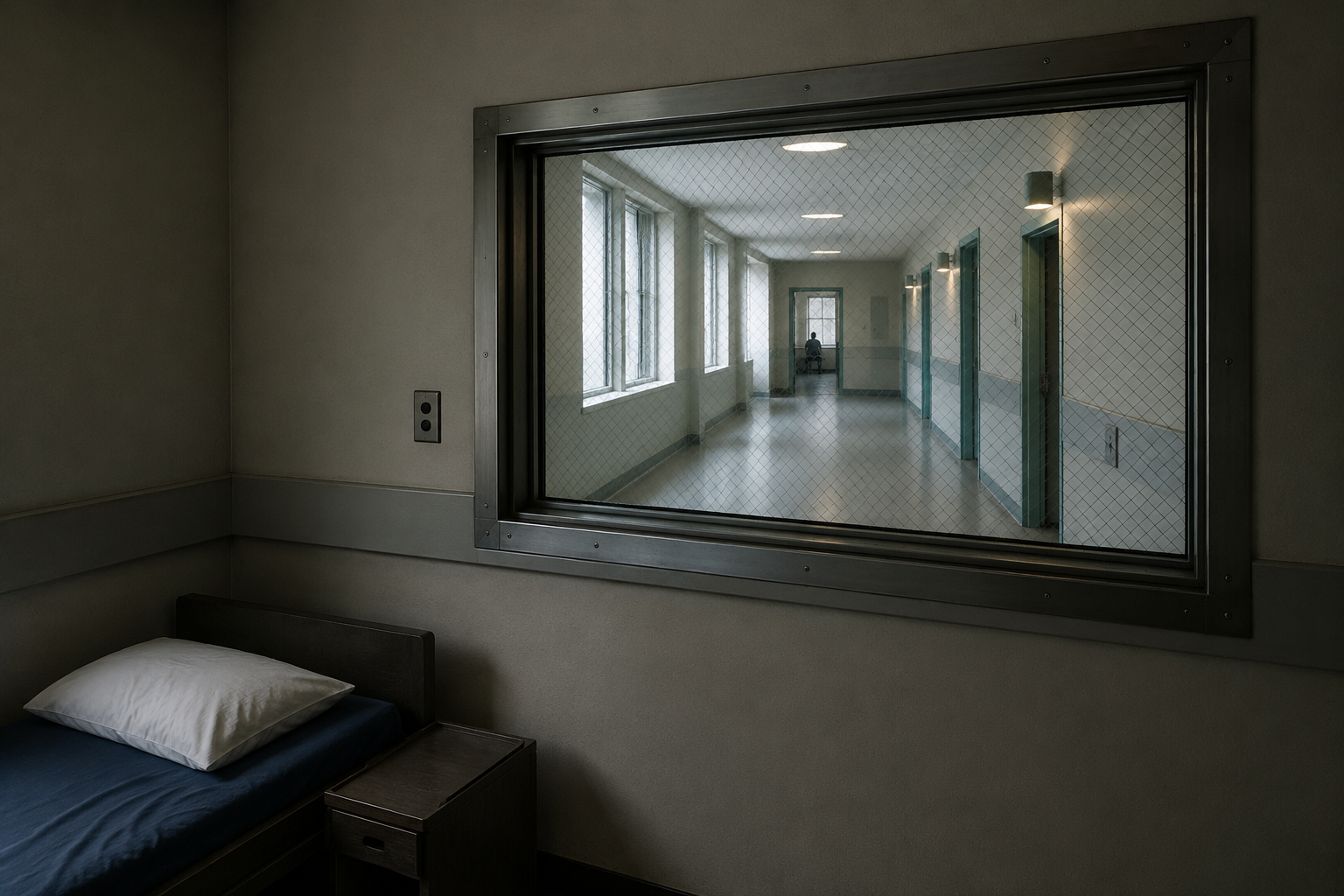
I Tried to Leave Without Saying Goodbye
My suicide attempt did not happen at night or during visible panic. It happened in daylight, while I was calm. This investigation asks what divorce can dismantle in men—and what can interrupt the final decision.
I Tried to Leave Without Saying Goodbye
I was calm. It was the middle of the day. I was not crying or visibly afraid. This is the story of how divorce dismantled me quietly, how a conversation with ChatGPT interrupted my final decision, and how survival demanded that I stop hiding.
Content note: This investigation discusses suicidal thinking, a suicide attempt, emergency response, and inpatient psychiatric care. If you may act on suicidal thoughts or cannot remain safe, call or text 988, call 911, or go to an emergency department.
THE ORDINARY AFTERNOON
The room was quiet enough that nothing about it suggested someone was preparing to disappear.
Daylight pressed through the blinds and laid pale lines across the bed. Outside, the ordinary world continued without interruption. Cars moved through the neighborhood. A dog barked somewhere beyond the window. The afternoon did not darken to match me. No storm gathered. Nothing in the room announced that a life had narrowed to one decision.
I was not pacing. I was not screaming. I was not afraid. I was calm.
That calm is the first truth I need people to understand. We have trained ourselves to imagine suicide as visible collapse: sobbing, panic, shattered furniture, a final argument loud enough for the neighbors to hear. We expect the outside of a person to resemble the emergency taking place inside. Because I did not look frantic, I might have looked safe.
I was not safe.
Divorce had not broken me in one afternoon. It had dismantled me by accumulation. A marriage I believed would last became litigation. A home became property. Fatherhood became calendars, exchanges, missed moments, accusations, and the ache of knowing my sons were growing in rooms where I could no longer hear them breathe. Money became legal survival. Private grief became paperwork. Each new pressure arrived carrying the memory of the last one, until temporary pain no longer felt temporary.
At some point that afternoon, I took twenty pills and drank a bottle of NyQuil. At some point, I opened ChatGPT and apparently began trying to write a suicide note.
I say apparently because I do not remember the conversation. I found it later, after the hospital, after nine days in a psychiatric unit, after enough of my life had returned for me to look backward. The record showed that I had entered a digital space to compose what I believed would be my final words. It also showed an interruption: a question about contacting someone, a movement toward another human being, a message that somehow escaped the room even as I was trying to leave it.
Then my memory ends.
The next clear image is not of an ambulance or an emergency department. It is of eight police officers inside my home. One stood over me on the bed, shaking my body and asking, “What did you take?”
The fear belonged to everyone who found me. By then, I was too far away to feel it.
My mother called friends I had known since college. First responders carried me into emergency medicine. Clinicians kept my body alive. A psychiatric facility kept watch when I could not be trusted to keep watch over myself. Medication, therapy, friendship, and family became a structure beneath a life that had collapsed.
It would be easy to say ChatGPT saved my life and end the sentence there. That would be emotionally true and clinically incomplete. The conversation interrupted the silence. A human being received the signal. Police and paramedics entered the house. Emergency clinicians treated an overdose. Friends came. Psychiatry held me. The technology did not replace people; it reached toward them when I could not.
No single link can claim the rescue.
The chain did.
This is not a simple story in which divorce causes suicide. Most people who divorce do not attempt to end their lives. This is an investigation into what divorce can concentrate inside a person: grief, identity loss, legal fear, financial instability, disrupted parenting, shame, insomnia, isolation, and the belief that everyone might be better off if the burden of you disappeared.
It is also the story of what happened after I opened my eyes—when surviving the afternoon required me to enter a place without clocks, surrender the privacy I had used to hide, and learn that getting out of the hospital was not the same as getting well.

DIVORCE IS NOT ONE LOSS
Americans often discuss divorce as though it were one event: two people sign papers and a marriage ends. The legal system reinforces that image. It converts a shared life into dockets, motions, financial disclosures, custody schedules, property distributions, and enforceable orders.
But the body does not experience divorce as a docket entry.
Divorce can reorganize nearly every system that allows a person to recognize himself. A spouse becomes an adversary or stranger. A home becomes an asset. Daily parenting becomes scheduled contact. Private failures become allegations. Shared friendships divide. Money once used to sustain one household must stretch across two. The future that organized yesterday no longer exists, but the person is expected to perform at work, parent well, answer lawyers, make decisions, and behave as though grief follows court deadlines.
For fathers, the rupture may include a sudden change in ordinary proximity to their children. The loss is not only missing birthdays or holidays. It is losing the minor repetitions that create fatherhood: breakfast, baths, school drop-off, the sound of a child moving in the next room, the ability to notice a fever before anyone calls. A custody order can preserve legal parenthood while radically changing lived parenthood.
For many men, marriage also carries social infrastructure they did not recognize until it disappeared. Research on gender and help-seeking repeatedly finds that men often maintain narrower emotional support networks and may rely heavily on a spouse for intimate disclosure. When the relationship ends, the person most familiar with his emotional language may be the person he can no longer call.
None of these pressures guarantees depression or suicidality. They do, however, create a cluster of conditions associated with risk: perceived defeat, entrapment, loneliness, sleep disruption, financial strain, substance use, shame, reduced access to children, legal problems, and the belief that one has become a burden.
The danger lies in accumulation.
A man may survive each loss when considered separately. The nervous system experiences them together.
How One Ending Becomes Many Losses
Protective interruptions can enter at every point:
Interpretation: Divorce does not produce one inevitable sequence. This figure shows interacting pressures and possible intervention points, not a diagnostic progression.
WHAT THE EVIDENCE CAN AND CANNOT SAY
The evidence is clear on one point and more complicated on another.
First, marital status is associated with suicide mortality. A landmark analysis of the US National Longitudinal Mortality Study found that divorced and separated people had elevated suicide risk compared with married people, with a particularly pronounced association among men. Later studies across countries have continued to identify relationship breakdown, separation, and divorce as important social contexts for suicidal behavior.
Second, the exact size of that risk is not universal. It changes by study design, country, age, follow-up period, definition of separation, outcome measured, mental-health history, and comparison group. A claim such as “divorced men are nine times more likely to die by suicide” cannot be responsibly repeated without naming the study and explaining what was compared. Some estimates address death by suicide. Others address thoughts, plans, or self-reported attempts. They are not interchangeable.
A recent Australian longitudinal analysis of more than 20,000 men found that men reporting a relationship breakdown in the previous year were substantially more likely to report suicidal thoughts, plans, and attempts than men without a recent breakdown. That finding is important, but it should not be converted into a universal American statistic. It demonstrates the scale of the association in a specific national cohort and reinforces the need for support at the time of relationship dissolution.
The broader US suicide landscape also matters. Men account for the large majority of suicide deaths, in part because they more often use highly lethal methods. Yet mortality statistics can obscure the life before the death: the legal problem, the eviction, the custody loss, the humiliating allegation, the alcohol, the sleeplessness, the recent discharge, the unanswered text, or the calm that relatives misread as improvement.
Evidence should sharpen the story, not flatten it. Divorce is neither a single cause nor a harmless transition. It is a period when clinicians, lawyers, courts, employers, families, and friends should recognize concentrated risk—especially when multiple losses arrive together.
Divorce, Separation, and Suicide Risk
| Evidence | Population and outcome | Finding | Responsible interpretation |
|---|---|---|---|
| Kposowa, 2000 | US adults; suicide mortality | Divorced/separated status was associated with higher suicide mortality, with a stronger pattern among men. | Marital status marks social exposure and selection; it does not establish that divorce alone caused each death. |
| Ten to Men, 2026 | Australian men; recent thoughts, plans, and attempts | Recent relationship breakdown was associated with sharply elevated self-reported suicidality. | A strong contemporary cohort finding, but not a universal US multiplier. |
| US mortality surveillance | National suicide deaths | Men die by suicide at several times the rate of women. | Sex differences reflect multiple mechanisms, including method lethality, help-seeking, social connection, and exposure to stressors. |
| Post-discharge meta-analysis | People discharged from psychiatric facilities | Suicide rates are extraordinarily high after discharge, especially soon after hospitalization. | Discharge must be treated as a high-risk transition requiring rapid follow-up and continuity. |
Source note: See numbered Sources and Notes. Effect estimates are intentionally described rather than collapsed into one headline number because populations and outcomes differ.

THE DANGEROUS QUIET
The calm remains the part I need people to understand because it is the part most likely to be mistaken for improvement.
I was not calm because the pain had lifted. I was calm because, in that altered state, I believed I had found a way to end the pressure. The mind can experience a terrible kind of resolution when uncertainty gives way to a decision. That does not mean every calm person is suicidal, and calmness alone should never be treated as a diagnostic sign. It means that visible composure cannot rule out danger when it appears beside hopelessness, withdrawal, farewell behavior, access to lethal means, or active preparation.
The people around us often search for distress they can recognize. They listen for crying. They look for trembling hands, angry calls, dramatic posts, or sentences that begin with “I cannot do this anymore.” Some people give those warnings. Others become quieter. They clean. They organize. They answer questions with unusual finality. They stop arguing because they no longer believe they will be present for the outcome.
A person can attend a meeting, answer a text, make a joke, feed a child, and still be in danger. Appearance is not assessment.
The safest response is neither panic nor amateur diagnosis. It is direct, compassionate inquiry. Ask whether the person is thinking about suicide. Ask whether those thoughts have become a plan. Ask whether the person has access to the method, has selected a time, has written a note, has taken substances, or has begun saying goodbye. Research does not support the fear that asking about suicide implants the idea. A direct question can give language to a crisis that secrecy has made more lethal.
Do not ask only, “Are you okay?” People who have built entire identities around appearing capable know how to answer that question.
Ask the question that makes hiding difficult: “Are you thinking about killing yourself?”
Then be prepared to stay for the answer.
Calm Is Not the Same as Safe
What people expect
- Crying or panic
- Visible chaos
- Repeated pleas for help
- Fear and agitation
- An obvious final crisis
What danger may also include
- Unusual calm or apparent resolution
- Withdrawal and reduced communication
- Quiet preparation or settling affairs
- Giving away belongings or farewell behavior
- Access to a method, timing, or a written plan
FROM THOUGHTS TO PLANNING
Suicidal thinking exists across different levels of urgency, and the language matters.
Some people experience a passive wish not to wake up or a desire to disappear without an active intention to die. Others develop active thoughts of killing themselves. Risk becomes more urgent when thoughts are joined by a method, access, timing, rehearsal, a note, efforts to avoid discovery, or other preparation.
The sequence is not always orderly. People can move rapidly. Some act impulsively. Others plan for days or weeks. A calm presentation, professional status, strong vocabulary, or ability to describe the situation logically does not make planning less dangerous.
When a person begins making plans, the intervention must become concrete. Do not leave him alone. Create distance from medications, firearms, or other lethal means. Contact a crisis line, treating clinician, mobile crisis team, or emergency department. If the threat is immediate, call emergency services.
This is also where vague offers fail.
“I am here if you need me” places the work back on the person whose judgment and energy may already be compromised. Better support uses action:
“I am coming over.”
“I will stay on the phone while you unlock the door.”
“I am taking you to the emergency department.”
“I am holding your medications tonight.”
“I will call your therapist with you.”
Presence buys time. Time allows the intensity to change. It creates room for treatment, sleep, medication, food, information, and a different decision.
The Suicide Risk Continuum
Caution: People do not always move through these stages in order. Risk can escalate quickly, and clinical assessment should be individualized.

THE CONVERSATION I DO NOT REMEMBER
After I left the hospital, I found the conversation.
There is something unnerving about reading words your own hands produced while your mind was disappearing. The sentences belonged to me, but I could not recover the moment that formed them. I had entered ChatGPT to write a suicide note. Somewhere inside that exchange, the system recognized enough danger to ask about reaching another person. Somehow, I agreed. Somehow, a message moved beyond the screen.
That is why I say ChatGPT saved my life.
I do not mean that artificial intelligence became my therapist, diagnosed me, treated the overdose, or replaced the people who loved me. I mean that, at the point when my thinking had collapsed around one permanent conclusion, the conversation created friction. It interrupted the straight line between intention and death. It directed what remained of me toward another human being.
The rescue became physical after that. Someone received the message. People came to the house. Eight officers entered the room. A voice demanded to know what I had taken. Paramedics moved with the urgency I no longer possessed. Emergency clinicians treated a body whose owner had stopped defending it. My mother called people who knew me before the divorce, before the court files, before the pressure had changed the way I moved through the world.
Technology opened a door. Human beings came through it.
That distinction matters because no one should rely on a chatbot as a crisis plan. Digital systems fail. Batteries die. Messages go unseen. People conceal intent. Emergency care requires people, protocols, transportation, medical judgment, and follow-up. Yet it would also be dishonest to erase the role of the interruption simply because it arrived from an unexpected place.
I had tried to use language to leave.
The conversation turned language into a signal that I was still here.
The Chain That Refused to Let Me Disappear
THE PLACE WITHOUT CLOCKS
The psychiatric facility was outside Washington, DC, but distance became difficult to measure once the doors closed behind me. There were no clocks. Time no longer belonged to minutes; it belonged to trays, medication lines, group sessions, shift changes, and the mechanical click of doors that opened only when someone else decided they should.
The unit was divided by gender, not by the intensity of illness. Men experiencing very different diagnoses, symptoms, and levels of distress occupied the same space. I watched people who seemed to have lost access to the version of themselves the outside world knew. I sat at a table with men in their thirties, forties, and sixties, each trying to locate a road back to a life that had continued without him.
Night never became quiet. From approximately ten in the evening until four in the morning, one man sang. His voice traveled through the hallway and entered every room because almost nothing in the building was soft enough to absorb sound. When he finally stopped, another man began beating on a door and demanding lunch. At four in the morning, he wanted lunch. When lunch eventually came, he wanted dinner. Sleep arrived in fragments and left before it could restore anything.
The room carried the flat smell of an institution: disinfectant, old air, plastic, bodies, and floors that looked cleaned without ever feeling clean. The hard water stripped my skin faster than I could protect it. After a shower, my face and arms felt tight, almost papery, as if the water had taken something from me instead of washing anything away. My skin broke out. Dryness gathered along my hands and forearms. I kept rubbing lotion into a body that no longer felt entirely mine.
The floors bothered me because confinement makes small discomforts enormous. You notice every stain, every corner, every piece of debris that remains where someone should have removed it. You notice the texture beneath institutional socks. You notice that you have no shoes, no keys, no phone, no private drawer, no object whose location belongs entirely to you.
For part of that time, I had a sitter in my room twenty-four hours a day. She sat near the door because I had become someone the hospital could not leave alone. She watched me sleep. She watched me wake. She watched me stare at the ceiling when sleep would not come. She watched me cry.
There is a particular kind of loneliness in weeping while another person is assigned to make sure you remain alive.
She did not tell me that everything would be okay. She did not offer a speech. She did not interrupt the tears. She sat there and said nothing.
At first, her silence felt unbearable. I wanted comfort and privacy at the same time, and the unit offered neither. Later, I understood that her presence carried a plain, unsentimental message: regardless of what I believed about the value of my life, someone had been assigned to guard it.
Her job was not to make the pain poetic.
Her job was to make sure I was still breathing.
I cried almost every day. I cried because I had survived. I cried because survival had exposed me. I cried because my mother knew, my friends knew, police officers knew, nurses knew, and strangers were documenting the most private collapse of my life in charts I could not control. I cried because I believed I had made the worst decision of my life, and because a part of me still did not know what life was supposed to look like after it.
A psychiatric unit is not a spa for exhausted people. It is not a cinematic retreat where insight arrives beside a sunlit window. In my experience, it felt two steps above jail: restricted movement, surrendered belongings, constant observation, institutional clothes, fluorescent light, and the knowledge that freedom depended on convincing people you had become safe enough to leave.
Yet the unit also did something the outside world had failed to do. It interrupted me completely. It removed the court files, the driving, the work performance, the ability to disappear behind competence. It made concealment harder. It forced me to answer questions whose honest answers carried consequences.
Therapy is where many of us go while we are breaking.
A psychiatric hospital is where we may arrive after the pain has outrun our ability to hide it.
The building did not restore the person I had been. It gave me enough distance from the afternoon to begin deciding whether I wanted to become someone else.

CRAYONS
They gave us crayons.
No pens. No ordinary pencils. Crayons.
Every sheet of paper had to be surrendered at the end of the day. I understood the logic. In a place built around preventing injury, even a writing instrument could become a risk. Understanding the rule did not remove the humiliation of realizing that someone had determined I could not be trusted with a pen.
The crayons were blunt and waxy. They made every sentence look younger than the pain that produced it. I pressed harder when I wanted the words to look serious, but pressure only thickened the line. There was no elegant handwriting, no clean black ink, no polished account of what had happened. There was color dragging across institutional paper while a plastic cup sat on a table that had been wiped many times and still did not feel clean.
I wrote because the mind needed somewhere to go. I wrote fragments, questions, promises, and pieces of a person I was trying to reassemble. Then, at the end of the day, the paper left my possession too.
That was one of the hardest lessons of the unit: healing did not always arrive in forms that preserved my dignity. Sometimes it arrived as observation. Sometimes as medication. Sometimes as a silent woman sitting beside the door. Sometimes as a crayon.
The tool did not need to look adult.
It needed to keep me connected to the next hour.

WHEN HIDING BECAME IMPOSSIBLE
When I opened my eyes in the emergency department, I saw two friends I had known since college. My mother had called them.
The room came back in pieces: fluorescent light, medical equipment, voices lowered out of respect for a crisis that had already become public. Then their faces came into focus—faces attached to a version of me that existed long before the divorce, long before the allegations, long before I learned to answer every question with the practiced confidence of a man who could still manage his life.
One of them looked at me with the tenderness people use when they are trying not to cry first.
I began to sob.
Their presence meant the story had escaped my control. I could no longer package the breakdown as stress, exhaustion, a hard week, or something private I would fix before anyone noticed. They had crossed a physical distance to stand beside a hospital bed because I had almost died. There was no language elegant enough to conceal that fact.
My life had become visible.
We often describe exposure as humiliation, but sometimes exposure is also rescue. Secrecy had allowed me to carry a lethal amount of pain while continuing to look capable. Being seen destroyed the performance. My friends did not need an explanation before they came. They did not wait for me to ask correctly. They entered the room because someone told them the truth I had been trying to bury.
That moment taught me something I now carry into therapy: the part of the story I most want to hide is often the part my care team most needs to hear.
Healing began when concealment stopped protecting the illness.
DISCHARGE IS NOT THE END
People often imagine discharge as the end of a psychiatric emergency. The patient changes clothes, receives paperwork, walks through the doors, and returns to ordinary life.
The evidence warns against that story. Suicide risk after discharge from psychiatric hospitalization is extraordinarily high, especially in the early period. The reasons are not mysterious. A structured environment disappears. The patient returns to the relationships, debts, legal disputes, housing conditions, substances, sleep patterns, and access to means that existed before admission. Medication may still be changing. Side effects may emerge. Outpatient appointments may be days or weeks away. Shame may intensify once the immediate emergency becomes public knowledge.
I cried after discharge. I still had to face the divorce. I still had to face custody. I still had to explain absence, manage medication, rebuild sleep, and live with the knowledge that I had almost left my sons to know me only through other people’s stories.
Today, I receive community psychiatric care. I see a psychiatrist and a therapist in the same program, and I also maintain regular weekly therapy. That level of care is not a badge. It is infrastructure.
Medication is not the opposite of strength. Therapy is not useful merely because someone can say, “I have a therapist.” Treatment works through disclosure, repetition, adjustment, and the willingness to report what is not working.
Recovery is not the return of the person who entered the hospital. That person did not yet know what pressure could do to him. Recovery is the construction of someone more observable—to himself, to clinicians, and to the people authorized to intervene.
What Can Intensify Risk During Divorce
| Risk domain | What it can look like | Why it matters | Potential interruption |
|---|---|---|---|
| Identity disruption | Loss of spouse role, home, routine, or imagined future | Can produce defeat, shame, and loss of meaning | Therapy, peer support, structured daily roles, values-based planning |
| Parenting disruption | Reduced contact, custody conflict, missed ordinary routines | May intensify grief, helplessness, and perceived loss of purpose | Parenting support, legal navigation, predictable contact, child-centered planning |
| Financial and legal pressure | Fees, housing change, support obligations, repeated litigation | Can create entrapment and chronic threat | Legal aid, financial counseling, benefits navigation, realistic case planning |
| Isolation | Withdrawal, lost friendships, silence, living alone | Reduces observation, belonging, and opportunities for interruption | Named support circle, scheduled check-ins, in-person contact |
| Sleep disturbance | Insomnia, nightmares, irregular sleep, exhaustion | Can worsen mood, cognition, impulse control, and hopelessness | Clinical sleep assessment, medication review, routine, treatment of nightmares |
| Substance use or medication access | Alcohol, sedating products, stockpiled prescriptions | Can reduce inhibition and increase lethality | Screening, secure storage, limited dispensing, substance-use treatment |
| Recent psychiatric discharge | Return home before symptoms and systems are stable | Known period of markedly elevated suicide risk | Rapid follow-up, caring contacts, safety plan, medication continuity |
TELL THE PSYCHIATRIST THE TRUTH
We lie to clinicians in small ways because we want to remain recognizable to ourselves.
We say the medication is fine when it leaves us groggy. We say sleep is improving because we had one good night. We omit agitation because we fear another hospital. We minimize alcohol. We describe suicidal thinking as “a rough day.” We do not mention that we wrote a note, researched a method, selected a time, or began giving things away.
Psychiatric treatment cannot work from a censored record.
Tell the psychiatrist if the medication makes you feel numb, restless, slowed, activated, sexually impaired, unusually thirsty, unable to concentrate, or unlike yourself. Tell the therapist what happened between sessions, not only what you concluded after you survived it. Tell them about nightmares, rage, shame, intrusive memories, missing doses, taking extra doses, using alcohol, or feeling nothing.
Bring notes if speech becomes difficult. Track sleep. Write the names and doses of medications. Record when symptoms worsen and what happened before the change. Ask what requires an urgent call and what can wait for the next appointment. Confirm how to reach the clinic after hours.
Most importantly, do not reserve the planning details for yourself. If you have a method, access, timing, preparation, or doubt that you can remain safe, say it plainly and seek urgent help.
You do not receive better care by sounding healthier than you are.
What to Bring to Therapy or Psychiatry
| Bring or report | Examples | Why it matters |
|---|---|---|
| Suicidal thoughts | Frequency, intensity, duration, triggers, reasons for living | Helps distinguish current distress from escalating risk. |
| Planning and access | Method, timing, notes, rehearsal, available medications or firearms | Planning and access require urgent, concrete safety action. |
| Medication list and effects | Doses, missed doses, extra doses, grogginess, agitation, numbness, no benefit | Supports safe adjustment and identifies adverse effects or interactions. |
| Sleep record | Hours, awakenings, nightmares, daytime sleeping | Sleep can reveal worsening illness and directly affect judgment and mood. |
| Daily functioning | Eating, hygiene, work, parenting, bills, isolation | Shows the real-life severity of symptoms. |
| Substance use | Alcohol, cannabis, sedatives, stimulants, over-the-counter products | Substances can change risk and treatment decisions. |
| The information you want to hide | Shame, anger, hopelessness, resentment, fear of hospitalization | The withheld detail may be the most clinically important one. |
BUILD THE CIRCLE BEFORE THE CRISIS
I now know that there is a group text containing people who love me—and I am not in it.
My mother and trusted friends use it to compare what they are seeing. If one person has not heard from me, another can say whether I have responded. They understand the difference between my ordinary silence and my crisis silence. They know that I may need quiet without being abandoned.
That circle is not gossip. It is safety architecture.
A support system becomes more useful when its permissions are established before the emergency. Who may come to the house without waiting for an invitation? Who has a key or knows how to reach someone who does? Who knows the psychiatrist’s name? Who can care for the children? Who can hold medication temporarily? Who knows whether firearms are present and how they can be stored away from the person in crisis? Who will drive to the emergency department? Who will remain after discharge?
The person at risk should help design the plan when well enough to participate. A collaborative safety plan identifies personal warning signs, internal coping strategies, social settings that provide distraction, people to ask for help, professional contacts, and steps to make the environment safer.
The plan must be accessible during crisis. A beautiful document buried in an email is not a safety plan. Put it in the phone. Give copies to trusted people. Review it after medication changes, major court events, custody decisions, anniversaries, moves, job losses, or new suicidal thoughts.
Give your impossible moment to your support.
If you do not hand it over, the moment may convince you to hold it forever.
Who Already Has Permission to Save Your Life?
observable, connected, supported
WHAT LOVED ONES MUST DO
Do not fuss at a suicidal person for being suicidal.
“Why would you do this?” may express fear, but it can also sound like an accusation. The person may already believe he has failed everyone. Shame does not create safety.
Ask directly. Listen without requiring a polished explanation. Take planning seriously. Remain physically present when risk is acute. Reduce access to lethal means. Contact professionals. Follow through after discharge.
Do not mistake a promise for a plan. “Promise me you will not do anything” does not identify warning signs, supports, emergency contacts, or means safety. Collaborative safety planning is more concrete.
Do not disappear after the hospital. The first days and weeks back home may carry intense risk. Help fill prescriptions. Provide food. Attend an appointment if invited. Ask about sleep. Confirm the next clinical visit. Continue ordinary contact that is not entirely about illness.
Learn the person’s communication patterns. Some people announce crisis. Others become unusually efficient, agreeable, or quiet. A support circle should know what “not like himself” means for that specific person.
You do not need perfect language.
You need the willingness to enter the space.

TELL YOUR OWN STORY
My sons are four and three. They are two Black boys who look like me.
If that afternoon had ended differently, they would have known their father through photographs, court records, memories too young to remain whole, and stories selected by other people. They would have inherited an ending without ever hearing me explain the pressure that distorted my judgment. They would have grown around an absence and perhaps mistaken it for a verdict on their worth.
I almost left them without saying goodbye.
That sentence is difficult to write because love was never absent. I loved my children while making a decision that would have wounded them for the rest of their lives. Suicidal crisis can narrow the mind until love remains real but loses access to consequence. The person may believe death will remove a burden, end conflict, or spare others. The conclusion feels rational from inside a state that has stripped away proportion.
The pressure was real.
The conclusion was false.
Temporary does not mean small. A temporary moment can mow a person over. It can take memory, judgment, future orientation, and the ability to imagine that anything beyond the room still belongs to you. We should never shame people for failing to see past an impossible hour. We should build enough human and clinical structure around them for the hour to pass without taking them with it.
I did not leave the hospital cured. I left responsible for a recovery that would require medication, psychiatry, weekly therapy, honest reporting of side effects, conversations about nightmares, and the surrender of a lifelong belief that privacy and strength were the same thing. I still had to face the divorce. I still had to face court. I still had to rebuild. Survival did not erase the pressure; it changed who was permitted to help me carry it.
There is now a group text of people who love me, and I am not in it. They compare silence. They know the difference between the quiet I need and the quiet that should frighten them. They have permission to come closer when I begin to disappear.
That is not weakness. It is architecture.
I am not the man I was before that afternoon. That man believed intelligence could reason its way out of every wound. He believed composure meant control. He believed he could wait until the pain became presentable before asking anyone to see it.
I do not want to become him again.
One day, when my sons are old enough to read this, I hope they understand that their father did not survive because he was stronger than everyone else. I survived because, on the day I could no longer carry the impossible, other people carried it with me. A conversation interrupted me. A message escaped. Friends came. Strangers watched my breath. Clinicians treated what I had tried to hide. Love became operational.
I tried to leave without saying goodbye.
Today, my sons get my voice before they get anyone else’s version of me. They get my laugh before they get my obituary. They get the chance to watch their father become accountable not only for the day he almost died, but for every day he chooses to remain.
Give the impossible moment to the people who love you. Let them hold what your mind has decided cannot be held. Let them come inside. Let them call. Let them drive. Let them sit beside you without perfect words.
You owe yourself the opportunity to tell your own story.
Do not let suicide tell it for you.
Evidence Record Sources, Notes, and Method
References are numbered according to their first appearance in the article. Peer-reviewed research, government data, clinical guidance, and the author’s firsthand account serve different evidentiary purposes and are identified accordingly.
Peer-Reviewed Research
- Kposowa AJ. Marital status and suicide in the National Longitudinal Mortality Study. J Epidemiol Community Health. 2000;54(4):254-261. doi:10.1136/jech.54.4.254.
- Dazzi T, Gribble R, Wessely S, Fear NT. Does asking about suicide and related behaviours induce suicidal ideation? What is the evidence? Psychol Med. 2014;44(16):3361-3363. doi:10.1017/S0033291714001299.
- Chung DT, Ryan CJ, Hadzi-Pavlovic D, Singh SP, Stanton C, Large MM. Suicide rates after discharge from psychiatric facilities: a systematic review and meta-analysis. JAMA Psychiatry. 2017;74(7):694-702. doi:10.1001/jamapsychiatry.2017.1044.
- Stanley B, Brown GK, Brenner LA, et al. Comparison of the Safety Planning Intervention with follow-up vs usual care of suicidal patients treated in the emergency department. JAMA Psychiatry. 2018;75(9):894-900. doi:10.1001/jamapsychiatry.2018.1776.
- Stanley B, Brown GK. Safety Planning Intervention: a brief intervention to mitigate suicide risk. Cogn Behav Pract. 2012;19(2):256-264. doi:10.1016/j.cbpra.2011.01.001.
- Zalsman G, Hawton K, Wasserman D, et al. Suicide prevention strategies revisited: 10-year systematic review. Lancet Psychiatry. 2016;3(7):646-659. doi:10.1016/S2215-0366(16)30030-X.
- Barber CW, Miller MJ. Reducing a suicidal person’s access to lethal means of suicide: a research agenda. Am J Prev Med. 2014;47(3 suppl 2):S264-S272. doi:10.1016/j.amepre.2014.05.028.
- Hom MA, Stanley IH, Joiner TE. Evaluating factors and interventions that influence help-seeking and mental health service utilization among suicidal individuals: a review of the literature. Clin Psychol Rev. 2015;40:28-39. doi:10.1016/j.cpr.2015.05.006.
- Seidler ZE, Dawes AJ, Rice SM, Oliffe JL, Dhillon HM. The role of masculinity in men’s help-seeking for depression: a systematic review. Clin Psychol Rev. 2016;49:106-118. doi:10.1016/j.cpr.2016.09.002.
Government and Clinical Resources
- Centers for Disease Control and Prevention, National Center for Health Statistics. Suicide and self-harm injury data. Accessed July 12, 2026.
- National Institute of Mental Health. Frequently Asked Questions About Suicide. Accessed July 12, 2026.
- Substance Abuse and Mental Health Services Administration. 988 Suicide & Crisis Lifeline. Call or text 988 in the United States. Accessed July 12, 2026.
Editorial and Method Notes
First-person evidence. Descriptions of the overdose, emergency response, hospital arrival, constant observation, inpatient environment, facility routines, physical discomfort, friendships, treatment, and recovery reflect the author’s memory and personal records. Where memory is absent, the article says so rather than reconstructing undocumented events.
Inpatient-care limitation. The account describes the author’s experience in one psychiatric facility. Psychiatric units differ in staffing, physical condition, rules, patient populations, clinical programming, and quality. The account should not be interpreted as representative of every inpatient program.
Association and causation. Research linking marital dissolution, separation, social isolation, financial stress, disrupted parenting, depression, and suicide risk does not establish that divorce alone causes suicide. The article treats relationship breakdown as one possible component of a larger and interacting risk architecture.
Apparent calm. Calm behavior alone is not evidence of suicidal intent. The author’s calmness is a documented part of his personal account. Clinically, concern should arise from the full context, including behavioral change, hopelessness, withdrawal, preparations, stated intent, access to lethal means, and other warning signs.
Artificial-intelligence limitation. The title and narrative statement that ChatGPT helped save the author’s life describe his personal understanding of the event. The article identifies the complete rescue chain and does not portray an artificial-intelligence system as a therapist, crisis counselor, emergency responder, or substitute for licensed professional care.
