


Caring for the caregiver
Somewhere between career success and midlife, many Black professionals quietly become the people everyone depends on. This investigative report explores caregiving, psychosocial stress, and the hidden health costs of becoming your family's infrastructure.
KonCite · Personal Investigation
Who Cares for the Caregiver?The Invisible Labor Behind Black Professional Success
At forty-four, I finally understand what my mother was carrying. Now I see friends reaching the height of their careers while quietly becoming the people their families cannot function without.
Editorial reconstruction: This image represents the intersection of professional responsibility, family care, and invisible labor.
Lately, I have noticed something about my friends.
They are tired. Not vacation tired. Not the kind of tired that can be solved by sleeping late on Saturday and promising to drink more water on Monday. This is a deeper fatigue, the kind that sits behind professional titles, successful children, leadership roles, polished presentations, and the dependable answer, “I’m good.”
Somewhere between forty and fifty, many of us quietly became the people everyone calls. A parent needs transportation to an appointment. A prescription has been denied. A specialist used language nobody in the family understood. Someone fell. A bill arrived. A cousin needs advice. A child still needs help. Work still expects the presentation by noon.
Because we earned the degree, found the stable job, learned how institutions work, or developed a reputation for fixing things, the call comes to us. Competence becomes availability. Achievement becomes family infrastructure.
Caregiving is not my current journey. But I recognize it because I lived beside it when I was young. During middle school and high school, my mother carried responsibilities I did not yet have the language to name. As a child, I experienced that time mostly as love and proximity. I remember being with her. I remember how she kept moving. I remember feeling cared for.
At forty-four, I finally understand that what looked natural from the outside was labor. It was planning, worry, time, interrupted sleep, financial calculation, emotional restraint, transportation, paperwork, and the constant mental inventory of what could go wrong next.
Children experience caregiving as love. Adults learn to recognize it as labor.
That recognition is why I see my friends differently now. I see the colleague who answers a medical call between meetings and returns to the room as though nothing happened. I see the friend managing medications from another state. I see the daughter who knows every specialist’s name and every sibling’s excuse. I see the son who is trying to protect his mother’s dignity while quietly wondering whether he can keep doing this without losing his health, his marriage, or the career his parents sacrificed to make possible.
We describe these people as strong. We rarely ask what strength is costing them.

The Expanding Circle of Responsibility After 40
Success often expands rather than reduces the number of people depending on one individual.
WHEN SUCCESS MAKES YOU MORE REACHABLE
American culture often treats success as separation from hardship. Work hard, earn credentials, move upward, and life is supposed to become easier. For many Black professionals, the reality is more complicated.
Upward mobility may improve income, insurance coverage, institutional knowledge, and access to information. Those gains matter. They may also make one person the family’s most reliable translator of systems. The lawyer reads the contract. The physician interprets the discharge instructions. The professor helps complete the application. The executive has the flexible credit card, the car, the retirement account, the reliable internet, or the ability to speak to authority without being immediately dismissed.
Success does not necessarily reduce obligation. It may increase the number of people who believe you can absorb it.
I call this the Success-Caregiving Paradox: the same achievements that provide greater personal security can increase the expectation that one person will stabilize the family around them.
This is not simply generosity. It is a transfer of administrative, emotional, medical, and financial responsibility into the hands of the relative most capable of navigating institutions. The person who “made it” becomes a scheduler, insurer, advocate, driver, researcher, translator, banker, emergency contact, and historian.
The paradox becomes sharper for people who are firsts. The first physician, first PhD, first attorney, first executive, or first person with a stable professional salary may already be managing imposter phenomenon, racialized scrutiny, and the pressure to represent more than themselves. They must appear calm in rooms where mistakes feel costly. They may also be coordinating a parent’s care from the hallway between those rooms.
The office sees the professional. The family sees the infrastructure. The caregiver has to be both.
America’s Caregiving Reality
| Finding | Best available estimate | Why it matters |
|---|---|---|
| Number of family caregivers | About 63 million U.S. adults, according to the 2025 AARP/NAC report | Caregiving is not a niche condition. It is a central part of the country’s health and labor infrastructure. |
| Growth | Approximately 45% increase over the previous decade | More adults are entering the role, often earlier and with more complex responsibilities. |
| High-intensity care | About 40% report high-intensity caregiving | Many caregivers are effectively performing a second job without formal preparation or reliable relief. |
| Training gap | Only a minority report formal preparation for caregiving or complex medical tasks | Families are performing clinical and administrative work that would require training in formal settings. |
| Employment collision | Many caregivers remain employed while providing care | The burden appears as missed work, reduced hours, stalled advancement, presenteeism, and concealed distress. |
Interpretation: Estimates vary by definition, reference period, and whether care is provided to adults, children, or both. The figures above use the 2025 AARP/National Alliance for Caregiving framework and should not be treated as a single clinical profile.

WHY THE BLACK CAREGIVING BURDEN IS DIFFERENT
Black caregiving should not be described as merely the universal caregiving experience with a racial adjective placed in front of it. The surrounding conditions are different.
Black families often encounter caregiving after decades of unequal exposure to chronic disease, neighborhood disinvestment, occupational stress, fragmented healthcare, lower accumulated wealth, and discriminatory treatment. Those conditions can shape when care is needed, how complex it becomes, and what resources are available to purchase relief.
A family with substantial savings can hire transportation, home care, meal preparation, legal help, or a care manager. A family without those reserves converts unmet need into unpaid labor. The difference is not love. It is purchasing power.
This helps explain why racial comparisons can be deceptively simple. Some studies find that Black caregivers report equal or even lower subjective burden than White caregivers despite providing demanding care. That should not be interpreted as evidence that the work is easier. Cultural meaning, spirituality, family obligation, resilience, and expectations about care can influence how burden is reported. High commitment can coexist with high physiological strain.
Black caregiving also sits inside broader kinship networks. The person receiving care may not be a spouse or parent. Care may flow to grandparents, siblings, aunts, uncles, fictive kin, church members, or family friends. These networks are sources of survival and belonging. They can also make the boundaries of responsibility difficult to define.
Then there is the historical meaning of care. Black families have survived because relatives, neighbors, churches, and communities did what institutions refused to do. Informal care has been a strategy of endurance. The danger comes when society celebrates that resilience while using it as an excuse not to build formal support.
A strong family should not be treated as a substitute for a functioning long-term-care system.
The office celebrates your promotion. The family experiences your availability. Somewhere in between, you become everyone’s emergency plan.

THE PSYCHOSOCIAL STRESS OF BEING THE PERSON WHO HANDLES IT
Caregiver burden is often reduced to the number of tasks performed. That misses the deepest part of the experience.
Psychosocial stress is the sustained mental, emotional, behavioral, and physiological demand created when people must repeatedly anticipate, interpret, manage, or recover from threats and obligations in their social environment, especially when they have limited power to remove them.
For caregivers, the stress is not confined to bathing, driving, cooking, or managing medication. It includes anticipation: Will the parent fall? Will the doctor call during a meeting? Did the prescription arrive? Can they be left alone? Will insurance pay? Which sibling will not answer this time?
It includes role conflict. The professional must be fully present at work while mentally tracking a family member’s condition. The parent must care for children while becoming responsible for a parent. The spouse must preserve intimacy while performing clinical tasks. The successful family member must remain generous while quietly resenting the assumption that competence equals infinite capacity.
It also includes concealment. Many Black professionals understand that vulnerability is not evaluated equally. The person already navigating racialized scrutiny may fear that disclosing caregiving demands will be read as unreliability, poor commitment, or an inability to handle leadership. So the crisis is managed privately and competence is performed publicly.
That performance has a physiological cost. Chronic vigilance can disturb sleep, elevate blood pressure, alter eating and physical activity, intensify depression and anxiety, and reduce the time available for preventive care. Caregivers may become what clinicians sometimes call the hidden or secondary patient: the person whose health deteriorates while attention remains fixed on the person receiving care.
The stressor affects the body. Then it affects how the body reaches care.
Caregivers postpone appointments because someone else’s appointment is more urgent. They ignore pain because the family cannot absorb another patient. They know exactly which medications their parent takes and cannot remember the date of their own last physical examination.
We should not romanticize this as strength. Strength may be present. So may untreated hypertension.
What Caregiving Can Do to the Body and Mind
| Outcome | What research generally shows | Likely pathways | Important caution |
|---|---|---|---|
| Depressive symptoms | Higher burden and intensive caregiving are consistently associated with greater depressive symptoms. | Loss, isolation, sleep disruption, role captivity, financial strain. | Caregiving can also provide meaning and closeness; effects vary by intensity and support. |
| Anxiety and vigilance | Uncertainty and responsibility can maintain persistent worry and threat monitoring. | Anticipatory stress, medical uncertainty, fear of emergencies. | Anxiety symptoms should not automatically be dismissed as a normal part of caring. |
| Sleep disruption | Nighttime supervision, worry, and irregular schedules commonly reduce sleep quality. | Interrupted sleep, hyperarousal, nighttime care tasks. | Sleep disorders may require direct treatment, not only stress advice. |
| Cardiometabolic strain | High-intensity caregiving may worsen blood pressure, activity, diet, and metabolic risk. | Sympathetic activation, reduced recovery, missed preventive care. | Associations vary; caregiving is not a single exposure and does not determine disease. |
| Financial harm | Reduced hours, job exits, unpaid leave, and out-of-pocket costs can weaken long-term security. | Lost wages, missed promotions, retirement withdrawals, purchased services. | Financial effects are shaped by policy, wealth, workplace flexibility, and family structure. |
| Social isolation | Care demands may reduce time for friendships, worship, exercise, hobbies, and rest. | Time scarcity, embarrassment, mobility limits, emotional exhaustion. | Isolation is modifiable and should be assessed directly. |

The Success-Caregiving Paradox
Upward mobility can increase both resources and expectations. The pathway is a proposed synthesis, not proof that professional success causes caregiver burden.
WHY WE HIDE IT?
Professional culture rewards the appearance of uninterrupted capacity. Caregiving is interruption made visible.
The caregiver leaves early, turns the camera off, takes the call, reschedules the trip, misses the networking event, or arrives after spending the night in an emergency department. Even when workplace policies exist, access may depend on the manager, team culture, job classification, and whether the employee believes using the benefit will damage advancement.
For Black professionals, disclosure may feel particularly risky. Many already experience the minority tax: additional mentoring, service, representation, emotional labor, and proof demanded because they are among the few. They may also be managing imposter feelings—the fear that any sign of strain will confirm someone else’s doubt about whether they belong.
So they hide caregiving inside productivity.
They answer email from waiting rooms. They present from parked cars. They schedule procedures around major meetings. They call exhaustion discipline and grief professionalism.
This is not work-life balance. It is work-life concealment.
Employers often see the consequences only when performance changes. By then, the caregiver may have been operating at a deficit for months. The organization loses concentration, creativity, retention, and leadership capacity, while the employee loses sleep, health, income, and the feeling that any part of life belongs entirely to them.
The problem is not that caregivers are insufficiently resilient. The problem is that institutions often benefit from care remaining invisible.
Evidence-Informed Ways to Reduce Caregiver Burden
| Intervention | Best use | Evidence signal | Limitation |
|---|---|---|---|
| Multicomponent caregiver programs | Education, skills, problem-solving, emotional support, and linkage to services | Meta-analyses generally find modest improvements in burden, depression, and coping, especially when tailored. | Availability, cultural fit, and caregiver time affect participation. |
| Cognitive behavioral approaches | Self-blame, catastrophic thinking, depression, insomnia, and coping | Supported for several caregiver populations, with effects varying by condition and delivery. | Therapy cannot substitute for money, respite, or safe formal care. |
| Respite and complementary formal care | Creating actual time away from direct care | Can reduce immediate strain and protect continuity, especially when reliable and acceptable. | Effects are mixed when respite is too brief, hard to access, or creates guilt and coordination work. |
| Care navigation and training | Medication, appointments, benefits, equipment, and complex medical tasks | Improves preparedness and may reduce avoidable confusion and crisis use. | Information without authority or resources can become another assignment. |
| Support groups and peer connection | Isolation, validation, practical learning, anticipatory grief | Often improves perceived support and coping; online options can increase access. | Not every group is culturally safe or appropriate. |
| Workplace flexibility and paid leave | Reducing the collision between employment and care | Strong practical rationale; flexible scheduling and paid leave protect employment and retention. | Policy effectiveness depends on affordability, eligibility, and freedom from retaliation. |
| Family care agreements and succession plans | Distributing tasks, money, authority, and backup responsibility | Evidence base is less standardized, but planning addresses known drivers of overload. | Family conflict, geography, and unequal resources can limit redistribution. |
| Brief restorative practices | Interrupting sustained activation and preserving identity | Positive emotion, mindfulness, creative activity, and short recovery periods may improve regulation and mood. | They are protective moments, not solutions to structural overload. |

Caring for the Caregiver
FINDING NUGGETS OF PEACE
Caregivers are often told to practice self-care as though wellness arrives in uninterrupted afternoons. Most people carrying a family know better. Peace often appears in smaller units.
A nugget of peace is not an attempt to solve caregiving with a coloring book, a cup of coffee, or a playlist. It is a protected moment in which the nervous system receives evidence that the entire day is not an emergency.
Adult coloring books can help some people narrow attention and create a brief creative boundary around worry. A walk, prayer, stretching, sitting in the car, calling the friend who needs nothing, or listening to one favorite song may do the same. These moments are not trivial because they are small. They are useful because they are repeatable.
My nugget of peace is coffee and Lauryn Hill’s “Ex-Factor.” I do not need the ritual to become a productivity strategy. For a few minutes, nobody needs me to interpret, solve, schedule, or explain anything. The coffee slows me down. The song gives emotion somewhere to go. I remain a person before I become useful to anyone else.
Peace does not have to be profound to be protective.
AT 44, I UNDERSTAND
When I was younger, I thought my mother’s strength meant caregiving came naturally to her.
At forty-four, I understand something different.
Strength is often what burden looks like from the outside.
I am grateful for the time we shared. I am grateful for what her care taught me about love, loyalty, and showing up. Gratitude does not require me to pretend the work was effortless. In fact, loving her now means seeing more clearly what she gave then.
That clarity has changed how I see my friends. I recognize the pause before they answer, the phone placed face down during dinner, the cancelled trip, the new familiarity with pharmacies and specialists, the promotion accepted while a parent’s health declines.
We call them executives, physicians, attorneys, scholars, entrepreneurs, leaders, mothers, fathers, sons, and daughters.
We should also call them caregivers.
And recognition must lead to more than praise. Caregivers need time, money, training, competent navigation, flexible work, paid leave, reliable respite, culturally safe support, and families willing to distribute responsibility before one person breaks.
The question is not whether Black caregivers can continue carrying everyone. History has already answered that.
The harder question is why so many institutions have been allowed to depend on that carrying while treating it as private love rather than public infrastructure.
As a child, I experienced caregiving as love.
At forty-four, I understand it as labor.
Both are true.
And perhaps honoring the caregiver requires us to finally hold both truths at once.
Sources and Notes
01Caregiving in the United States, 2025
AARP and National Alliance for Caregiving. Caregiving in the U.S. 2025. National survey report.
02Caregiver burden: clinical review
Adelman RD, Tmanova LL, Delgado D, Dion S, Lachs MS. Caregiver burden: a clinical review. JAMA. 2014;311(10):1052-1060.
03Stress process model
Pearlin LI, Mullan JT, Semple SJ, Skaff MM. Caregiving and the stress process: an overview of concepts and their measures. Gerontologist. 1990;30(5):583-594.
04Allostatic load
McEwen BS, Stellar E. Stress and the individual: mechanisms leading to disease. Arch Intern Med. 1993;153(18):2093-2101.
05Weathering
Geronimus AT. The weathering hypothesis and the health of African-American women and infants. Ethn Dis. 1992;2(3):207-221.
06Racism and health
Paradies Y, Ben J, Denson N, et al. Racism as a determinant of health: a systematic review and meta-analysis. PLoS One. 2015;10(9):e0138511.
07Discrimination and health
Williams DR, Mohammed SA. Discrimination and racial disparities in health. J Behav Med. 2009;32(1):20-47.
08Black veterans and healthcare racism
Jenkins KA, Keddem S, Bekele SB, Augustine KE, Long JA. Perspectives on racism in health care among Black veterans with chronic kidney disease. JAMA Netw Open. 2022;5(5):e2211900.
09Dementia caregiver interventions
Walter E, Pinquart M. How effective are dementia caregiver interventions? An updated comprehensive meta-analysis. Gerontologist. 2020.
10Remote caregiver support
Cochrane review: remotely delivered information, training and support for informal caregivers of people with dementia. Cochrane Database Syst Rev. 2021.
11Caregiving and employment
National Academies of Sciences, Engineering, and Medicine. Families Caring for an Aging America. Washington, DC: National Academies Press; 2016.
12Family caregiver health
Roth DL, Fredman L, Haley WE. Informal caregiving and its impact on health: a reappraisal from population-based studies. Gerontologist. 2015;55(2):309-319.
13Caregiver concept analysis
Liu Z, Heffernan C, Tan J. Caregiver burden: a concept analysis. Int J Nurs Sci. 2020;7(4):438-445.
14Black dementia caregiving
Alzheimer’s Association. Alzheimer’s Disease Facts and Figures. Current annual report; review racial and ethnic disparities sections.
15Workplace support
U.S. Department of Labor. Family and Medical Leave Act guidance; state paid-family-leave rules vary and should be checked before publication.
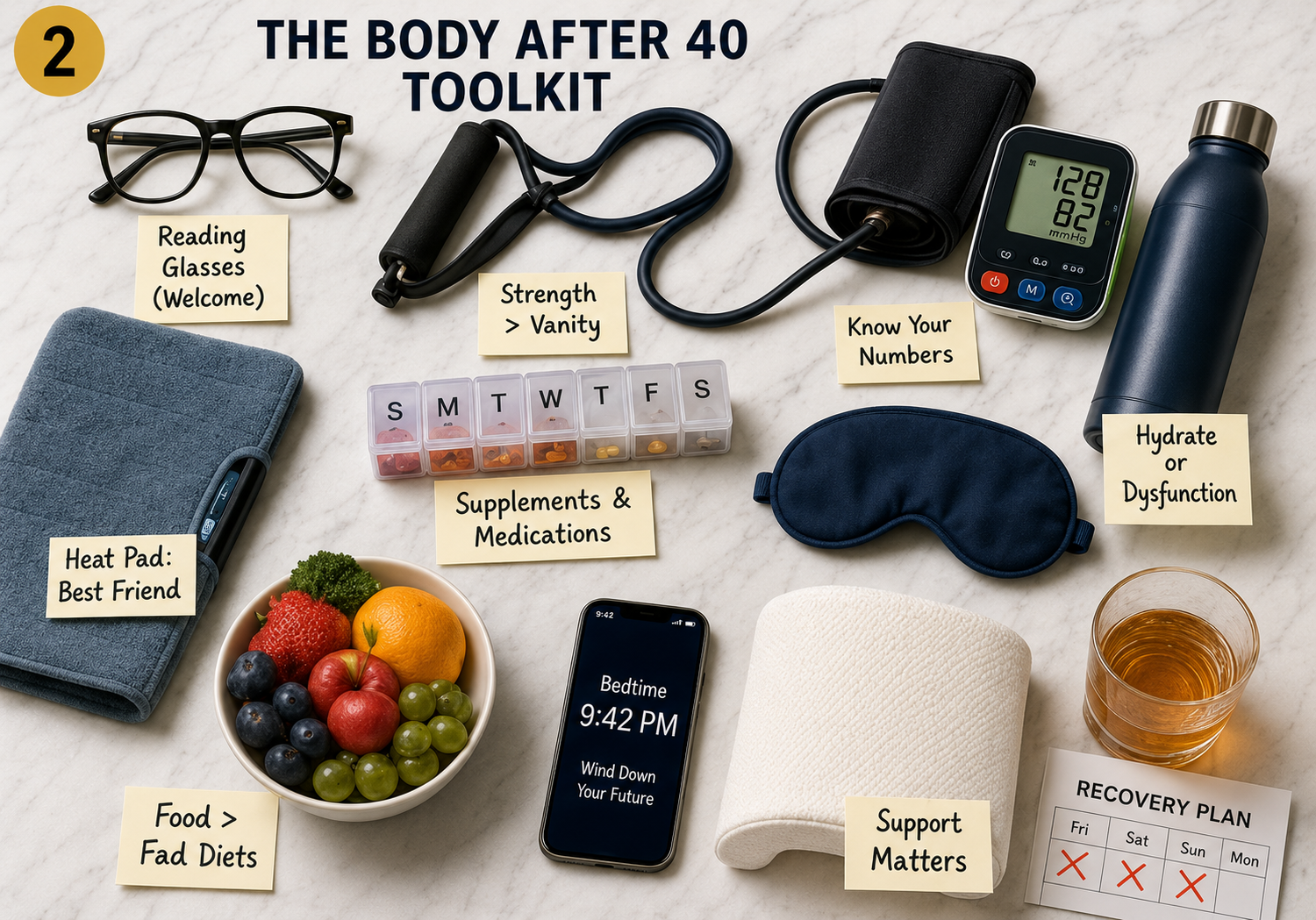
Lordy, Lordy, My Body After 40
Forty does not make the Black body biologically defective. It reveals what can happen when normal aging collides with abnormal exposure.
This evidence-rich guide examines how metabolism, muscle, sleep, hormones, cardiovascular health, cancer risk, cognition, and healthcare use change during midlife. It also explains why Black women and men may encounter these changes earlier or more severely because of psychosocial stress, unequal care, delayed diagnosis, and cumulative physiological strain.
With practical screening guidance, reference ranges, cancer and dementia considerations, and strategies for protecting health after 40, this article turns midlife anxiety into informed action—with just enough humor to help the medicine go down.
KonCite · Investigative Public Intelligence
Lordy, Lordy,My Body After 40
Why midlife hits Black bodies differently—and what hormones, muscle, sleep, sex, stress, metabolism, cancer risk, cognition, and healthcare have been doing while we were busy handling everybody else’s emergency.
Forty did not arrive with a medical warning.
It arrived when sleeping “wrong” became an orthopedic event. It arrived when one cocktail required electrolytes, strategic silence, and the temporary cancellation of Saturday. It arrived when I stood up too quickly and briefly saw the administrative offices of heaven.
Nothing dramatic had happened. And yet, everything had changed.
The knees had opinions. The back had boundaries. The digestive system had revised its operating hours. Food that once entered the body quietly now demanded a full committee hearing. The body had not failed. It had simply stopped providing complimentary services.
That is the funny part.
The serious part is that Black adults do not enter midlife from the same physiological or institutional starting line as everyone else.
By 40, many Black adults are already carrying higher burdens of hypertension, diabetes, sleep disruption, kidney disease, cardiovascular strain, caregiving responsibility, occupational stress, medical distrust, and delayed diagnosis. Some cancers appear before the age at which routine screening systems begin searching for them. The conditions that increase dementia risk may already be active decades before anyone forgets a familiar name.
The body is aging. The environment has also been billing it for years.
Forty does not make the Black body biologically defective. It reveals what can happen when normal aging collides with abnormal exposure.
Race does not cause hypertension, diabetes, cancer, kidney failure, or dementia. Black skin does not manufacture disease. But Black people often live, work, age, seek treatment, and recover inside systems that distribute stress, environmental protection, preventive care, diagnostic attention, and treatment quality unequally.
Without that distinction, we risk describing racial inequality as though the body invented it.

Editorial illustration created for KonCite.
After 40, the Body Stops Covering for You
Aging does not begin on the 40th birthday. Muscle, metabolism, vascular function, reproductive hormones, bone remodeling, sleep architecture, and tissue recovery change across adulthood.
But somewhere around midlife, the body becomes less willing to hide the arrangement.
You may maintain approximately the same weight while carrying less muscle and more abdominal fat. You may look healthy while blood pressure, glucose, cholesterol, kidney markers, or sleep quality begin moving in the wrong direction. You may continue performing at work while taking longer to recover from stress, illness, travel, exercise, alcohol, or insufficient sleep.
This is not a sudden metabolic betrayal. It is a reduction in reserve.
Muscle becomes easier to lose when we stop challenging it. Blood vessels stiffen. Sleep becomes less forgiving. Hormonal transitions alter temperature regulation, fat distribution, sexual function, mood, and recovery. Chronic diseases that developed silently begin producing numbers, medications, referrals, and follow-up appointments.
At 25, the body often behaves like a family member who quietly pays the overdue bill.
After 40, it forwards the invoice.
Midlife Black Health
The Body Has Been Keeping Receipts
Selected disparities that make ordinary midlife biology more consequential for many Black adults.
Vasomotor symptoms
Median duration reported among Black women with frequent menopausal vasomotor symptoms in the SWAN cohort.
Dementia burden
Black older adults are often estimated to have about twice the prevalence of Alzheimer disease or related dementias as White older adults.
Prostate-cancer mortality
Black men experience substantially higher prostate-cancer incidence and nearly twice the mortality of White men.
Breast-cancer mortality
Black women die from breast cancer at markedly higher rates despite similar overall incidence.
Routine mammography
Current USPSTF guidance begins biennial average-risk screening at 40; symptoms require diagnostic evaluation at any age.
Colorectal screening
Average-risk screening begins at 45, but bleeding, anemia, persistent bowel change, or weight loss should not wait.
PSA discussion for Black men
ACS recommends an informed discussion at 45 for Black men and at 40 for some men with strong family history.
Psychosocial stress
Stress can affect disease through biological activation, behavioral adaptation, and altered healthcare engagement.
After 40, One Appointment Starts Bringing Friends
Before 40, many adults still treat healthcare episodically. You become ill. You visit. You recover. You disappear.
After 40, one appointment begins reproducing.
The annual examination orders bloodwork. The bloodwork identifies elevated glucose. The glucose triggers a repeat test. The repeat test produces a diagnosis. The diagnosis creates a medication review, eye examination, kidney assessment, nutrition consultation, and three-month follow-up.
The blood-pressure reading leads to home monitoring. Home monitoring leads to medication. Medication leads to laboratory testing. Laboratory testing leads to another appointment to determine whether the first appointment worked.
After 40, the doctor’s visit stops being an event and becomes a franchise.
This does not mean the visits are unnecessary. Screening, monitoring, and follow-up can prevent disability and premature death. But they create healthcare labor.
A 20-minute appointment can require hours or days of scheduling, referrals, transportation, childcare, insurance calls, record retrieval, pharmacy communication, prior authorization, testing, and follow-up.
For Black patients, increased contact with medicine does not automatically produce increased trust or better control. More visits may also mean more opportunities for symptoms to be minimized, records to be fragmented, or the patient to become the unpaid coordinator of several specialists.
The cascade is not the problem. Fragmentation is. The problem begins when every clinician examines one organ while no one governs the whole person.

Editorial illustration created for KonCite.
Table 1
The Midlife Appointment Cascade
| Starting point | What the first visit may trigger | What often comes next |
|---|---|---|
| Elevated blood pressure | Repeat readings, home monitoring, kidney tests, medication | Dose adjustment, sleep-apnea assessment, recurring follow-up |
| Elevated A1C | Repeat testing, nutrition counseling, medication | Eye examination, kidney screening, laboratory monitoring |
| Breast symptom | Diagnostic mammography, ultrasound, biopsy | Surgery, oncology, surveillance, or reassurance |
| Elevated PSA | Repeat PSA, urology, examination, imaging | Biopsy discussion, surveillance, or treatment planning |
| Rectal bleeding | Blood count, GI referral, colonoscopy | Pathology, treatment, or repeat surveillance |
| Memory change | Cognitive assessment, medication review, laboratory testing | Imaging, neurology, family planning, longitudinal monitoring |
| Menopause symptoms | Symptom assessment, bleeding evaluation, treatment discussion | Medication adjustment and cardiovascular-risk review |
| Erectile dysfunction | Vascular, metabolic, medication, sleep, and hormone assessment | Treatment plus management of underlying disease |
Psychosocial Stress Is Not a Mood
Psychosocial stress is the sustained mental, emotional, behavioral, and physiological demand created when people must repeatedly anticipate, interpret, manage, or recover from threats within their social environment—especially when they lack the power or resources to remove the threat.
Those threats can include racism, financial instability, caregiving overload, unsafe or unstable work, medical distrust, neighborhood danger, repeated institutional navigation, family conflict, isolation, and the expectation that a person remain composed while absorbing harm.
In my research with Black veterans living with chronic kidney disease, participants described racism in healthcare as producing anger, hurt, headaches, distrust, hypervigilance, emotional suppression, and, for some, maladaptive coping. They did not describe racism as an abstract sociological concept. They described it as an experience that entered the mind, the body, the clinical encounter, and the decisions they made afterward.
Psychosocial stress can affect disease through three connected pathways.
The biological pathway
The body activates the sympathetic nervous system and stress-hormone systems to prepare for threat. Heart rate rises. Blood vessels constrict. Glucose becomes more available. Sleep becomes lighter. Muscles tense. Immune and inflammatory activity may shift.
The behavioral pathway
Chronic stress can influence sleep, eating, alcohol use, smoking, physical activity, medication adherence, and care-seeking. These behaviors can represent attempts to regulate a nervous system that rarely receives a clear signal that the danger has ended.
The healthcare pathway
Stress and discrimination can affect whether a person trusts the clinician, reports the symptom, returns for follow-up, fills the prescription, or believes that the system will protect them.
The stressor affects the body. Then it affects how the body reaches care.
The body can survive a crisis. It was not designed to treat Tuesday as a crisis for twenty years.
Figure 1
How Psychosocial Stress Enters the Body
- 1
Social Exposure
Racism, financial strain, caregiving, unsafe work, medical distrust, neighborhood disadvantage.
- 2
Threat Appraisal
Vigilance, fear, anger, rumination, helplessness, emotional suppression.
- 3
Biological Activation
Stress-hormone signaling, sympathetic activation, elevated pressure, disturbed sleep, inflammatory activity.
- 4
Behavioral Adaptation
Irregular eating, reduced exercise, substance use, missed care, medication inconsistency, withdrawal.
- 5
Cumulative Load
Insulin resistance, vascular injury, abdominal fat, immune dysregulation, impaired recovery.
- 6
Disease Expression
Hypertension, diabetes, cardiovascular and kidney disease, depression, cognitive decline, poorer recovery.
Black Women After 40: The Hot Flash Is Not the Whole Story
Perimenopause can begin years before the final menstrual period. Hormonal fluctuation can affect sleep, mood, cognition, menstrual bleeding, temperature regulation, sexual comfort, urinary function, bone turnover, body composition, and cardiovascular risk.
The public conversation often reduces this transition to hot flashes. That is like describing a hurricane as “some wind.”
In the Study of Women’s Health Across the Nation, frequent vasomotor symptoms lasted a median of 7.4 years overall. Black women experienced the longest median duration—approximately 10.1 years—compared with 6.5 years among White women, 5.4 years among Chinese women, and 4.8 years among Japanese women. Greater stress was associated with longer symptom duration.
For some Black women, perimenopause is not a season. It is a federal appointment.
Longer symptoms matter because night sweats and sleep disruption do not remain in the bedroom. They can affect blood pressure, insulin sensitivity, cognition, mood, work performance, and caregiving capacity.
Black women may also enter perimenopause with higher burdens of hypertension, diabetes, obesity, and chronic psychosocial stress. The hormonal transition does not create every risk. It may collide with risks already operating.
The hot flash gets the joke. The heart, vessels, bones, sleep, and metabolism carry the invoice.
Breast Cancer May Arrive Before the Calendar Is Ready
The USPSTF recommends biennial screening mammography for average-risk women from ages 40 through 74. But 40 is a screening threshold. It is not a biological starting line.
Black women are more likely to develop breast cancer at younger ages and remain substantially more likely than White women to die from it. They are also disproportionately affected by aggressive subtypes, including triple-negative breast cancer.
A 37-year-old Black woman with a new breast mass does not need to be told that routine screening starts at 40. She needs diagnostic evaluation.
Screening looks for disease in people without symptoms. Diagnostic evaluation investigates an existing symptom. Risk-based surveillance begins earlier or occurs more often because risk is elevated.
The body does not check the insurance manual before growing a tumor.
A screening mammogram may qualify as preventive care. Diagnostic imaging after a lump, discharge, skin change, or abnormal result may involve different insurance rules and patient costs. Preventive care may be free. Finding out why you felt the lump may still generate a bill.

Editorial illustration created for KonCite.
Black Men After 40: Several Departments Are Reporting
Black men often enter their 40s carrying cardiovascular risk that began much earlier.
Hypertension, diabetes, sleep apnea, kidney disease, chronic stress, and delayed preventive care can influence energy, sexual function, cognition, and physical endurance.
Fatigue is not automatically low testosterone. Erectile dysfunction is not simply an embarrassing bedroom problem. And waking to urinate three times each night should not automatically become a personality trait.
Erections Can Be Cardiovascular Correspondence
Erectile dysfunction can reflect vascular disease, diabetes, hypertension, medication effects, sleep apnea, depression, neurological disease, hormonal disorders, or relational and psychological stress.
After 40, the penis may become the first department willing to disclose that the vascular system is underperforming.
That does not mean every erection problem predicts a heart attack. It means new or persistent erectile dysfunction deserves a broader assessment than an online testosterone advertisement.
The Prostate Conversation May Need to Begin Earlier
Black men are more likely to develop prostate cancer and are approximately twice as likely as White men to die from it. Population-level risk does not mean every Black man requires identical testing, but it does mean average-risk guidance may not fully represent the individual sitting in the examination room.
The American Cancer Society recommends beginning the informed screening discussion at age 45 for Black men and at age 40 for men with more than one first-degree relative diagnosed at an early age.
Earlier discussion does not mean automatic biopsy or treatment. PSA testing can produce false alarms, overdiagnosis, unnecessary procedures, and treatment-related harm. But avoiding the conversation entirely also has consequences.
A guideline written for the average man can become a late invitation for the man whose risk was never average.
PSA must be interpreted over time and in context. Infection, benign prostate enlargement, recent procedures, ejaculation, medications, age, family history, symptoms, and changes from prior values can all affect interpretation.
PSA is not a pregnancy test for prostate cancer. It does not simply say yes or no.

Editorial illustration created for KonCite.
Your Brain Is Also Turning 40
Dementia is usually diagnosed later in life. Its risk architecture may begin decades earlier.
Hypertension, diabetes, stroke, sleep apnea, hearing loss, depression, smoking, inactivity, traumatic brain injury, and social isolation can influence later cognitive health. Many of these conditions are already inequitably distributed by midlife.
Black older adults are frequently estimated to be approximately twice as likely as White older adults to live with Alzheimer disease or another dementia. The exact size of the disparity varies across studies and measurement methods, and the difference should not be interpreted as evidence of an inherently defective Black brain.
Cardiovascular disease, education, environmental exposure, socioeconomic conditions, discrimination, diagnostic access, and quality of care all contribute to the observed burden.
Alzheimer disease may announce itself in old age, but hypertension, diabetes, poor sleep, stroke risk, and chronic stress may have been preparing the room since midlife.
Black families also frequently carry the burden before the diagnosis receives a name. They become transportation systems, medication managers, financial monitors, historians, care coordinators, and behavioral interpreters while waiting for a formal evaluation.
We joke about walking into a room and forgetting why. That is usually distraction, stress, or ordinary retrieval failure.
But getting lost in a familiar neighborhood, repeatedly missing payments, forgetting medication, asking the same question within minutes, or losing the ability to complete familiar tasks requires evaluation.
Forgetting why you entered the room is human. Forgetting how to leave your neighborhood deserves attention.
Not every cognitive change is dementia. Depression, thyroid disease, medication effects, sleep disorders, hearing loss, vitamin deficiency, infection, stroke, and other medical conditions can affect cognition. That is precisely why assessment matters.

Editorial illustration created for KonCite.
Table 2
Your Midlife Numbers: Reference Ranges and Risk Zones
A result is not a diagnosis. Trends, symptoms, medications, laboratory methods, and clinical context matter.
| Measure | Common lower-risk/reference range | Watch zone | Clinical threshold or concern | What it means |
|---|---|---|---|---|
| Blood pressure | Below 120/80 mm Hg | 120–129 and below 80 | Stage 1: 130–139 or 80–89; Stage 2: ≥140 or ≥90 | Requires accurate technique and usually repeated readings. Very high pressure with concerning symptoms requires urgent care. |
| A1C | Below 5.7% | 5.7%–6.4% | 6.5% or higher | Reflects average glucose exposure over roughly 2–3 months; diagnosis often requires confirmation. |
| Fasting glucose | Below 100 mg/dL | 100–125 mg/dL | 126 mg/dL or higher | Interpret with symptoms, medications, acute illness, and repeat testing. |
| 2-hour oral glucose | Below 140 mg/dL | 140–199 mg/dL | 200 mg/dL or higher | May reveal impaired glucose handling not seen on fasting testing. |
| PSA | No universal cancer-free cutoff | Trend, age, symptoms, family history, prostate size, medications | Elevated or rising value requires clinical assessment | PSA does not diagnose cancer by itself. ACS discussion begins at 45 for Black men and at 40 for some men with strong family history. |
| eGFR | Often ≥60 mL/min/1.73 m² | Declining trend or near 60 | Below 60 for at least 3 months may indicate CKD | Interpret with age, trend, clinical context, and urine albumin. |
| Urine ACR | Below 30 mg/g | 30–300 mg/g | Above 300 mg/g | Can identify kidney injury before filtration falls substantially. |
| Triglycerides | Below 150 mg/dL | 150–199 mg/dL | 200 or higher; ≥500 raises pancreatitis concern | Can reflect glucose dysregulation, alcohol, diet, medications, and genetics. |
| HDL cholesterol | Commonly favorable: >40 men; >50 women | Below those levels | Interpret with the entire risk profile | High HDL does not cancel high LDL, smoking, diabetes, or hypertension. |
| Bone density T-score | −1.0 or higher | −1.0 to −2.5 | −2.5 or lower | Fracture risk also depends on age, prior fracture, medications, falls, and other conditions. |
| Testosterone | Laboratory- and assay-specific | Borderline low | Symptoms plus repeatedly low morning levels | One random or afternoon test should not produce a diagnosis. |
| Hemoglobin | Laboratory-, age-, and sex-specific | Decline from baseline | Anemia requires investigation | Fatigue should not automatically be blamed on age, menopause, or stress. |
Table 3
Screening Age Is Not Symptom Age
| Condition | Routine or risk-based discussion | Symptoms that override the calendar |
|---|---|---|
| Breast cancer | Average-risk mammography begins at 40; earlier surveillance may apply to elevated risk. | New lump, nipple discharge, skin or nipple change, focal persistent change, or swollen nodes. |
| Prostate cancer | ACS discussion at 45 for Black men; age 40 for some men with strong family history. | Blood in urine or semen, urinary obstruction, unexplained bone pain, weight loss, or concerning examination. |
| Colorectal cancer | Average-risk screening begins at 45. | Rectal bleeding, iron-deficiency anemia, persistent bowel change, weight loss, or abdominal symptoms. |
| Dementia | No single population screening birthday guarantees detection. | Loss of function, getting lost, financial mistakes, medication errors, repeated questions, or major personality change. |
| Kidney disease | Risk-based blood and urine testing, especially with hypertension or diabetes. | Swelling, foamy urine, blood in urine, severe fatigue, major urine change, or uncontrolled pressure. |
| Diabetes | Routine risk-based screening; broad adult screening commonly begins by the mid-30s. | Excess thirst, frequent urination, unexplained weight loss, recurrent infections, or blurred vision. |
The calendar does not outrank the symptom.
What Actually Protects the Black Body After 40
The wellness section cannot end with “eat better, exercise, and reduce stress.” That advice may be technically correct and practically useless.
After 40, maintenance requires specificity.
Know your baseline
A person cannot monitor a trend they have never measured. Know or discuss blood pressure, glucose, cholesterol, kidney function and urine albumin, weight and waist trend, sleep quality, family cancer history, menopausal symptoms and abnormal bleeding, sexual-function changes, medication effects, psychosocial stress, mood, and any change in daily functioning.
Preserve muscle deliberately
Muscle is not merely aesthetic tissue. It supports glucose regulation, balance, bone protection, mobility, recovery, and independence. Adults should generally perform muscle-strengthening activity involving major muscle groups at least twice weekly, adjusted for medical conditions and physical ability.
Working a physically exhausting job is labor. It is not automatically progressive resistance training.
Build cardiovascular capacity
Walking, cycling, swimming, dancing, interval training, and other aerobic activity can improve blood pressure, insulin sensitivity, sleep, mood, cardiovascular fitness, and functional reserve. The goal is not punishment. It is capacity.
Treat sleep as a clinical issue
Loud snoring, witnessed breathing pauses, morning headaches, resistant hypertension, severe daytime sleepiness, or repeated nighttime awakenings deserve attention. Sleep apnea can affect blood pressure, heart rhythm, glucose regulation, cognition, sexual function, and safety.
After 40, “I only need five hours” is often a personality claim made by a nervous system requesting legal representation.
Manage psychosocial stress at three levels
Regulation includes therapy, prayer, meditation, exercise, emotional expression, rest, and supportive relationships. Protection includes boundaries, caregiving support, changing clinicians, financial planning, workplace accommodation, patient advocacy, and documentation. Structural correction includes safer workplaces, paid leave, reliable healthcare, antiracist clinical systems, environmental protection, community infrastructure, and fair policy.
A breathing exercise can calm the nervous system. It cannot negotiate a safer job, remove discrimination, or provide paid leave. Wellness must include regulation and protection.
Do not wait for a screening birthday when symptoms are present
A lump, bleeding, unexplained weight loss, persistent pain, cognitive decline, urinary obstruction, rectal bleeding, or major functional change deserves diagnostic evaluation regardless of age.
Prepare for the appointment
Bring a current medication list, home readings, a symptom timeline, family history, prior results, and the three questions that matter most.
Ask: What are we trying to rule out? What result would change the plan? When will I receive the result? What symptoms mean I should not wait? What is the next step if the test is normal but the problem continues?
Wellness after 40 includes what happens between appointments. It also includes how well we prepare for, understand, coordinate, and survive the appointments themselves.

Editorial illustration created for KonCite.
The Body Is Not the Enemy
The Black body after 40 is not a punchline, tragedy, or defective machine.
It is a body entering midlife with remarkable adaptive capacity and, too often, an unfair cumulative load.
The goal is not to fear aging. The goal is to stop confusing preventable damage with the natural cost of being Black.
Some changes require acceptance. Some require training. Some require medication. Some require diagnostic urgency. Some require rest. Some require a different physician. And some require changing the systems that keep instructing Black people to manage exposures no body was designed to absorb indefinitely.
Forty is not the age when the body falls apart. It is often the age when the body stops lying on our behalf.
It stops pretending the stress did not matter. It stops disguising the sleep debt. It stops covering for the blood pressure, the glucose, the skipped appointment, the grief, the alcohol, the sedentary year, the caregiving burden, and the symptom we hoped would disappear if we ignored it with enough confidence.
After 40, the body does not whisper less. We simply lose the privilege of pretending we did not hear it.
Lordy, lordy.
The body has entered evidence.
Sources and Notes
Evidence Behind the Body After 40
Peer-reviewed research, clinical recommendations, and public-health guidance supporting the article’s discussion of psychosocial stress, weathering, sleep, menopause, cancer screening, diabetes, blood pressure, kidney disease, and racial health inequities.
1 Racism in Healthcare Among Black Veterans With Kidney Disease Original Investigation · JAMA Network Open
Jenkins KA, Keddem S, Bekele SB, Augustine KE, Long JA. Perspectives on racism in health care among Black veterans with chronic kidney disease. JAMA Netw Open. 2022;5(5):e2211900. doi:10.1001/jamanetworkopen.2022.11900.
View source2 The Weathering Hypothesis Foundational Scholarship · Ethnicity & Disease
Geronimus AT. The weathering hypothesis and the health of African-American women and infants: evidence and speculations. Ethn Dis. 1992;2(3):207-221.
View source3 Stress, Adaptation, and the Pathway to Disease Foundational Stress Science · Archives of Internal Medicine
McEwen BS, Stellar E. Stress and the individual: mechanisms leading to disease. Arch Intern Med. 1993;153(18):2093-2101.
View source4 Racial Differences in Weathering and Psychosocial Stress CARDIA Study · American Journal of Public Health
Forrester SN, Taylor JL, Whitfield KE, Thorpe RJ Jr. Racial differences in weathering and associations with psychosocial stress: the CARDIA study. Am J Public Health. 2019;109(4):615-621.
View source5 Duration of Menopausal Vasomotor Symptoms Longitudinal Study · JAMA Internal Medicine
Avis NE, Crawford SL, Greendale G, et al. Duration of menopausal vasomotor symptoms over the menopause transition. JAMA Intern Med. 2015;175(4):531-539.
View source6 Breast Cancer Screening Recommendation National Clinical Recommendation · USPSTF
US Preventive Services Task Force. Screening for breast cancer: recommendation statement. JAMA. 2024.
View guideline7 Prostate Cancer Early-Detection Recommendations Clinical Guidance · American Cancer Society
American Cancer Society. Recommendations for prostate cancer early detection. Current clinical-guidance web resource.
View guideline8 Colorectal Cancer Screening Recommendation National Clinical Recommendation · USPSTF
US Preventive Services Task Force. Screening for colorectal cancer: recommendation statement. JAMA. 2021;325(19):1965-1977.
View source9 Standards of Care in Diabetes Annual Clinical Guideline · American Diabetes Association
American Diabetes Association Professional Practice Committee. Standards of Care in Diabetes. Current annual clinical guideline.
View guideline10 Blood Pressure Categories and Home Monitoring Patient and Clinical Guidance · American Heart Association
American Heart Association. Blood pressure categories and home blood-pressure monitoring guidance.
View guidance11 Allostatic Load and Racial Disparities in Mortality Population Health Study · Journal of the National Medical Association
Duru OK, Harawa NT, Kermah D, Norris KC. Allostatic load burden and racial disparities in mortality. J Natl Med Assoc. 2012;104(1-2):89-95.
View source12 Racism as a Determinant of Health Systematic Review and Meta-Analysis · PLOS ONE
Paradies Y, Ben J, Denson N, et al. Racism as a determinant of health: a systematic review and meta-analysis. PLoS One. 2015;10(9):e0138511.
View source13 Discrimination and Racial Health Disparities Review Article · Journal of Behavioral Medicine
Williams DR, Mohammed SA. Discrimination and racial disparities in health: evidence and needed research. J Behav Med. 2009;32(1):20-47.
View source14 Discrimination and Cardiovascular Health in Black Americans Contemporary Review · Current Cardiology Reports
Merritt CC, Bonham VL, Green BL. Discrimination and cardiovascular health in Black Americans. Curr Cardiol Rep. 2024;26(5):401-410.
View source15 Racism-Related Vigilance and Sleep Difficulty Sleep and Racial Stress Study · Race and Social Problems
Hicken MT, Lee H, Ailshire J, Burgard SA, Williams DR. “Every shut eye, ain’t sleep”: racism-related vigilance and disparities in sleep difficulty. Race Soc Probl. 2013;5(2):100-112.
View source