


SEEN AS DANGEROUS,MISSED AS DEPRESSED
Black male pain is often recognized only after it becomes disruptive, dangerous, or fatal. This investigation examines rising suicide among Black men and boys, double consciousness, racialized misdiagnosis, firearm lethality, and why prevention must normalize both psychotherapy and psychiatry—not force people to choose between them.
KonCite · Black Mental Health Investigation
Seen as Dangerous, Missed as DepressedThe Rising Suicide Crisis Among Black Men and Boys—and the Care We Have Failed to Normalize
Black male distress is often recognized only after it frightens, disrupts, or inconveniences someone else. By then, the boy has become a discipline problem, the man has become a threat, and the illness has been allowed to deepen in plain sight.
Content note: This article discusses suicide and psychiatric crisis. In the United States, call or text 988 for immediate crisis support. If someone has an active plan or cannot remain safe, stay with them and seek emergency help.
THE PAIN WE KEEP MISNAMING
We have become very good at recognizing Black male pain when it becomes inconvenient to somebody else.
A boy stops turning in assignments, and the school records noncompliance. He becomes irritable, and adults call him disrespectful. He leaves the basketball team, stops answering friends, sleeps through the afternoon, gives away something he once treasured, or begins taking risks that do not resemble the child his family knows. The adults around him may see attitude, laziness, defiance, hormones, marijuana, bad friends, or a discipline problem.
What they may not see is depression.
A Black man arrives late, misses deadlines, drinks more, drives too fast, stops returning calls, becomes impossible to reach emotionally, or starts speaking about himself as though his existence has become a debt everyone else must pay. His family may call him distant. His supervisor may call him unreliable. The emergency department may call him agitated. Police may call him dangerous.
What they may not call him is ill.
That failure of recognition sits at the center of the rising suicide crisis among Black men and boys. The crisis is not simply that more Black males are experiencing despair. The crisis is that their despair is often forced to travel through institutions trained to interpret Black male behavior before they investigate Black male suffering.
We see the conduct. We miss the condition.
We document the disruption. We fail to diagnose the distress.
And then, after a death, we search backward through the silence and suddenly discover all the signs we had previously renamed.

KonCite Critical Finding
The rate is rising. Recognition and care have not kept pace.
Black men die by suicide at roughly four times the rate of Black women.
Sex differences in method lethality, treatment contact, substance use, isolation and help-seeking all matter. The ratio describes mortality—not who suffers more.
Reported suicide attempts among Black high-school students rose from 1991 through 2017.
The nationally representative analysis found a significant upward trend among Black adolescents while trends were flat or declining in several other groups.
Black children ages 5–12 had a higher suicide death rate than White children in a major national study.
The finding overturned assumptions that very young Black children were relatively protected from suicide mortality.
Firearm-suicide rates among Black teenagers surpassed those among White teenagers.
Because firearms are highly lethal, safe storage and temporary separation during crisis are clinical prevention—not political decoration.
THE NUMBERS ARE NOT THE EXPLANATION
Numbers can identify a crisis without explaining it.
The 73 percent increase in self-reported attempts among Black high-school students from 1991 through 2017 is not a diagnosis of Black adolescence. The higher suicide rate found among Black children ages five through twelve is not evidence of some new defect in Black childhood. The fourfold mortality difference between Black men and Black women does not mean Black women experience less suffering. Each statistic describes a different population, measure, time period, and route to death.
Together, however, they destroy a dangerous myth: that suicide is principally a White problem and that Black families are protected by resilience, spirituality, toughness, or familiarity with adversity.
Resilience is not a psychiatric diagnosis. Faith is not immunity. Strength is not the absence of major depression, bipolar disorder, psychosis, traumatic stress, addiction, or suicidal thinking.
When we romanticize Black survival, we can become less curious about Black suffering. We praise endurance so enthusiastically that we forget endurance has a physiological and psychological cost. We repeat that Black people have survived slavery, segregation, racial terror, poverty, policing, and exclusion—as though historical exposure to suffering should produce permanent resistance to despair.
That is not admiration. It is abandonment dressed as praise.
Sean Joe’s scholarship has been essential because it insists that Black suicide be studied on its own terms rather than treated as a statistical afterthought. Michael Lindsey and colleagues showed that the trajectory among Black adolescents was changing. Arielle Sheftall and colleagues disrupted the belief that very young Black children were comparatively protected. Rheeda Walker’s work has examined how racial stress, psychological fortitude, and culture shape suicide risk and protection among Black Americans.
These scholars did more than add Black faces to an existing literature. They forced the field to ask whether its theories, measurements, screening practices, and clinical assumptions were capable of recognizing Black distress before death made the evidence impossible to ignore.
How suffering becomes a behavior problem
Pain accumulates
Loss, racism, humiliation, violence, family instability, illness, isolation or psychiatric symptoms.
Distress changes behavior
Withdrawal, irritability, substance use, declining performance, agitation or risk-taking.
Institutions rename it
Defiance, laziness, danger, disrespect, poor character or criminality.
Punishment replaces assessment
Suspension, exclusion, police contact, workplace discipline or family conflict.
The illness deepens unseen
Less trust, less disclosure, less treatment and greater risk during crisis.
DOUBLE CONSCIOUSNESS INSIDE THE CLINICAL ENCOUNTER
W. E. B. Du Bois gave us language for the psychic labor of seeing oneself through one’s own eyes and through the gaze of a society that has already decided what Blackness means. Double consciousness is often taught as an elegant theory of identity. It is also a practical problem inside mental healthcare.
Before some Black men describe their pain, they conduct an internal risk assessment.
Will honesty make me look weak?
Will anger make them afraid of me?
Will they call police?
Will this enter my employment record?
Will medication change who I am?
Will the clinician understand racism as an exposure without deciding that race explains everything?
Will I be heard as a person in pain—or processed as a Black man who might become dangerous?
Frantz Fanon, who was both a psychiatrist and an anticolonial theorist, understood that racial domination enters the psyche. He refused the convenient fiction that mental illness exists outside history. Ralph Ellison’s language of invisibility helps explain how a person can be observed constantly while remaining unseen. James Baldwin understood what it costs to live inside other people’s distortions. bell hooks wrote against the emotional mutilation required by narrow forms of masculinity and insisted that love, accountability and emotional truth belong in any serious discussion of Black male life.
These literary voices should not be used as decorative quotations around a clinical article. They identify the social conditions under which disclosure occurs.
A Black man does not enter the therapy room as a brain detached from history. A Black boy does not enter a psychiatric assessment without prior experiences of school discipline, adultification, surveillance, or having his emotions interpreted as threat.
Clinical competence therefore requires more than cultural warmth. It requires diagnostic precision, knowledge of racism-related stress, awareness of differential punishment, careful assessment of substance use and trauma, and enough humility to ask what the patient believes will happen if he tells the truth.

WHY BLACK BOYS ARE PUNISHED BEFORE THEY ARE ASSESSED
Black boys often encounter systems that are exceptionally prepared to manage their behavior and remarkably unprepared to investigate its meaning.
A child who becomes withdrawn may disappear academically without creating enough disruption to trigger concern. A child whose depression appears through anger or impulsivity may receive immediate attention—but the attention may arrive through discipline rather than care. The same distress that might invite evaluation in another child can invite exclusion, suspension, security, or police contact in a Black boy.
This does not mean every episode of misconduct is psychiatric illness. It means that behavior should not be treated as proof that no illness exists.
Depression in boys and men may include sadness, but it can also involve irritability, emotional numbness, reckless behavior, substance use, sleep changes, social withdrawal, declining performance, hopelessness, shame, physical complaints, and a growing belief that one’s family would be better off without them. Bipolar disorder may involve periods of depression alongside decreased need for sleep, unusual energy, impulsivity, grandiosity or agitation. Psychosis may involve hallucinations, paranoia, disorganization or severe changes in functioning. Trauma may appear as vigilance, anger, dissociation, nightmares or avoidance.
The correct response is not to diagnose every difficult Black boy from a distance. It is to build pathways that allow concerning change to produce assessment rather than automatic punishment.
A school should know who performs suicide screening. A pediatric practice should know how to ask directly. A family should know that sudden improvement after severe distress can sometimes reflect a dangerous decision rather than recovery. Coaches, barbers, fraternity brothers, pastors and mentors can become bridges to care—but they should not be turned into unpaid substitutes for trained clinicians.
Community trust matters. Clinical skill matters. Both must be present.
THERAPY IS NOT PSYCHIATRY — AND WE NEED BOTH
For years, public conversation has used “therapy” as shorthand for all mental healthcare. That shorthand is no longer adequate.
Psychotherapy is treatment delivered through structured psychological and behavioral methods. Depending on licensure and training, it may be provided by psychologists, clinical social workers, professional counselors, marriage and family therapists, and psychiatrists. Therapy can help people process trauma, challenge hopeless beliefs, regulate emotion, repair relationships, reduce avoidance, build coping skills and develop a safety plan.
Psychiatry is a medical specialty. Psychiatrists are physicians. They assess psychiatric symptoms alongside medical illness, medications, sleep, substance use and neurological or endocrine contributors. They diagnose mental disorders, evaluate suicide risk, prescribe and monitor psychiatric medication, coordinate hospitalization when necessary, and may also provide psychotherapy.
Neither discipline should be presented as the morally superior form of care.
Some people need psychotherapy without medication. Some need medication and psychotherapy. Some need a psychiatric evaluation because the depression is severe, recurring or accompanied by psychosis, mania, catatonia, dangerous agitation, substance withdrawal, profound insomnia, or persistent suicidal intent. Some need medical testing because thyroid disease, medication effects, sleep disorders, neurological illness, chronic pain or substance use may be affecting mood and cognition.
Medication is not a spiritual failure. It is not proof that the family did not pray hard enough. It is not a surrender of Black strength.
Medication is also not magic. It cannot make an unsafe school safe. It cannot remove racism from a workplace. It cannot build a trustworthy relationship with a father. It cannot substitute for housing, food, sleep, belonging, grief support or protection from violence.
The point is not to choose between therapy and psychiatry.
The point is to stop offering partial care to people facing potentially fatal illness.
THERAPY IS NOT PSYCHIATRY — AND WE NEED BOTH
For years, public conversation has used “therapy” as shorthand for all mental healthcare. That shorthand is no longer adequate.
Psychotherapy is treatment delivered through structured psychological and behavioral methods. Depending on licensure and training, it may be provided by psychologists, clinical social workers, professional counselors, marriage and family therapists, and psychiatrists. Therapy can help people process trauma, challenge hopeless beliefs, regulate emotion, repair relationships, reduce avoidance, build coping skills and develop a safety plan.
Psychiatry is a medical specialty. Psychiatrists are physicians. They assess psychiatric symptoms alongside medical illness, medications, sleep, substance use and neurological or endocrine contributors. They diagnose mental disorders, evaluate suicide risk, prescribe and monitor psychiatric medication, coordinate hospitalization when necessary, and may also provide psychotherapy.
Neither discipline should be presented as the morally superior form of care.
Some people need psychotherapy without medication. Some need medication and psychotherapy. Some need a psychiatric evaluation because the depression is severe, recurring or accompanied by psychosis, mania, catatonia, dangerous agitation, substance withdrawal, profound insomnia, or persistent suicidal intent. Some need medical testing because thyroid disease, medication effects, sleep disorders, neurological illness, chronic pain or substance use may be affecting mood and cognition.
Medication is not a spiritual failure. It is not proof that the family did not pray hard enough. It is not a surrender of Black strength.
Medication is also not magic. It cannot make an unsafe school safe. It cannot remove racism from a workplace. It cannot build a trustworthy relationship with a father. It cannot substitute for housing, food, sleep, belonging, grief support or protection from violence.
The point is not to choose between therapy and psychiatry.
The point is to stop offering partial care to people facing potentially fatal illness.
Mental healthcare is an ecosystem
| Professional or service | Primary role | What they may provide | When especially important |
|---|---|---|---|
| Psychiatrist | Medical diagnosis and treatment | Psychiatric assessment, medication, medical differential diagnosis, hospitalization decisions, psychotherapy in some practices | Severe depression, bipolar disorder, psychosis, complex medication needs, persistent or acute suicide risk |
| Psychologist | Psychological assessment and psychotherapy | Evidence-based therapy, testing, diagnostic assessment, suicide-focused treatment | Trauma, depression, anxiety, behavioral concerns, cognitive or personality assessment |
| Clinical social worker or counselor | Psychotherapy and care navigation | Therapy, family work, crisis support, resource coordination | Ongoing treatment, relational stress, grief, trauma and system navigation |
| Primary-care or pediatric clinician | Front-door screening and medical assessment | Depression and suicide screening, initial medication in some cases, labs, referrals and follow-up | New symptoms, physical complaints, sleep change, medication or medical contributors |
| Emergency or crisis service | Immediate safety assessment | Acute evaluation, stabilization, safety planning, hospitalization or urgent referral | Active plan, intent, recent attempt, psychosis, inability to remain safe |
| Family, peers, faith and community | Connection and practical support | Presence, transportation, monitoring, encouragement, help following the safety plan | Every stage—but never as a substitute for clinical care during psychiatric crisis |
MEDICATION WITHOUT SHAME — AND WITHOUT MYTH
Black communities have good historical reasons to be cautious about medicine. Distrust did not fall from the sky. It was produced by unequal treatment, coercion, experimentation, dismissal, misdiagnosis and systems that have often been more willing to control Black behavior than relieve Black suffering.
That history must be acknowledged. It must not become a reason to abandon people who may benefit from psychiatric treatment.
Antidepressants, mood stabilizers, antipsychotic medications, medications for anxiety, and treatments for substance-use disorders are different classes with different indications, benefits, side effects and monitoring requirements. The correct question is not “Do you believe in medication?” as though pharmacology were a denomination.
The questions are clinical:
What symptoms are present?
How severe are they?
What diagnosis or diagnoses best explain them?
What medical conditions or substances could be contributing?
What treatment has been tried?
What are the benefits, risks, alternatives and monitoring plan?
For young people, treatment requires particular care. Medication decisions should involve development, family history, symptom course, safety monitoring and clear follow-up. Families should understand what changes require urgent contact. Medication should not be prescribed casually, and fear of medication should not block indicated care.
We should normalize psychiatric consultation without normalizing careless prescribing.
We should normalize medication without promising that medication alone can repair social injury.
We should normalize second opinions, questions, monitoring and patient autonomy.
Complete care is neither anti-medication nor medication-only. It is precise enough to use every appropriate tool and humble enough to recognize the limits of each one.
THE FIREARM QUESTION
Any honest investigation of Black male suicide must address firearms.
This is not because every suicidal person uses a firearm. It is because firearms are highly lethal, suicide crises can escalate rapidly, and the difference between immediate access and temporary distance can determine whether a person survives long enough for the crisis to change.
Among Black males, firearms are a leading method of suicide death. Recent youth trends make the issue more urgent. When firearm-suicide rates among Black teenagers surpassed those among White teenagers, the finding should have changed how families, clinicians, schools and community organizations discussed safe storage.
Safe storage means more than hiding a weapon. It may involve locked storage, unloaded storage, ammunition stored separately, and preventing access to keys or combinations. During a period of elevated risk, the safest arrangement may be temporary lawful storage away from the person in crisis, consistent with local law and professional guidance.
The purpose is not punishment. The purpose is time.
Suicidal intensity can change. A person may feel unable to survive an hour and feel differently after sleep, connection, treatment, medication, removal from conflict, sobriety, or simply the passage of time. A highly lethal method collapses the distance between impulse and death.
Lethal-means counseling is therefore not ideological theater. It is survival architecture.
Suicide prevention must be a pathway, not a referral
Withdrawal, agitation, hopelessness, sleep change, substance use, giving possessions away or speaking as a burden.
Ask about suicidal thoughts, plan, intent, timing and access to lethal means.
Stay present, remove lethal access, involve trusted people and use crisis services.
Psychiatric, psychological, medical, substance-use and family assessment as indicated.
Therapy, medication, hospitalization, safety planning, sleep and substance treatment according to need.
Rapid appointments, caring contacts, family support and repeated reassessment.
WHAT ACTUALLY PREVENTS SUICIDE
Suicide prevention is often reduced to awareness. Awareness matters, but awareness without an operating system leaves families informed and alone.
Evidence supports several concrete practices.
Direct questioning matters. Asking whether someone is thinking about suicide does not create suicidal thinking. It can reduce ambiguity and permit a more accurate assessment of risk.
Safety planning matters. The Stanley-Brown Safety Planning Intervention helps a person identify warning signs, internal coping strategies, people and places that provide distraction, individuals who can help, professional resources, and steps to make the environment safer. In a large emergency-department study among veterans, safety planning combined with structured follow-up was associated with fewer suicidal behaviors and greater treatment engagement than usual care.
Follow-up matters. Risk does not end when the emergency department discharges someone or the inpatient unit closes the chart. The days and weeks after a crisis require rapid appointments, caring contacts, medication follow-up where relevant, family education and clear instructions for what to do if risk returns.
Suicide-focused psychotherapy matters. Cognitive therapy and cognitive-behavioral approaches can directly address suicidal beliefs, hopelessness, problem solving and relapse prevention. Dialectical Behavior Therapy has strong evidence for reducing suicidal and self-harming behavior in appropriate populations. Treatment should not assume that improving a general diagnosis automatically resolves suicide risk.
Psychiatric treatment matters. Severe mood disorders, psychosis, substance-use disorders and other psychiatric conditions require diagnosis and treatment proportionate to their seriousness. Medication may be part of that treatment. Hospitalization may sometimes be necessary. The goal should be the least restrictive care that can reliably maintain safety—not avoidance of psychiatry until the crisis becomes unmanageable.
Connection matters, but connection must be operational. “Call me anytime” is less useful than agreeing who will stay tonight, who will hold the car keys, who will store the firearm, who will attend the appointment, who will manage medications, and who will call tomorrow morning.
Cultural responsiveness matters. A clinician does not become culturally competent by displaying a Black poster or saying the word trauma. The patient should not have to teach the provider why racism, adultification, religious language, masculinity, police exposure, financial responsibility or family reputation shapes the way distress is expressed and help is sought.
The strongest prevention plan is not one heroic conversation. It is a coordinated system that remains present after the immediate emotion has passed.
What complete suicide prevention can include
| Intervention | Primary purpose | Evidence-informed benefit | Important boundary |
|---|---|---|---|
| Direct suicide inquiry | Identify ideation, plan, intent and access | Improves disclosure and risk assessment; asking does not create suicidal ideation | Questions must lead to action when risk is present |
| Stanley-Brown safety planning | Create a practical crisis sequence | Associated with reduced suicidal behavior and improved follow-up engagement | Not a “no-suicide contract” and not a substitute for emergency care |
| Lethal-means counseling | Create time and distance from highly lethal methods | Reduces access during periods of acute risk | Must be specific, collaborative and legally appropriate |
| Suicide-focused CBT or cognitive therapy | Address hopelessness, beliefs, problem solving and recurrence | Can reduce repeat attempts in selected patients | Requires trained clinicians and ongoing safety assessment |
| Dialectical Behavior Therapy | Reduce suicidal and self-harming behavior while building regulation skills | Strong evidence in appropriate high-risk populations | Intensive model; availability and fit vary |
| Psychiatric assessment and medication | Treat underlying psychiatric illness and severe symptoms | May reduce depression, mania, psychosis, anxiety or substance-related risk | Requires diagnosis, monitoring, follow-up and informed consent |
| Rapid follow-up and caring contacts | Maintain connection after discharge or crisis | Supports engagement during a high-risk transition period | Must connect to accessible ongoing care |
| Family and school intervention | Reduce conflict, improve monitoring and create support | Can strengthen protective relationships and early recognition | Should protect confidentiality and avoid turning families into clinicians |
WHY “GO TO THERAPY” IS NOT A SYSTEM
“Black men need therapy” has become a culturally acceptable sentence. It is often offered as though it completes the analysis.
Therapy may be exactly what a person needs. It may also be unavailable, unaffordable, poorly matched, insufficiently frequent, culturally unsafe, or clinically incomplete. A weekly appointment cannot compensate for an active plan, a loaded firearm, untreated mania, severe alcohol withdrawal, command hallucinations, or the period immediately after a suicide attempt.
The phrase can also relocate responsibility onto the person in pain. He is told to find a provider, verify insurance, assess cultural fit, take time from work, arrange transportation, explain himself to a stranger, and remain hopeful through waiting lists—all while experiencing the illness that makes executive functioning, trust and hope more difficult.
Normalization must therefore extend beyond encouraging disclosure.
We need to normalize psychiatric evaluation.
We need to normalize medication when clinically indicated.
We need to normalize changing clinicians when care is dismissive or unsafe.
We need to normalize family participation without stripping the patient of dignity.
We need to normalize same-day crisis access, follow-up after discharge, substance-use treatment, sleep evaluation and the removal of lethal means.
We need to normalize asking a successful Black man whether he wants to live—not because he appears unstable, but because achievement has never been proof against despair.
The problem is not that Black men and boys refuse all help.
The problem is that the help presented to them is too often fragmented, culturally thin, administratively exhausting, or activated only after danger becomes visible to everyone else.

HOW TO ASK WITHOUT MAKING HIM PERFORM
The worst questions contain the answer we want.
“You are not thinking about doing something crazy, are you?”
“You would never do that to your mother.”
“You know you have too much to live for.”
Those sentences communicate fear, judgment and obligation. They tell the person that honesty will create a problem for the listener.
Use direct, calm language.
“I have noticed that you have stopped doing things you usually care about, and you sound exhausted. Sometimes when people feel trapped, they think about dying. Has that been happening to you?”
“Are you thinking about suicide?”
“Have you thought about how you would do it?”
“Do you have access to what you would use?”
“Have you decided when?”
“Can you stay with me while we get help?”
Do not debate whether the person has a good life. Do not demand gratitude. Do not ask him to prove love for the family by surviving the moment alone.
If there is an active plan, intent, recent attempt, severe intoxication, psychosis, or access to a lethal method, treat the situation as urgent. Stay present. Engage emergency or crisis services. Reduce access to lethal means. Do not promise secrecy.
The goal is not to deliver a perfect speech.
The goal is to help the person survive long enough for treatment, connection and time to alter what currently feels permanent.
BEYOND SURVIVAL
We have spent too long praising Black men for surviving systems that remain unwilling to care for them.
Survival is not treatment.
Endurance is not wellness.
Silence is not stability.
And a man’s usefulness to his job, family, church, fraternity, team or community is not evidence that he feels attached to his own life.
The intervention cannot begin at the funeral, when everyone suddenly becomes fluent in the language of warning signs. It must begin in pediatric visits, school hallways, locker rooms, barbershops, primary-care offices, emergency departments, psychiatric clinics, workplaces, churches, group chats and family kitchens.
But community presence must connect to clinical capacity.
The barber can notice.
The coach can ask.
The father can stay.
The pastor can accompany.
The friend can hold the keys.
The psychiatrist can assess.
The therapist can treat.
The health system can follow up.
The family can help make the environment safer.
No one person has to become the entire system. Everyone has to know their part.
We should not ask Black boys to become less emotional. We should stop punishing the forms their emotion is allowed to take.
We should not ask Black men to become less strong. We should build a definition of strength large enough to include medication, hospitalization, tears, boundaries, disclosure, rest and the decision to stay alive.
The goal is not to teach Black men and boys how to suffer more quietly.
The goal is to make sure they do not have to suffer alone—and that when they reach for care, the care is complete enough to meet them.
Stay. Ask. Protect. Connect.
If someone tells you he is thinking about suicide, believe the seriousness of the disclosure. Ask about plan, intent and access. Stay with him when danger is immediate. Create distance from firearms and other lethal methods. Connect him to crisis and clinical care—and remain involved after the first appointment.
United States: Call or text 988 for the Suicide & Crisis Lifeline. If there is an active plan, an attempt in progress, severe medical danger or an inability to remain safe, seek emergency assistance immediately.
CALL OR TEXT 988Sources and Notes
Peer-reviewed research, surveillance resources and Black intellectual traditions supporting the article’s analysis of suicide, diagnosis, treatment, double consciousness and culturally responsive care.
01Lindsey MA, Sheftall AH, Xiao Y, Joe S
Lindsey MA, Sheftall AH, Xiao Y, Joe S. Trends of suicidal behaviors among high school students in the United States: 1991–2017. Pediatrics. 2019;144(5):e20191187.
View source ↗02Bridge JA, Horowitz LM, Fontanella CA, et al
Bridge JA, Horowitz LM, Fontanella CA, et al. Age-related racial disparity in suicide rates among US youths from 2001 through 2015. JAMA Pediatrics. 2018;172(7):697-699.
View source ↗03Joe S
Joe S. Explaining changes in the patterns of Black suicide in the United States from 1981 to 2002: an age, cohort, and period analysis. Journal of Black Psychology. 2006;32(3):262-284.
View source ↗04Walker RL, Salami TK, Carter SE, Flowers K
Walker RL, Salami TK, Carter SE, Flowers K. Perceived racism and suicide ideation: mediating role of depression but moderating role of religiosity among African American adults. Suicide and Life-Threatening Behavior. 2014;44(5):548-559.
View source ↗05Lindsey MA, Joe S, Nebbitt V
Lindsey MA, Joe S, Nebbitt V. Family matters: the role of mental health stigma and social support on depressive symptoms and subsequent help seeking among African American boys. Journal of Black Psychology. 2010;36(4):458-482.
View source ↗06Stanley B, Brown GK, Brenner LA, et al
Stanley B, Brown GK, Brenner LA, et al. Comparison of the Safety Planning Intervention with follow-up vs usual care of suicidal patients treated in the emergency department. JAMA Psychiatry. 2018;75(9):894-900.
View source ↗07Brown GK, Ten Have T, Henriques GR, Xie SX, Hollander JE, Beck AT
Brown GK, Ten Have T, Henriques GR, Xie SX, Hollander JE, Beck AT. Cognitive therapy for the prevention of suicide attempts: a randomized controlled trial. JAMA. 2005;294(5):563-570.
View source ↗08Dazzi T, Gribble R, Wessely S, Fear NT
Dazzi T, Gribble R, Wessely S, Fear NT. Does asking about suicide and related behaviours induce suicidal ideation? What is the evidence? Psychological Medicine. 2014;44(16):3361-3363.
View source ↗09Du Bois WEB
Du Bois WEB. The Souls of Black Folk. 1903.
View source ↗10Fanon F
Fanon F. Black Skin, White Masks. 1952.
View source ↗11Ellison R
Ellison R. Invisible Man. 1952.
View source ↗12hooks b
hooks b. The Will to Change: Men, Masculinity, and Love. 2004.
View source ↗13Centers for Disease Control and Prevention
Centers for Disease Control and Prevention. Suicide Data and Statistics. Current surveillance resource.
View source ↗14988 Suicide & Crisis Lifeline
988 Suicide & Crisis Lifeline. Current crisis resource.
View source ↗
Caring for the caregiver
Somewhere between career success and midlife, many Black professionals quietly become the people everyone depends on. This investigative report explores caregiving, psychosocial stress, and the hidden health costs of becoming your family's infrastructure.
KonCite · Personal Investigation
Who Cares for the Caregiver?The Invisible Labor Behind Black Professional Success
At forty-four, I finally understand what my mother was carrying. Now I see friends reaching the height of their careers while quietly becoming the people their families cannot function without.
Editorial reconstruction: This image represents the intersection of professional responsibility, family care, and invisible labor.
Lately, I have noticed something about my friends.
They are tired. Not vacation tired. Not the kind of tired that can be solved by sleeping late on Saturday and promising to drink more water on Monday. This is a deeper fatigue, the kind that sits behind professional titles, successful children, leadership roles, polished presentations, and the dependable answer, “I’m good.”
Somewhere between forty and fifty, many of us quietly became the people everyone calls. A parent needs transportation to an appointment. A prescription has been denied. A specialist used language nobody in the family understood. Someone fell. A bill arrived. A cousin needs advice. A child still needs help. Work still expects the presentation by noon.
Because we earned the degree, found the stable job, learned how institutions work, or developed a reputation for fixing things, the call comes to us. Competence becomes availability. Achievement becomes family infrastructure.
Caregiving is not my current journey. But I recognize it because I lived beside it when I was young. During middle school and high school, my mother carried responsibilities I did not yet have the language to name. As a child, I experienced that time mostly as love and proximity. I remember being with her. I remember how she kept moving. I remember feeling cared for.
At forty-four, I finally understand that what looked natural from the outside was labor. It was planning, worry, time, interrupted sleep, financial calculation, emotional restraint, transportation, paperwork, and the constant mental inventory of what could go wrong next.
Children experience caregiving as love. Adults learn to recognize it as labor.
That recognition is why I see my friends differently now. I see the colleague who answers a medical call between meetings and returns to the room as though nothing happened. I see the friend managing medications from another state. I see the daughter who knows every specialist’s name and every sibling’s excuse. I see the son who is trying to protect his mother’s dignity while quietly wondering whether he can keep doing this without losing his health, his marriage, or the career his parents sacrificed to make possible.
We describe these people as strong. We rarely ask what strength is costing them.

The Expanding Circle of Responsibility After 40
Success often expands rather than reduces the number of people depending on one individual.
WHEN SUCCESS MAKES YOU MORE REACHABLE
American culture often treats success as separation from hardship. Work hard, earn credentials, move upward, and life is supposed to become easier. For many Black professionals, the reality is more complicated.
Upward mobility may improve income, insurance coverage, institutional knowledge, and access to information. Those gains matter. They may also make one person the family’s most reliable translator of systems. The lawyer reads the contract. The physician interprets the discharge instructions. The professor helps complete the application. The executive has the flexible credit card, the car, the retirement account, the reliable internet, or the ability to speak to authority without being immediately dismissed.
Success does not necessarily reduce obligation. It may increase the number of people who believe you can absorb it.
I call this the Success-Caregiving Paradox: the same achievements that provide greater personal security can increase the expectation that one person will stabilize the family around them.
This is not simply generosity. It is a transfer of administrative, emotional, medical, and financial responsibility into the hands of the relative most capable of navigating institutions. The person who “made it” becomes a scheduler, insurer, advocate, driver, researcher, translator, banker, emergency contact, and historian.
The paradox becomes sharper for people who are firsts. The first physician, first PhD, first attorney, first executive, or first person with a stable professional salary may already be managing imposter phenomenon, racialized scrutiny, and the pressure to represent more than themselves. They must appear calm in rooms where mistakes feel costly. They may also be coordinating a parent’s care from the hallway between those rooms.
The office sees the professional. The family sees the infrastructure. The caregiver has to be both.
America’s Caregiving Reality
| Finding | Best available estimate | Why it matters |
|---|---|---|
| Number of family caregivers | About 63 million U.S. adults, according to the 2025 AARP/NAC report | Caregiving is not a niche condition. It is a central part of the country’s health and labor infrastructure. |
| Growth | Approximately 45% increase over the previous decade | More adults are entering the role, often earlier and with more complex responsibilities. |
| High-intensity care | About 40% report high-intensity caregiving | Many caregivers are effectively performing a second job without formal preparation or reliable relief. |
| Training gap | Only a minority report formal preparation for caregiving or complex medical tasks | Families are performing clinical and administrative work that would require training in formal settings. |
| Employment collision | Many caregivers remain employed while providing care | The burden appears as missed work, reduced hours, stalled advancement, presenteeism, and concealed distress. |
Interpretation: Estimates vary by definition, reference period, and whether care is provided to adults, children, or both. The figures above use the 2025 AARP/National Alliance for Caregiving framework and should not be treated as a single clinical profile.

WHY THE BLACK CAREGIVING BURDEN IS DIFFERENT
Black caregiving should not be described as merely the universal caregiving experience with a racial adjective placed in front of it. The surrounding conditions are different.
Black families often encounter caregiving after decades of unequal exposure to chronic disease, neighborhood disinvestment, occupational stress, fragmented healthcare, lower accumulated wealth, and discriminatory treatment. Those conditions can shape when care is needed, how complex it becomes, and what resources are available to purchase relief.
A family with substantial savings can hire transportation, home care, meal preparation, legal help, or a care manager. A family without those reserves converts unmet need into unpaid labor. The difference is not love. It is purchasing power.
This helps explain why racial comparisons can be deceptively simple. Some studies find that Black caregivers report equal or even lower subjective burden than White caregivers despite providing demanding care. That should not be interpreted as evidence that the work is easier. Cultural meaning, spirituality, family obligation, resilience, and expectations about care can influence how burden is reported. High commitment can coexist with high physiological strain.
Black caregiving also sits inside broader kinship networks. The person receiving care may not be a spouse or parent. Care may flow to grandparents, siblings, aunts, uncles, fictive kin, church members, or family friends. These networks are sources of survival and belonging. They can also make the boundaries of responsibility difficult to define.
Then there is the historical meaning of care. Black families have survived because relatives, neighbors, churches, and communities did what institutions refused to do. Informal care has been a strategy of endurance. The danger comes when society celebrates that resilience while using it as an excuse not to build formal support.
A strong family should not be treated as a substitute for a functioning long-term-care system.
The office celebrates your promotion. The family experiences your availability. Somewhere in between, you become everyone’s emergency plan.

THE PSYCHOSOCIAL STRESS OF BEING THE PERSON WHO HANDLES IT
Caregiver burden is often reduced to the number of tasks performed. That misses the deepest part of the experience.
Psychosocial stress is the sustained mental, emotional, behavioral, and physiological demand created when people must repeatedly anticipate, interpret, manage, or recover from threats and obligations in their social environment, especially when they have limited power to remove them.
For caregivers, the stress is not confined to bathing, driving, cooking, or managing medication. It includes anticipation: Will the parent fall? Will the doctor call during a meeting? Did the prescription arrive? Can they be left alone? Will insurance pay? Which sibling will not answer this time?
It includes role conflict. The professional must be fully present at work while mentally tracking a family member’s condition. The parent must care for children while becoming responsible for a parent. The spouse must preserve intimacy while performing clinical tasks. The successful family member must remain generous while quietly resenting the assumption that competence equals infinite capacity.
It also includes concealment. Many Black professionals understand that vulnerability is not evaluated equally. The person already navigating racialized scrutiny may fear that disclosing caregiving demands will be read as unreliability, poor commitment, or an inability to handle leadership. So the crisis is managed privately and competence is performed publicly.
That performance has a physiological cost. Chronic vigilance can disturb sleep, elevate blood pressure, alter eating and physical activity, intensify depression and anxiety, and reduce the time available for preventive care. Caregivers may become what clinicians sometimes call the hidden or secondary patient: the person whose health deteriorates while attention remains fixed on the person receiving care.
The stressor affects the body. Then it affects how the body reaches care.
Caregivers postpone appointments because someone else’s appointment is more urgent. They ignore pain because the family cannot absorb another patient. They know exactly which medications their parent takes and cannot remember the date of their own last physical examination.
We should not romanticize this as strength. Strength may be present. So may untreated hypertension.
What Caregiving Can Do to the Body and Mind
| Outcome | What research generally shows | Likely pathways | Important caution |
|---|---|---|---|
| Depressive symptoms | Higher burden and intensive caregiving are consistently associated with greater depressive symptoms. | Loss, isolation, sleep disruption, role captivity, financial strain. | Caregiving can also provide meaning and closeness; effects vary by intensity and support. |
| Anxiety and vigilance | Uncertainty and responsibility can maintain persistent worry and threat monitoring. | Anticipatory stress, medical uncertainty, fear of emergencies. | Anxiety symptoms should not automatically be dismissed as a normal part of caring. |
| Sleep disruption | Nighttime supervision, worry, and irregular schedules commonly reduce sleep quality. | Interrupted sleep, hyperarousal, nighttime care tasks. | Sleep disorders may require direct treatment, not only stress advice. |
| Cardiometabolic strain | High-intensity caregiving may worsen blood pressure, activity, diet, and metabolic risk. | Sympathetic activation, reduced recovery, missed preventive care. | Associations vary; caregiving is not a single exposure and does not determine disease. |
| Financial harm | Reduced hours, job exits, unpaid leave, and out-of-pocket costs can weaken long-term security. | Lost wages, missed promotions, retirement withdrawals, purchased services. | Financial effects are shaped by policy, wealth, workplace flexibility, and family structure. |
| Social isolation | Care demands may reduce time for friendships, worship, exercise, hobbies, and rest. | Time scarcity, embarrassment, mobility limits, emotional exhaustion. | Isolation is modifiable and should be assessed directly. |

The Success-Caregiving Paradox
Upward mobility can increase both resources and expectations. The pathway is a proposed synthesis, not proof that professional success causes caregiver burden.
WHY WE HIDE IT?
Professional culture rewards the appearance of uninterrupted capacity. Caregiving is interruption made visible.
The caregiver leaves early, turns the camera off, takes the call, reschedules the trip, misses the networking event, or arrives after spending the night in an emergency department. Even when workplace policies exist, access may depend on the manager, team culture, job classification, and whether the employee believes using the benefit will damage advancement.
For Black professionals, disclosure may feel particularly risky. Many already experience the minority tax: additional mentoring, service, representation, emotional labor, and proof demanded because they are among the few. They may also be managing imposter feelings—the fear that any sign of strain will confirm someone else’s doubt about whether they belong.
So they hide caregiving inside productivity.
They answer email from waiting rooms. They present from parked cars. They schedule procedures around major meetings. They call exhaustion discipline and grief professionalism.
This is not work-life balance. It is work-life concealment.
Employers often see the consequences only when performance changes. By then, the caregiver may have been operating at a deficit for months. The organization loses concentration, creativity, retention, and leadership capacity, while the employee loses sleep, health, income, and the feeling that any part of life belongs entirely to them.
The problem is not that caregivers are insufficiently resilient. The problem is that institutions often benefit from care remaining invisible.
Evidence-Informed Ways to Reduce Caregiver Burden
| Intervention | Best use | Evidence signal | Limitation |
|---|---|---|---|
| Multicomponent caregiver programs | Education, skills, problem-solving, emotional support, and linkage to services | Meta-analyses generally find modest improvements in burden, depression, and coping, especially when tailored. | Availability, cultural fit, and caregiver time affect participation. |
| Cognitive behavioral approaches | Self-blame, catastrophic thinking, depression, insomnia, and coping | Supported for several caregiver populations, with effects varying by condition and delivery. | Therapy cannot substitute for money, respite, or safe formal care. |
| Respite and complementary formal care | Creating actual time away from direct care | Can reduce immediate strain and protect continuity, especially when reliable and acceptable. | Effects are mixed when respite is too brief, hard to access, or creates guilt and coordination work. |
| Care navigation and training | Medication, appointments, benefits, equipment, and complex medical tasks | Improves preparedness and may reduce avoidable confusion and crisis use. | Information without authority or resources can become another assignment. |
| Support groups and peer connection | Isolation, validation, practical learning, anticipatory grief | Often improves perceived support and coping; online options can increase access. | Not every group is culturally safe or appropriate. |
| Workplace flexibility and paid leave | Reducing the collision between employment and care | Strong practical rationale; flexible scheduling and paid leave protect employment and retention. | Policy effectiveness depends on affordability, eligibility, and freedom from retaliation. |
| Family care agreements and succession plans | Distributing tasks, money, authority, and backup responsibility | Evidence base is less standardized, but planning addresses known drivers of overload. | Family conflict, geography, and unequal resources can limit redistribution. |
| Brief restorative practices | Interrupting sustained activation and preserving identity | Positive emotion, mindfulness, creative activity, and short recovery periods may improve regulation and mood. | They are protective moments, not solutions to structural overload. |

Caring for the Caregiver
FINDING NUGGETS OF PEACE
Caregivers are often told to practice self-care as though wellness arrives in uninterrupted afternoons. Most people carrying a family know better. Peace often appears in smaller units.
A nugget of peace is not an attempt to solve caregiving with a coloring book, a cup of coffee, or a playlist. It is a protected moment in which the nervous system receives evidence that the entire day is not an emergency.
Adult coloring books can help some people narrow attention and create a brief creative boundary around worry. A walk, prayer, stretching, sitting in the car, calling the friend who needs nothing, or listening to one favorite song may do the same. These moments are not trivial because they are small. They are useful because they are repeatable.
My nugget of peace is coffee and Lauryn Hill’s “Ex-Factor.” I do not need the ritual to become a productivity strategy. For a few minutes, nobody needs me to interpret, solve, schedule, or explain anything. The coffee slows me down. The song gives emotion somewhere to go. I remain a person before I become useful to anyone else.
Peace does not have to be profound to be protective.
AT 44, I UNDERSTAND
When I was younger, I thought my mother’s strength meant caregiving came naturally to her.
At forty-four, I understand something different.
Strength is often what burden looks like from the outside.
I am grateful for the time we shared. I am grateful for what her care taught me about love, loyalty, and showing up. Gratitude does not require me to pretend the work was effortless. In fact, loving her now means seeing more clearly what she gave then.
That clarity has changed how I see my friends. I recognize the pause before they answer, the phone placed face down during dinner, the cancelled trip, the new familiarity with pharmacies and specialists, the promotion accepted while a parent’s health declines.
We call them executives, physicians, attorneys, scholars, entrepreneurs, leaders, mothers, fathers, sons, and daughters.
We should also call them caregivers.
And recognition must lead to more than praise. Caregivers need time, money, training, competent navigation, flexible work, paid leave, reliable respite, culturally safe support, and families willing to distribute responsibility before one person breaks.
The question is not whether Black caregivers can continue carrying everyone. History has already answered that.
The harder question is why so many institutions have been allowed to depend on that carrying while treating it as private love rather than public infrastructure.
As a child, I experienced caregiving as love.
At forty-four, I understand it as labor.
Both are true.
And perhaps honoring the caregiver requires us to finally hold both truths at once.
Sources and Notes
01Caregiving in the United States, 2025
AARP and National Alliance for Caregiving. Caregiving in the U.S. 2025. National survey report.
02Caregiver burden: clinical review
Adelman RD, Tmanova LL, Delgado D, Dion S, Lachs MS. Caregiver burden: a clinical review. JAMA. 2014;311(10):1052-1060.
03Stress process model
Pearlin LI, Mullan JT, Semple SJ, Skaff MM. Caregiving and the stress process: an overview of concepts and their measures. Gerontologist. 1990;30(5):583-594.
04Allostatic load
McEwen BS, Stellar E. Stress and the individual: mechanisms leading to disease. Arch Intern Med. 1993;153(18):2093-2101.
05Weathering
Geronimus AT. The weathering hypothesis and the health of African-American women and infants. Ethn Dis. 1992;2(3):207-221.
06Racism and health
Paradies Y, Ben J, Denson N, et al. Racism as a determinant of health: a systematic review and meta-analysis. PLoS One. 2015;10(9):e0138511.
07Discrimination and health
Williams DR, Mohammed SA. Discrimination and racial disparities in health. J Behav Med. 2009;32(1):20-47.
08Black veterans and healthcare racism
Jenkins KA, Keddem S, Bekele SB, Augustine KE, Long JA. Perspectives on racism in health care among Black veterans with chronic kidney disease. JAMA Netw Open. 2022;5(5):e2211900.
09Dementia caregiver interventions
Walter E, Pinquart M. How effective are dementia caregiver interventions? An updated comprehensive meta-analysis. Gerontologist. 2020.
10Remote caregiver support
Cochrane review: remotely delivered information, training and support for informal caregivers of people with dementia. Cochrane Database Syst Rev. 2021.
11Caregiving and employment
National Academies of Sciences, Engineering, and Medicine. Families Caring for an Aging America. Washington, DC: National Academies Press; 2016.
12Family caregiver health
Roth DL, Fredman L, Haley WE. Informal caregiving and its impact on health: a reappraisal from population-based studies. Gerontologist. 2015;55(2):309-319.
13Caregiver concept analysis
Liu Z, Heffernan C, Tan J. Caregiver burden: a concept analysis. Int J Nurs Sci. 2020;7(4):438-445.
14Black dementia caregiving
Alzheimer’s Association. Alzheimer’s Disease Facts and Figures. Current annual report; review racial and ethnic disparities sections.
15Workplace support
U.S. Department of Labor. Family and Medical Leave Act guidance; state paid-family-leave rules vary and should be checked before publication.
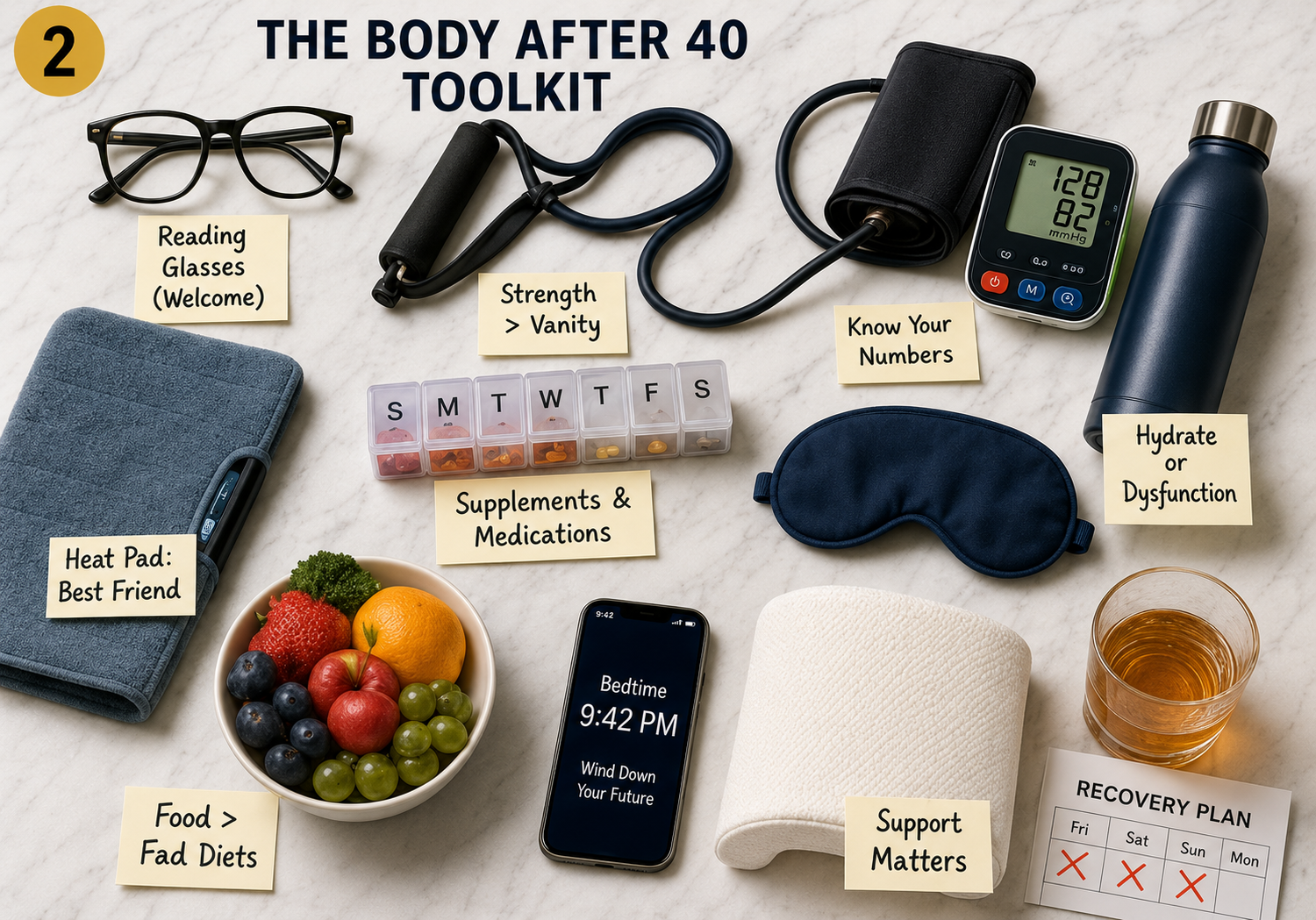
Lordy, Lordy, My Body After 40
Forty does not make the Black body biologically defective. It reveals what can happen when normal aging collides with abnormal exposure.
This evidence-rich guide examines how metabolism, muscle, sleep, hormones, cardiovascular health, cancer risk, cognition, and healthcare use change during midlife. It also explains why Black women and men may encounter these changes earlier or more severely because of psychosocial stress, unequal care, delayed diagnosis, and cumulative physiological strain.
With practical screening guidance, reference ranges, cancer and dementia considerations, and strategies for protecting health after 40, this article turns midlife anxiety into informed action—with just enough humor to help the medicine go down.
KonCite · Investigative Public Intelligence
Lordy, Lordy,My Body After 40
Why midlife hits Black bodies differently—and what hormones, muscle, sleep, sex, stress, metabolism, cancer risk, cognition, and healthcare have been doing while we were busy handling everybody else’s emergency.
Forty did not arrive with a medical warning.
It arrived when sleeping “wrong” became an orthopedic event. It arrived when one cocktail required electrolytes, strategic silence, and the temporary cancellation of Saturday. It arrived when I stood up too quickly and briefly saw the administrative offices of heaven.
Nothing dramatic had happened. And yet, everything had changed.
The knees had opinions. The back had boundaries. The digestive system had revised its operating hours. Food that once entered the body quietly now demanded a full committee hearing. The body had not failed. It had simply stopped providing complimentary services.
That is the funny part.
The serious part is that Black adults do not enter midlife from the same physiological or institutional starting line as everyone else.
By 40, many Black adults are already carrying higher burdens of hypertension, diabetes, sleep disruption, kidney disease, cardiovascular strain, caregiving responsibility, occupational stress, medical distrust, and delayed diagnosis. Some cancers appear before the age at which routine screening systems begin searching for them. The conditions that increase dementia risk may already be active decades before anyone forgets a familiar name.
The body is aging. The environment has also been billing it for years.
Forty does not make the Black body biologically defective. It reveals what can happen when normal aging collides with abnormal exposure.
Race does not cause hypertension, diabetes, cancer, kidney failure, or dementia. Black skin does not manufacture disease. But Black people often live, work, age, seek treatment, and recover inside systems that distribute stress, environmental protection, preventive care, diagnostic attention, and treatment quality unequally.
Without that distinction, we risk describing racial inequality as though the body invented it.

Editorial illustration created for KonCite.
After 40, the Body Stops Covering for You
Aging does not begin on the 40th birthday. Muscle, metabolism, vascular function, reproductive hormones, bone remodeling, sleep architecture, and tissue recovery change across adulthood.
But somewhere around midlife, the body becomes less willing to hide the arrangement.
You may maintain approximately the same weight while carrying less muscle and more abdominal fat. You may look healthy while blood pressure, glucose, cholesterol, kidney markers, or sleep quality begin moving in the wrong direction. You may continue performing at work while taking longer to recover from stress, illness, travel, exercise, alcohol, or insufficient sleep.
This is not a sudden metabolic betrayal. It is a reduction in reserve.
Muscle becomes easier to lose when we stop challenging it. Blood vessels stiffen. Sleep becomes less forgiving. Hormonal transitions alter temperature regulation, fat distribution, sexual function, mood, and recovery. Chronic diseases that developed silently begin producing numbers, medications, referrals, and follow-up appointments.
At 25, the body often behaves like a family member who quietly pays the overdue bill.
After 40, it forwards the invoice.
Midlife Black Health
The Body Has Been Keeping Receipts
Selected disparities that make ordinary midlife biology more consequential for many Black adults.
Vasomotor symptoms
Median duration reported among Black women with frequent menopausal vasomotor symptoms in the SWAN cohort.
Dementia burden
Black older adults are often estimated to have about twice the prevalence of Alzheimer disease or related dementias as White older adults.
Prostate-cancer mortality
Black men experience substantially higher prostate-cancer incidence and nearly twice the mortality of White men.
Breast-cancer mortality
Black women die from breast cancer at markedly higher rates despite similar overall incidence.
Routine mammography
Current USPSTF guidance begins biennial average-risk screening at 40; symptoms require diagnostic evaluation at any age.
Colorectal screening
Average-risk screening begins at 45, but bleeding, anemia, persistent bowel change, or weight loss should not wait.
PSA discussion for Black men
ACS recommends an informed discussion at 45 for Black men and at 40 for some men with strong family history.
Psychosocial stress
Stress can affect disease through biological activation, behavioral adaptation, and altered healthcare engagement.
After 40, One Appointment Starts Bringing Friends
Before 40, many adults still treat healthcare episodically. You become ill. You visit. You recover. You disappear.
After 40, one appointment begins reproducing.
The annual examination orders bloodwork. The bloodwork identifies elevated glucose. The glucose triggers a repeat test. The repeat test produces a diagnosis. The diagnosis creates a medication review, eye examination, kidney assessment, nutrition consultation, and three-month follow-up.
The blood-pressure reading leads to home monitoring. Home monitoring leads to medication. Medication leads to laboratory testing. Laboratory testing leads to another appointment to determine whether the first appointment worked.
After 40, the doctor’s visit stops being an event and becomes a franchise.
This does not mean the visits are unnecessary. Screening, monitoring, and follow-up can prevent disability and premature death. But they create healthcare labor.
A 20-minute appointment can require hours or days of scheduling, referrals, transportation, childcare, insurance calls, record retrieval, pharmacy communication, prior authorization, testing, and follow-up.
For Black patients, increased contact with medicine does not automatically produce increased trust or better control. More visits may also mean more opportunities for symptoms to be minimized, records to be fragmented, or the patient to become the unpaid coordinator of several specialists.
The cascade is not the problem. Fragmentation is. The problem begins when every clinician examines one organ while no one governs the whole person.

Editorial illustration created for KonCite.
Table 1
The Midlife Appointment Cascade
| Starting point | What the first visit may trigger | What often comes next |
|---|---|---|
| Elevated blood pressure | Repeat readings, home monitoring, kidney tests, medication | Dose adjustment, sleep-apnea assessment, recurring follow-up |
| Elevated A1C | Repeat testing, nutrition counseling, medication | Eye examination, kidney screening, laboratory monitoring |
| Breast symptom | Diagnostic mammography, ultrasound, biopsy | Surgery, oncology, surveillance, or reassurance |
| Elevated PSA | Repeat PSA, urology, examination, imaging | Biopsy discussion, surveillance, or treatment planning |
| Rectal bleeding | Blood count, GI referral, colonoscopy | Pathology, treatment, or repeat surveillance |
| Memory change | Cognitive assessment, medication review, laboratory testing | Imaging, neurology, family planning, longitudinal monitoring |
| Menopause symptoms | Symptom assessment, bleeding evaluation, treatment discussion | Medication adjustment and cardiovascular-risk review |
| Erectile dysfunction | Vascular, metabolic, medication, sleep, and hormone assessment | Treatment plus management of underlying disease |
Psychosocial Stress Is Not a Mood
Psychosocial stress is the sustained mental, emotional, behavioral, and physiological demand created when people must repeatedly anticipate, interpret, manage, or recover from threats within their social environment—especially when they lack the power or resources to remove the threat.
Those threats can include racism, financial instability, caregiving overload, unsafe or unstable work, medical distrust, neighborhood danger, repeated institutional navigation, family conflict, isolation, and the expectation that a person remain composed while absorbing harm.
In my research with Black veterans living with chronic kidney disease, participants described racism in healthcare as producing anger, hurt, headaches, distrust, hypervigilance, emotional suppression, and, for some, maladaptive coping. They did not describe racism as an abstract sociological concept. They described it as an experience that entered the mind, the body, the clinical encounter, and the decisions they made afterward.
Psychosocial stress can affect disease through three connected pathways.
The biological pathway
The body activates the sympathetic nervous system and stress-hormone systems to prepare for threat. Heart rate rises. Blood vessels constrict. Glucose becomes more available. Sleep becomes lighter. Muscles tense. Immune and inflammatory activity may shift.
The behavioral pathway
Chronic stress can influence sleep, eating, alcohol use, smoking, physical activity, medication adherence, and care-seeking. These behaviors can represent attempts to regulate a nervous system that rarely receives a clear signal that the danger has ended.
The healthcare pathway
Stress and discrimination can affect whether a person trusts the clinician, reports the symptom, returns for follow-up, fills the prescription, or believes that the system will protect them.
The stressor affects the body. Then it affects how the body reaches care.
The body can survive a crisis. It was not designed to treat Tuesday as a crisis for twenty years.
Figure 1
How Psychosocial Stress Enters the Body
- 1
Social Exposure
Racism, financial strain, caregiving, unsafe work, medical distrust, neighborhood disadvantage.
- 2
Threat Appraisal
Vigilance, fear, anger, rumination, helplessness, emotional suppression.
- 3
Biological Activation
Stress-hormone signaling, sympathetic activation, elevated pressure, disturbed sleep, inflammatory activity.
- 4
Behavioral Adaptation
Irregular eating, reduced exercise, substance use, missed care, medication inconsistency, withdrawal.
- 5
Cumulative Load
Insulin resistance, vascular injury, abdominal fat, immune dysregulation, impaired recovery.
- 6
Disease Expression
Hypertension, diabetes, cardiovascular and kidney disease, depression, cognitive decline, poorer recovery.
Black Women After 40: The Hot Flash Is Not the Whole Story
Perimenopause can begin years before the final menstrual period. Hormonal fluctuation can affect sleep, mood, cognition, menstrual bleeding, temperature regulation, sexual comfort, urinary function, bone turnover, body composition, and cardiovascular risk.
The public conversation often reduces this transition to hot flashes. That is like describing a hurricane as “some wind.”
In the Study of Women’s Health Across the Nation, frequent vasomotor symptoms lasted a median of 7.4 years overall. Black women experienced the longest median duration—approximately 10.1 years—compared with 6.5 years among White women, 5.4 years among Chinese women, and 4.8 years among Japanese women. Greater stress was associated with longer symptom duration.
For some Black women, perimenopause is not a season. It is a federal appointment.
Longer symptoms matter because night sweats and sleep disruption do not remain in the bedroom. They can affect blood pressure, insulin sensitivity, cognition, mood, work performance, and caregiving capacity.
Black women may also enter perimenopause with higher burdens of hypertension, diabetes, obesity, and chronic psychosocial stress. The hormonal transition does not create every risk. It may collide with risks already operating.
The hot flash gets the joke. The heart, vessels, bones, sleep, and metabolism carry the invoice.
Breast Cancer May Arrive Before the Calendar Is Ready
The USPSTF recommends biennial screening mammography for average-risk women from ages 40 through 74. But 40 is a screening threshold. It is not a biological starting line.
Black women are more likely to develop breast cancer at younger ages and remain substantially more likely than White women to die from it. They are also disproportionately affected by aggressive subtypes, including triple-negative breast cancer.
A 37-year-old Black woman with a new breast mass does not need to be told that routine screening starts at 40. She needs diagnostic evaluation.
Screening looks for disease in people without symptoms. Diagnostic evaluation investigates an existing symptom. Risk-based surveillance begins earlier or occurs more often because risk is elevated.
The body does not check the insurance manual before growing a tumor.
A screening mammogram may qualify as preventive care. Diagnostic imaging after a lump, discharge, skin change, or abnormal result may involve different insurance rules and patient costs. Preventive care may be free. Finding out why you felt the lump may still generate a bill.

Editorial illustration created for KonCite.
Black Men After 40: Several Departments Are Reporting
Black men often enter their 40s carrying cardiovascular risk that began much earlier.
Hypertension, diabetes, sleep apnea, kidney disease, chronic stress, and delayed preventive care can influence energy, sexual function, cognition, and physical endurance.
Fatigue is not automatically low testosterone. Erectile dysfunction is not simply an embarrassing bedroom problem. And waking to urinate three times each night should not automatically become a personality trait.
Erections Can Be Cardiovascular Correspondence
Erectile dysfunction can reflect vascular disease, diabetes, hypertension, medication effects, sleep apnea, depression, neurological disease, hormonal disorders, or relational and psychological stress.
After 40, the penis may become the first department willing to disclose that the vascular system is underperforming.
That does not mean every erection problem predicts a heart attack. It means new or persistent erectile dysfunction deserves a broader assessment than an online testosterone advertisement.
The Prostate Conversation May Need to Begin Earlier
Black men are more likely to develop prostate cancer and are approximately twice as likely as White men to die from it. Population-level risk does not mean every Black man requires identical testing, but it does mean average-risk guidance may not fully represent the individual sitting in the examination room.
The American Cancer Society recommends beginning the informed screening discussion at age 45 for Black men and at age 40 for men with more than one first-degree relative diagnosed at an early age.
Earlier discussion does not mean automatic biopsy or treatment. PSA testing can produce false alarms, overdiagnosis, unnecessary procedures, and treatment-related harm. But avoiding the conversation entirely also has consequences.
A guideline written for the average man can become a late invitation for the man whose risk was never average.
PSA must be interpreted over time and in context. Infection, benign prostate enlargement, recent procedures, ejaculation, medications, age, family history, symptoms, and changes from prior values can all affect interpretation.
PSA is not a pregnancy test for prostate cancer. It does not simply say yes or no.

Editorial illustration created for KonCite.
Your Brain Is Also Turning 40
Dementia is usually diagnosed later in life. Its risk architecture may begin decades earlier.
Hypertension, diabetes, stroke, sleep apnea, hearing loss, depression, smoking, inactivity, traumatic brain injury, and social isolation can influence later cognitive health. Many of these conditions are already inequitably distributed by midlife.
Black older adults are frequently estimated to be approximately twice as likely as White older adults to live with Alzheimer disease or another dementia. The exact size of the disparity varies across studies and measurement methods, and the difference should not be interpreted as evidence of an inherently defective Black brain.
Cardiovascular disease, education, environmental exposure, socioeconomic conditions, discrimination, diagnostic access, and quality of care all contribute to the observed burden.
Alzheimer disease may announce itself in old age, but hypertension, diabetes, poor sleep, stroke risk, and chronic stress may have been preparing the room since midlife.
Black families also frequently carry the burden before the diagnosis receives a name. They become transportation systems, medication managers, financial monitors, historians, care coordinators, and behavioral interpreters while waiting for a formal evaluation.
We joke about walking into a room and forgetting why. That is usually distraction, stress, or ordinary retrieval failure.
But getting lost in a familiar neighborhood, repeatedly missing payments, forgetting medication, asking the same question within minutes, or losing the ability to complete familiar tasks requires evaluation.
Forgetting why you entered the room is human. Forgetting how to leave your neighborhood deserves attention.
Not every cognitive change is dementia. Depression, thyroid disease, medication effects, sleep disorders, hearing loss, vitamin deficiency, infection, stroke, and other medical conditions can affect cognition. That is precisely why assessment matters.

Editorial illustration created for KonCite.
Table 2
Your Midlife Numbers: Reference Ranges and Risk Zones
A result is not a diagnosis. Trends, symptoms, medications, laboratory methods, and clinical context matter.
| Measure | Common lower-risk/reference range | Watch zone | Clinical threshold or concern | What it means |
|---|---|---|---|---|
| Blood pressure | Below 120/80 mm Hg | 120–129 and below 80 | Stage 1: 130–139 or 80–89; Stage 2: ≥140 or ≥90 | Requires accurate technique and usually repeated readings. Very high pressure with concerning symptoms requires urgent care. |
| A1C | Below 5.7% | 5.7%–6.4% | 6.5% or higher | Reflects average glucose exposure over roughly 2–3 months; diagnosis often requires confirmation. |
| Fasting glucose | Below 100 mg/dL | 100–125 mg/dL | 126 mg/dL or higher | Interpret with symptoms, medications, acute illness, and repeat testing. |
| 2-hour oral glucose | Below 140 mg/dL | 140–199 mg/dL | 200 mg/dL or higher | May reveal impaired glucose handling not seen on fasting testing. |
| PSA | No universal cancer-free cutoff | Trend, age, symptoms, family history, prostate size, medications | Elevated or rising value requires clinical assessment | PSA does not diagnose cancer by itself. ACS discussion begins at 45 for Black men and at 40 for some men with strong family history. |
| eGFR | Often ≥60 mL/min/1.73 m² | Declining trend or near 60 | Below 60 for at least 3 months may indicate CKD | Interpret with age, trend, clinical context, and urine albumin. |
| Urine ACR | Below 30 mg/g | 30–300 mg/g | Above 300 mg/g | Can identify kidney injury before filtration falls substantially. |
| Triglycerides | Below 150 mg/dL | 150–199 mg/dL | 200 or higher; ≥500 raises pancreatitis concern | Can reflect glucose dysregulation, alcohol, diet, medications, and genetics. |
| HDL cholesterol | Commonly favorable: >40 men; >50 women | Below those levels | Interpret with the entire risk profile | High HDL does not cancel high LDL, smoking, diabetes, or hypertension. |
| Bone density T-score | −1.0 or higher | −1.0 to −2.5 | −2.5 or lower | Fracture risk also depends on age, prior fracture, medications, falls, and other conditions. |
| Testosterone | Laboratory- and assay-specific | Borderline low | Symptoms plus repeatedly low morning levels | One random or afternoon test should not produce a diagnosis. |
| Hemoglobin | Laboratory-, age-, and sex-specific | Decline from baseline | Anemia requires investigation | Fatigue should not automatically be blamed on age, menopause, or stress. |
Table 3
Screening Age Is Not Symptom Age
| Condition | Routine or risk-based discussion | Symptoms that override the calendar |
|---|---|---|
| Breast cancer | Average-risk mammography begins at 40; earlier surveillance may apply to elevated risk. | New lump, nipple discharge, skin or nipple change, focal persistent change, or swollen nodes. |
| Prostate cancer | ACS discussion at 45 for Black men; age 40 for some men with strong family history. | Blood in urine or semen, urinary obstruction, unexplained bone pain, weight loss, or concerning examination. |
| Colorectal cancer | Average-risk screening begins at 45. | Rectal bleeding, iron-deficiency anemia, persistent bowel change, weight loss, or abdominal symptoms. |
| Dementia | No single population screening birthday guarantees detection. | Loss of function, getting lost, financial mistakes, medication errors, repeated questions, or major personality change. |
| Kidney disease | Risk-based blood and urine testing, especially with hypertension or diabetes. | Swelling, foamy urine, blood in urine, severe fatigue, major urine change, or uncontrolled pressure. |
| Diabetes | Routine risk-based screening; broad adult screening commonly begins by the mid-30s. | Excess thirst, frequent urination, unexplained weight loss, recurrent infections, or blurred vision. |
The calendar does not outrank the symptom.
What Actually Protects the Black Body After 40
The wellness section cannot end with “eat better, exercise, and reduce stress.” That advice may be technically correct and practically useless.
After 40, maintenance requires specificity.
Know your baseline
A person cannot monitor a trend they have never measured. Know or discuss blood pressure, glucose, cholesterol, kidney function and urine albumin, weight and waist trend, sleep quality, family cancer history, menopausal symptoms and abnormal bleeding, sexual-function changes, medication effects, psychosocial stress, mood, and any change in daily functioning.
Preserve muscle deliberately
Muscle is not merely aesthetic tissue. It supports glucose regulation, balance, bone protection, mobility, recovery, and independence. Adults should generally perform muscle-strengthening activity involving major muscle groups at least twice weekly, adjusted for medical conditions and physical ability.
Working a physically exhausting job is labor. It is not automatically progressive resistance training.
Build cardiovascular capacity
Walking, cycling, swimming, dancing, interval training, and other aerobic activity can improve blood pressure, insulin sensitivity, sleep, mood, cardiovascular fitness, and functional reserve. The goal is not punishment. It is capacity.
Treat sleep as a clinical issue
Loud snoring, witnessed breathing pauses, morning headaches, resistant hypertension, severe daytime sleepiness, or repeated nighttime awakenings deserve attention. Sleep apnea can affect blood pressure, heart rhythm, glucose regulation, cognition, sexual function, and safety.
After 40, “I only need five hours” is often a personality claim made by a nervous system requesting legal representation.
Manage psychosocial stress at three levels
Regulation includes therapy, prayer, meditation, exercise, emotional expression, rest, and supportive relationships. Protection includes boundaries, caregiving support, changing clinicians, financial planning, workplace accommodation, patient advocacy, and documentation. Structural correction includes safer workplaces, paid leave, reliable healthcare, antiracist clinical systems, environmental protection, community infrastructure, and fair policy.
A breathing exercise can calm the nervous system. It cannot negotiate a safer job, remove discrimination, or provide paid leave. Wellness must include regulation and protection.
Do not wait for a screening birthday when symptoms are present
A lump, bleeding, unexplained weight loss, persistent pain, cognitive decline, urinary obstruction, rectal bleeding, or major functional change deserves diagnostic evaluation regardless of age.
Prepare for the appointment
Bring a current medication list, home readings, a symptom timeline, family history, prior results, and the three questions that matter most.
Ask: What are we trying to rule out? What result would change the plan? When will I receive the result? What symptoms mean I should not wait? What is the next step if the test is normal but the problem continues?
Wellness after 40 includes what happens between appointments. It also includes how well we prepare for, understand, coordinate, and survive the appointments themselves.

Editorial illustration created for KonCite.
The Body Is Not the Enemy
The Black body after 40 is not a punchline, tragedy, or defective machine.
It is a body entering midlife with remarkable adaptive capacity and, too often, an unfair cumulative load.
The goal is not to fear aging. The goal is to stop confusing preventable damage with the natural cost of being Black.
Some changes require acceptance. Some require training. Some require medication. Some require diagnostic urgency. Some require rest. Some require a different physician. And some require changing the systems that keep instructing Black people to manage exposures no body was designed to absorb indefinitely.
Forty is not the age when the body falls apart. It is often the age when the body stops lying on our behalf.
It stops pretending the stress did not matter. It stops disguising the sleep debt. It stops covering for the blood pressure, the glucose, the skipped appointment, the grief, the alcohol, the sedentary year, the caregiving burden, and the symptom we hoped would disappear if we ignored it with enough confidence.
After 40, the body does not whisper less. We simply lose the privilege of pretending we did not hear it.
Lordy, lordy.
The body has entered evidence.
Sources and Notes
Evidence Behind the Body After 40
Peer-reviewed research, clinical recommendations, and public-health guidance supporting the article’s discussion of psychosocial stress, weathering, sleep, menopause, cancer screening, diabetes, blood pressure, kidney disease, and racial health inequities.
1 Racism in Healthcare Among Black Veterans With Kidney Disease Original Investigation · JAMA Network Open
Jenkins KA, Keddem S, Bekele SB, Augustine KE, Long JA. Perspectives on racism in health care among Black veterans with chronic kidney disease. JAMA Netw Open. 2022;5(5):e2211900. doi:10.1001/jamanetworkopen.2022.11900.
View source2 The Weathering Hypothesis Foundational Scholarship · Ethnicity & Disease
Geronimus AT. The weathering hypothesis and the health of African-American women and infants: evidence and speculations. Ethn Dis. 1992;2(3):207-221.
View source3 Stress, Adaptation, and the Pathway to Disease Foundational Stress Science · Archives of Internal Medicine
McEwen BS, Stellar E. Stress and the individual: mechanisms leading to disease. Arch Intern Med. 1993;153(18):2093-2101.
View source4 Racial Differences in Weathering and Psychosocial Stress CARDIA Study · American Journal of Public Health
Forrester SN, Taylor JL, Whitfield KE, Thorpe RJ Jr. Racial differences in weathering and associations with psychosocial stress: the CARDIA study. Am J Public Health. 2019;109(4):615-621.
View source5 Duration of Menopausal Vasomotor Symptoms Longitudinal Study · JAMA Internal Medicine
Avis NE, Crawford SL, Greendale G, et al. Duration of menopausal vasomotor symptoms over the menopause transition. JAMA Intern Med. 2015;175(4):531-539.
View source6 Breast Cancer Screening Recommendation National Clinical Recommendation · USPSTF
US Preventive Services Task Force. Screening for breast cancer: recommendation statement. JAMA. 2024.
View guideline7 Prostate Cancer Early-Detection Recommendations Clinical Guidance · American Cancer Society
American Cancer Society. Recommendations for prostate cancer early detection. Current clinical-guidance web resource.
View guideline8 Colorectal Cancer Screening Recommendation National Clinical Recommendation · USPSTF
US Preventive Services Task Force. Screening for colorectal cancer: recommendation statement. JAMA. 2021;325(19):1965-1977.
View source9 Standards of Care in Diabetes Annual Clinical Guideline · American Diabetes Association
American Diabetes Association Professional Practice Committee. Standards of Care in Diabetes. Current annual clinical guideline.
View guideline10 Blood Pressure Categories and Home Monitoring Patient and Clinical Guidance · American Heart Association
American Heart Association. Blood pressure categories and home blood-pressure monitoring guidance.
View guidance11 Allostatic Load and Racial Disparities in Mortality Population Health Study · Journal of the National Medical Association
Duru OK, Harawa NT, Kermah D, Norris KC. Allostatic load burden and racial disparities in mortality. J Natl Med Assoc. 2012;104(1-2):89-95.
View source12 Racism as a Determinant of Health Systematic Review and Meta-Analysis · PLOS ONE
Paradies Y, Ben J, Denson N, et al. Racism as a determinant of health: a systematic review and meta-analysis. PLoS One. 2015;10(9):e0138511.
View source13 Discrimination and Racial Health Disparities Review Article · Journal of Behavioral Medicine
Williams DR, Mohammed SA. Discrimination and racial disparities in health: evidence and needed research. J Behav Med. 2009;32(1):20-47.
View source14 Discrimination and Cardiovascular Health in Black Americans Contemporary Review · Current Cardiology Reports
Merritt CC, Bonham VL, Green BL. Discrimination and cardiovascular health in Black Americans. Curr Cardiol Rep. 2024;26(5):401-410.
View source15 Racism-Related Vigilance and Sleep Difficulty Sleep and Racial Stress Study · Race and Social Problems
Hicken MT, Lee H, Ailshire J, Burgard SA, Williams DR. “Every shut eye, ain’t sleep”: racism-related vigilance and disparities in sleep difficulty. Race Soc Probl. 2013;5(2):100-112.
View source
You didn’t deserve that
At eight years old, I learned that home could become dangerous without warning. Decades later, becoming the father of two sons forced me to reconsider what happened, what my body carried forward, and why a parent’s refusal to remember does not erase a child’s experience.
This personal investigation moves from childhood abuse and parental addiction to the public-health evidence on adverse childhood experiences, trauma recovery, and intergenerational conditioning. It also examines how survivors can build homes where correction does not become humiliation, authority does not depend on fear, and children never have to become weapons to feel safe.
KonCite · Personal Investigation
You Didn’t Deserve That Decoding Childhood Emotional Abuse After Becoming a Parent
I believed the trauma ended when I stopped being afraid of my father. Becoming the father of two sons taught me that fearlessness and healing are not the same thing—and that childhood abuse is never only a private family matter.
Editorial reconstruction: This conceptual image represents the article’s themes of childhood memory, fatherhood, protection, and the interruption of generational harm. It does not depict the exact historical events described.
The Bathroom Floor
I was eight years old when my father taught me that home could become dangerous without warning.
My mother had left for one of the three jobs she worked to keep our household afloat. I was in my father’s bathroom, standing in front of the medicine cabinet, looking for a Band-Aid. He walked in, saw me there, stood behind me, and slapped me with the full force of a grown man.
My temple struck the bottom corner of the cabinet. I blacked out.
When I regained consciousness, I was alone. He had left me there. I do not remember anyone asking whether I had suffered a concussion. I do not remember him returning in panic, kneeling beside me, or showing horror at what his hand had done. I remember learning that the adult responsible for protecting me could knock me unconscious and walk away.
The physical act lasted seconds. The lesson lasted much longer: danger did not always enter through the front door. Sometimes it already had a key.

Six Months Later, My Mother Left
Approximately six months later, in the middle of a snowstorm, my mother left him. Leaving changed the household, but it did not instantly undo what my body had learned inside it.
The fear had already been installed. Alcohol and drug use remained part of the landscape of my childhood, and his instability continued to cross the boundaries that separation was supposed to create. Years later, when I played high school basketball, he became so intoxicated and disruptive that he was banned from attending my games.
What should have been a place where I searched the stands for a father’s pride became another place where I searched for danger. The abuse had followed me out of the house and into the gymnasium.

I Was Training for War
When I was ten, someone asked what I wanted for Christmas. I said a weight set. I received a Hulk Hogan weight set and began lifting every day.
Most children lift weights because they want to become athletes, imitate a hero, or see muscles forming in the mirror. I was preparing to fight my father.
From ten to thirteen, I trained because I believed childhood survival might eventually require me to overpower a grown man. Every repetition carried a private promise: one day, if he put his hands on me again, I would be strong enough to stop him.
The adaptation made sense inside the environment. The problem was not that the child built strength. The problem was that a child believed becoming a weapon was the only reliable path to safety.

Figure 1
How a Child Adapts to an Unsafe Parent
The adaptation is often an intelligent response to danger. Harm develops when a childhood survival strategy remains active after the original threat has passed.
| Childhood adaptation | Immediate protective function | Possible adult expression | Corrective direction |
|---|---|---|---|
| Hypervigilance | Anticipates unpredictable danger | Scanning rooms, sleep difficulty, rapid conflict activation | Learn present-day safety cues and grounding |
| Emotional suppression | Reduces punishment for showing distress | Detachment, shame, difficulty asking for help | Develop emotional language and safe disclosure |
| Physical preparation | Counters helplessness and vulnerability | Defensiveness, compulsive strength, readiness to fight | Expand safety beyond combat and control |
| Overachievement | Creates predictability and approval | Perfectionism, work addiction, fear of failure | Separate worth from performance |
| People-pleasing | Reduces anger, rejection, or abandonment | Weak boundaries and excessive responsibility | Practice limits without guilt |
| Withdrawal | Reduces exposure and humiliation | Isolation, distrust, emotional distance | Build selective, reciprocal connection |
Interpretation: These patterns are not diagnoses. The same behavior can have many causes, and survivors do not all adapt in the same way.
The Night I Stopped Being Afraid
The moment came during the summer before high school. At approximately 1:30 in the morning, my father dragged me out of bed. He was drunk, raging, and demanding what he called a family meeting. He pulled me through the house and slammed my back into a doorframe.
I bounced forward with my fist closed and my body loaded. Years of fear, weightlifting, humiliation, and preparation gathered behind one arm.
My mother grabbed my arm and said, “No. The Bible says honor your mother and father.”
I answered, “The Bible also says fathers, provoke not your sons.” I knew the Word because I spent so much time inside. Scripture had become one of the few authorities available to me that stood above his anger.
I watched his bloodshot eyes widen. I smelled the liquor on his breath. In that moment, I knew I was no longer afraid of him.
For years, I treated that night as the ending. I believed that once I destroyed the fear, I had destroyed the trauma. I had not. I changed the balance of power between my father and me. I had not yet changed what his violence had taught my body.
I destroyed the fear. I did not destroy the trauma.
Fearlessness Is Not Healing
Trauma is often described through fear because fear is visible. A child trembles, hides, freezes, cries, or avoids. But fear is only one of the ways childhood abuse reorganizes a life.
A child living with an intoxicated, unpredictable, or violent parent does not simply experience isolated incidents. He adapts to an environment. He listens for footsteps, studies facial expressions, tracks the front door, and calculates whether silence will make him safer. Those adaptations can become so practiced that they eventually look like personality.
Hypervigilance may look like exceptional awareness. Emotional suppression may look like maturity. Refusing help may look like independence. Constant preparation may look like discipline. These strategies can protect children inside environments they cannot control, yet the body may continue using them after the original danger has passed.
My story was personal. The pattern was not rare. Adverse childhood experiences include abuse, neglect, household substance misuse, and family instability. Across studies, cumulative exposure is associated with higher odds of depression, suicidality, harmful substance use, interpersonal difficulty, and several chronic health outcomes. These associations do not mean every survivor follows one path. They mean childhood safety is a population-health issue rather than a private family concern.
The bathroom floor does not remain in the bathroom. Schools, clinics, workplaces, relationships, and future families eventually receive the consequences.
Evidence panel
Childhood Abuse Is a Societal Issue
The bathroom floor does not remain in the bathroom. Education, healthcare, employment, relationships, and future families eventually carry the consequences.
| Evidence domain | What the literature shows | Why it matters |
|---|---|---|
| Cumulative exposure | Meta-analyses find progressively higher risks across mental health, substance use, violence, and physical health as adversity accumulates. | Prevention and treatment must address accumulation, not only single incidents. |
| Emotional abuse | Psychological maltreatment is independently associated with depression, anxiety, post-traumatic symptoms, shame, and relational difficulty. | The absence of visible injury does not mean the absence of durable harm. |
| Household substance misuse | Parental alcohol or drug misuse increases unpredictability, impaired supervision, conflict exposure, and maltreatment risk. | Addiction treatment is also child-safety policy. |
| Education | Traumatic stress can disrupt sleep, attention, emotional regulation, attendance, and classroom behavior. | Schools often see the adaptation before anyone names the source. |
| Adult health | Large observational studies associate childhood adversity with later cardiovascular, metabolic, pain, and mental-health burdens. | Childhood protection is a long-term health intervention. |
| Intergenerational risk | Maltreatment can recur across generations, but safe, stable, nurturing relationships and treatment can interrupt transmission. | History changes risk; it does not determine destiny. |
Associations do not mean every survivor develops illness or repeats abuse. Risk is probabilistic, not destiny.
My Sons Reopened the Case
I did not fully understand what had happened to me until I became the father of two sons.
I had always known the facts: the cabinet, the blackout, the liquor, the doorframe, the basketball games, and the years I spent preparing to fight. Parenthood changed the scale of those memories.
When I look at my boys, I see how small children actually are. I see their softness, dependence, humor, confusion, and innocence. Even when they are loud, emotional, disobedient, exhausted, or difficult, I do not stop recognizing them as children. Their behavior does not erase my obligation to regulate mine.
The child I was raising became evidence for the child I had been. I could respond patiently to a mistake and recognize that patience had always been possible. I could apologize after speaking too sharply and recognize that accountability never weakened a parent. I could watch my sons sleep and understand that protection should never have required negotiation.
Parenthood did not create the wound. It removed the explanations that had once concealed its severity.
He Said He Did Not Remember
In my 40s, I finally confronted my father. I wanted acknowledgment. I wanted him to understand that what he may have experienced as intoxicated episodes became the organizing memories of my childhood.
He said he did not remember. He said he had blacked out when he drank. He refused to apologize.
That answer crushed me. I had carried the memories for a lifetime, while he claimed not to carry them at all. He lost the night. I lost the safety. He forgot the blow. I built my body around the possibility of the next one.
Alcohol-related amnesia may explain impaired recall. It does not erase responsibility. A person does not need perfect memory to say: I believe you. I was the adult. You were the child. My intoxication does not excuse what I did. You did not deserve it. I am sorry.
Memory is not the price of admission for remorse. His refusal forced me to accept that healing could no longer depend on his willingness to become the father I needed.
He lost the night. I lost the safety.
You Didn't Deserve That
The title of this piece is not sentimental reassurance. It is a correction of the child’s original logic.
The adult is supposed to love me. The adult is hurting me. A child rarely concludes that the parent lacks sobriety, emotional regulation, judgment, or moral courage. The child is more likely to conclude that something about the child caused the treatment.
This is how abuse migrates from an event into an identity. The parent commits the violence. The child becomes the explanation.
I was eight years old. I was looking for a Band-Aid. He was the adult. His intoxication did not make me responsible. His rage did not prove I was disrespectful. No rule, mistake, Scripture, family hierarchy, or cultural expectation justified rendering a child unconscious and leaving him alone.
Healing begins by returning responsibility to its proper owner.
Table 1
What Emotional Abuse Teaches—and What Healing Must Correct
| Abusive message | What the child may learn | Adult consequence | Corrective truth |
|---|---|---|---|
| “You made me angry.” | I cause other people’s violence. | Excessive guilt and people-pleasing. | Adults are responsible for regulating their behavior. |
| “Stop being weak.” | Emotion invites punishment. | Suppression and shame. | Emotion is information, not failure. |
| “You are disrespectful.” | Disagreement is dangerous. | Conflict avoidance or aggression. | Boundaries and disagreement can remain safe. |
| “No one will believe you.” | Truth is powerless. | Silence and isolation. | Safe witnesses and evidence matter. |
| “I do not remember.” | My memory is unreliable. | Self-doubt and rumination. | Another person’s amnesia does not erase the event. |
| “That was discipline.” | Fear equals respect. | Harsh parenting reflexes. | Discipline teaches; abuse terrorizes. |
What Research Says Helps Adults Heal
Recovery does not require forgetting, minimizing the abuse because the parent struggled with addiction, reconciling with the person who caused harm, or forgiving on someone else’s timetable. It requires treatment that matches the survivor’s symptoms, preferences, culture, relationships, and readiness.
Trauma-focused psychotherapies have the strongest evidence for post-traumatic stress symptoms. Cognitive Processing Therapy helps survivors identify and challenge “stuck points” involving guilt, shame, trust, power, safety, and intimacy. It can address beliefs such as: I should have stopped him; I cannot trust anyone; strength means never needing help; conflict always becomes violence; love requires tolerating harm.
Prolonged Exposure helps survivors gradually approach memories, emotions, and safe situations they have avoided because those reminders trigger distress. The goal is not to force suffering. It is to help the nervous system learn that remembering is not the same as being trapped there again.
EMDR pairs structured trauma recall with bilateral stimulation and can reduce distress attached to traumatic memories. It is supported by major treatment guidelines, although no single approach is universally superior and fit matters.
Skills-based treatment can help with grounding, emotion regulation, sleep, anger, dissociation, and relationship safety. Group therapy and peer support can reduce shame and isolation. Medication may help depression, anxiety, nightmares, sleep disturbance, or PTSD symptoms, but medication does not process the trauma by itself.
Survivors of chronic childhood abuse may need stabilization and trust-building before direct trauma processing. A trauma-informed clinician should understand addiction in family systems, masculinity, race, faith, discipline, and the cultural pressure to convert pain into silence.
Table 2
Evidence-Based Trauma Treatment Options
These approaches should be selected with a qualified trauma-informed clinician according to symptoms, readiness, preferences, culture, and co-occurring conditions.
| Approach | Primary target | What treatment involves | Evidence position | Important limitation |
|---|---|---|---|---|
| Cognitive Processing Therapy | Guilt, shame, trauma beliefs | Structured cognitive work, practice assignments, examination of stuck points | Strong evidence for PTSD | Requires engagement with painful beliefs |
| Prolonged Exposure | Avoidance and fear | Imaginal exposure and gradual return to safe avoided situations | Strong evidence for PTSD | Must be paced and delivered by a trained clinician |
| EMDR | Distressing trauma memories | Structured recall with bilateral stimulation | Guideline-supported | Not every patient prefers or responds to it |
| Skills/stabilization | Dysregulation, sleep, anger, dissociation | Grounding, distress tolerance, emotion regulation, safety planning | Supportive/adjunctive | May not fully process memories alone |
| Group or peer support | Isolation and shame | Shared learning, validation, skills, connection | Helpful for selected patients | Group safety and fit matter |
| Medication | Depression, anxiety, nightmares, sleep or PTSD symptoms | Pharmacologic symptom management | Symptom-specific evidence | Does not process trauma by itself |
This educational table is not individual medical advice. Immediate danger, suicidal thinking, severe substance use, or inability to function requires prompt professional assessment.
Not Every Pattern Is a Generational Curse
I do not believe everything inherited across families is a generational curse. Some things are generational conditioning.
Conditioning is what happens when repeated behavior becomes familiar enough to feel natural: harsh tones inherited as preparation, fear mistaken for discipline, silence mistaken for peace, emotional absence mistaken for masculinity, and the refusal to apologize mistaken for authority.
Calling every pattern a curse can make it sound mystical, fixed, or externally controlled. Conditioning names the learning. What was learned can be identified, interrupted, replaced, and repaired.
I do not need to repeat my father’s tone because I heard it. I do not need to treat fear as respect because fear controlled me. I do not need to make my sons hard by becoming the first thing they must survive.
Figure 2
How a Parent Interrupts Generational Conditioning
Trigger
A child’s behavior activates the parent’s history.
Pause
Notice the body, memory, and urge before acting.
Separate
Identify what belongs to the present child and what belongs to the past.
Respond
Use limits without humiliation, intimidation, or fear.
Repair
Acknowledge harm when the parent gets it wrong.
Repeat
Cycle-breaking becomes a practice, not a declaration.
What Cycle-Breaking Looks Like at Home
Cycle-breaking parents will still become tired, impatient, and imperfect. The distinction is not perfection. It is the willingness to pause, regulate, and repair.
It means asking: Am I responding to my child, or am I responding to what my child awakened in me? It means separating behavior from identity, maintaining limits without humiliation, refusing to use fear as evidence of respect, and allowing boys tenderness without treating emotion as weakness.
It also means apologizing. A parent can say: I was wrong. You did not deserve that tone. The rule still stands, and it was my job to manage my frustration. You are safe with me. We can repair this.
An apology does not surrender parental authority. It shows children that love and accountability can occupy the same room.
When alcohol or drug use is part of the family history, cycle-breaking also requires direct protection: sober caregiving, treatment, boundaries around intoxicated adults, and refusal to let “I do not remember” become the family accountability policy.
What I Give My Sons
I cannot change the bathroom. I cannot stop the hand before it lands. I cannot make my father remember. I cannot force him to apologize.
But I can decide what enters my sons’ inheritance.
They will inherit my stories, but they do not have to inherit my fear. They may inherit my strength, but they do not have to learn strength through violence. They will see me become frustrated, but they will not become containers for my rage. They will make mistakes, but their mistakes will not become permission for cruelty.
They will know boundaries. They will also know repair. They will hear me apologize. They will learn that a father can hold authority without turning the home into a place of threat.
The child I was spent years building a body capable of protecting himself from his father. The father I am now teaches his sons that they do not need protection from me.
I once believed healing began when I stopped being afraid. Now I understand that healing is believing the child, naming the violence, grieving what never came, accepting that an apology may never arrive, and allowing tenderness to become a form of power.
My sons will never have to build themselves into weapons to feel safe in my presence.
I did not deserve that. Neither did you. And our children do not have to inherit what we survived.
Sources and notes
Evidence Behind the Personal Investigation
Peer-reviewed research and authoritative clinical guidance supporting the article’s discussion of adverse childhood experiences, emotional abuse, intergenerational risk, trauma treatment, and cycle-breaking parenting.
1The original ACE studyPeer-reviewed or authoritative source+
Felitti VJ, Anda RF, Nordenberg D, et al. Relationship of childhood abuse and household dysfunction to many of the leading causes of death in adults. Am J Prev Med. 1998;14(4):245-258.
View source ↗2Multiple ACEs and health outcomesPeer-reviewed or authoritative source+
Hughes K, Bellis MA, Hardcastle KA, et al. The effect of multiple adverse childhood experiences on health: a systematic review and meta-analysis. Lancet Public Health. 2017;2(8):e356-e366.
View source ↗3ACE outcomes across the life coursePeer-reviewed or authoritative source+
Petruccelli K, Davis J, Berman T. Adverse childhood experiences and associated health outcomes: a systematic review and meta-analysis. Child Abuse Negl. 2019;97:104127.
View source ↗4Long-term consequences of child maltreatmentPeer-reviewed or authoritative source+
Norman RE, Byambaa M, De R, Butchart A, Scott J, Vos T. The long-term health consequences of child physical abuse, emotional abuse, and neglect: a systematic review and meta-analysis. PLoS Med. 2012;9(11):e1001349.
View source ↗5Childhood adversity and adult psychopathologyPeer-reviewed or authoritative source+
Kessler RC, McLaughlin KA, Green JG, et al. Childhood adversities and adult psychopathology in the WHO World Mental Health Surveys. Br J Psychiatry. 2010;197(5):378-385.
View source ↗6Intergenerational transmission of maltreatmentPeer-reviewed or authoritative source+
Madigan S, Cyr C, Eirich R, et al. Testing the cycle of maltreatment hypothesis: meta-analytic evidence of the intergenerational transmission of child maltreatment. Dev Psychopathol. 2019;31(1):23-51.
View source ↗7Parental PTSD and offspring outcomesPeer-reviewed or authoritative source+
Leen-Feldner EW, Feldner MT, Knapp A, Bunaciu L, Blumenthal H, Amstadter AB. Offspring psychological and biological correlates of parental posttraumatic stress: review of the literature and research agenda. Clin Psychol Rev. 2013;33(8):1106-1133.
View source ↗8Cognitive Processing TherapyPeer-reviewed or authoritative source+
Resick PA, Monson CM, Chard KM. Cognitive Processing Therapy for PTSD: A Comprehensive Manual. New York, NY: Guilford Press; 2017.
View source ↗9Prolonged Exposure therapyPeer-reviewed or authoritative source+
Foa EB, Hembree EA, Rothbaum BO, Rauch SAM. Prolonged Exposure Therapy for PTSD: Emotional Processing of Traumatic Experiences. 2nd ed. New York, NY: Oxford University Press; 2019.
View source ↗10PTSD treatment guidelinePeer-reviewed or authoritative source+
American Psychological Association. Clinical Practice Guideline for the Treatment of Posttraumatic Stress Disorder in Adults. 2017.
View source ↗11VA/DoD PTSD clinical practice guidelinePeer-reviewed or authoritative source+
US Department of Veterans Affairs; US Department of Defense. VA/DoD Clinical Practice Guideline for Management of Posttraumatic Stress Disorder and Acute Stress Disorder. 2023.
View source ↗12Preventing adverse childhood experiencesPeer-reviewed or authoritative source+
Centers for Disease Control and Prevention. Preventing Adverse Childhood Experiences: Leveraging the Best Available Evidence. Atlanta, GA: National Center for Injury Prevention and Control; 2019.
View source ↗Editorial note: Population-level associations do not predict one survivor’s future. Treatment selection should be individualized by a qualified clinician, and web-based guidelines should be checked for updates at publication.
