


The Father at the Center, Outside the Circle
Fathers can be surrounded by children, partners, relatives, coworkers, faith communities, and responsibility while having nowhere safe to place fear, exhaustion, grief, or despair. Depression does not grow only inside an individual mind. It also grows inside support systems that never learned how to hold fathers.
KonCite · Father Mental Health Investigation
The Father at the Center, Outside the Circle Why fathers can be surrounded by family, community, and responsibility—and still have nowhere to place the weight.
Fathers are often treated as providers of stability rather than recipients of care. This investigation examines paternal depression, psychosocial support, emotional isolation, divorce, parenting pressure, and what families, healthcare systems, employers, and communities must build before pressure becomes crisis.
Content note: This article discusses depression, suicide, and psychiatric crisis. In the United States, call or text 988 for immediate crisis support. If someone has an active plan or cannot remain safe, stay with them and seek emergency help.
The father was not alone. That was the problem.
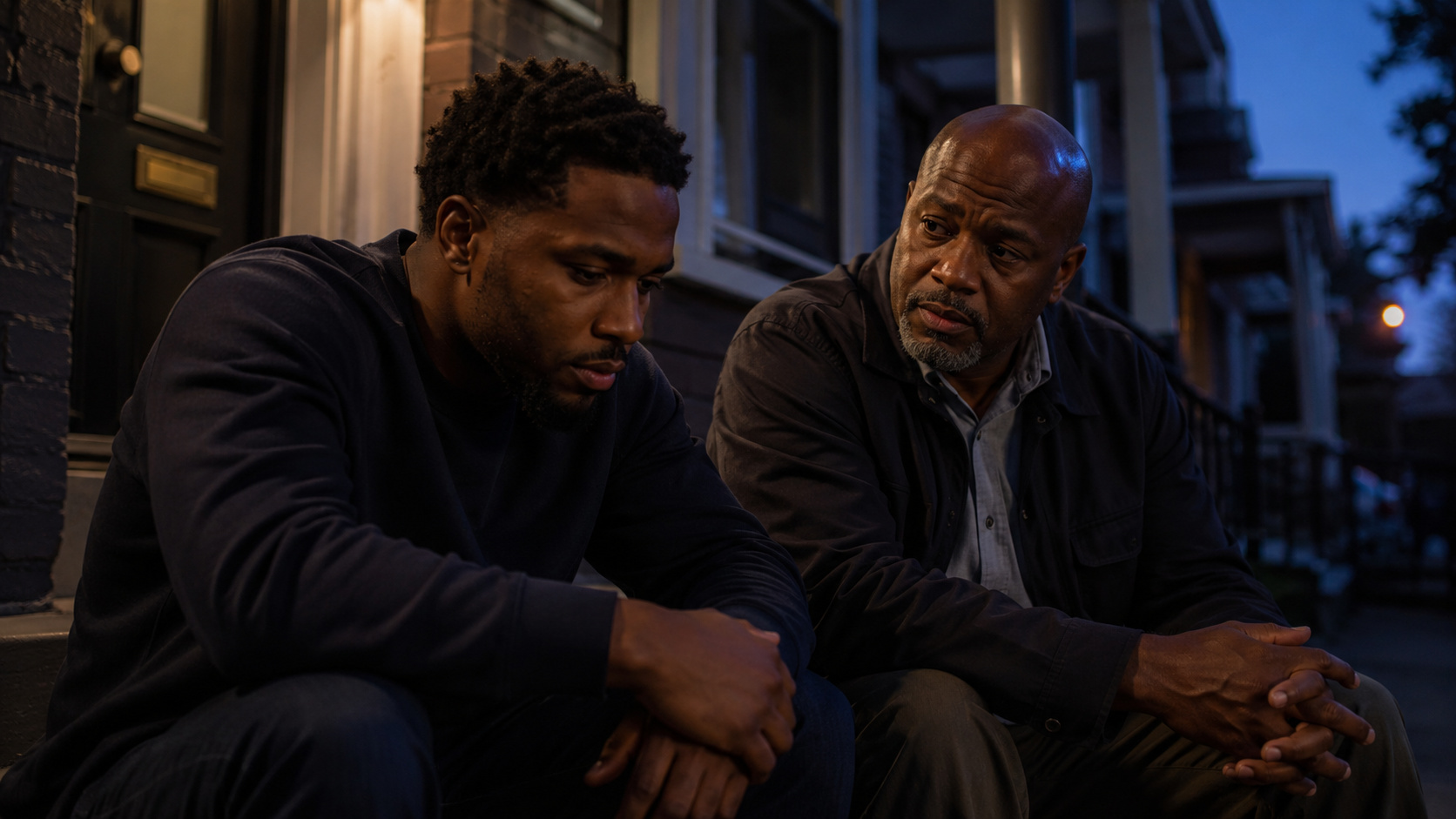
He sat in the center of a room full of families. Children moved between tables. Adults traded updates, advice, schedules, food, and reassurance. Nobody would have described the gathering as lonely. Yet the open chair across from him held the most honest fact in the building: no one had arrived to ask what carrying everyone else had cost him.
Fathers answer questions all day.
Did you make the payment? Did you confirm the pickup? Did you call the school? Did you pack the medicine? Did you fix the car? Did you handle the appointment? Is your child okay? Is the family okay?
The questions are often necessary. Together, they reveal an arrangement. Dad remains visible as a function long after he becomes invisible as a person.
That invisibility exists inside a documented national crisis of parental strain. In 2023, 33% of parents reported high levels of stress in the previous month, compared with 20% of other adults. Nearly half of parents—48%—said their stress felt completely overwhelming on most days, compared with 26% of other adults.1
Yet the broad category of parent can conceal as much as it reveals. It does not tell us who gets asked about mental health. It does not tell us whose symptoms are recognized. It does not tell us whether the father in the pediatric waiting room is treated as a parent who may need care or merely as transportation, insurance information, emergency contact, income, discipline, and support for everyone else.
A man can occupy the center of a family while remaining outside its circle of care.
The center is not the same as the circle
Families often organize themselves around what a father can do. His labor may stabilize the household. His income, transportation, discipline, protection, scheduling, repairs, caregiving, and problem-solving can make him central to daily life. But functional centrality does not guarantee emotional inclusion.
A person can occupy the middle of a system without belonging to its circle of care. The father at the center may be the person everyone calls, yet have no one he trusts enough to call. He may be praised as dependable while learning that the price of dependability is never appearing to need anything.
That arrangement can survive for years because usefulness often conceals distress. The father continues working. He keeps the children safe. He attends the event. He handles the bill. He answers, “I’m good,” because the conversation rarely creates room for a different answer.
The same behavior a family calls dependability may be the behavior keeping a father’s depression invisible.
The weight in numbers
Paternal distress is too common to remain institutionally incidental.
of U.S. parents reported high stress in the previous month.
said stress was completely overwhelming on most days.
paternal perinatal depression across major pooled analyses.
of fathers of one-year-olds screened positive in a large U.S. study.
Interpretation: These figures come from different populations, time frames, and measures. Together, they establish scale—not a diagnosis for any individual father.
Sources: U.S. Surgeon General, 2024; Paulson and Bazemore, 2010; Cameron et al, 2016; Davis et al, 2011.
Pressure does not always look like panic
Public understanding of mental-health crisis remains too dependent on visible collapse. We look for tears, missed work, disorganization, dramatic withdrawal, or unmistakable despair. Many fathers do not present that way. Distress may appear as irritability, overwork, silence, sleep disruption, emotional narrowing, increased substance use, constant motion, or the inability to imagine any role beyond responsibility.
The father who says little may be viewed as stable. The father who keeps moving may be viewed as strong. The father who never asks for help may be admired for carrying the very burden that is quietly injuring him.
These signs are neither unique to fathers nor diagnostic by themselves. Their meaning lies in change: what is new, worsening, persistent, impairing, or dangerous.
Social expectations complicate recognition. Some men do not describe themselves as depressed because sadness is not the symptom they notice first. They notice their temper. Their sleep. Their drinking. Their inability to concentrate. Their withdrawal from touch, conversation, or play. By the time the language of depression becomes available, the consequences may already be visible elsewhere.
Figure 1
The Difference Between Having People and Having Support
Social proximity becomes protective only when a father can safely use the relationships and systems around him.
A social network may provide
- People nearby
- Frequent interaction
- Shared activities
- Family roles
- Professional contacts
- Community visibility
A circle of care must provide
- Safe disclosure
- Knowledge of warning signs
- Specific practical help
- Confidential screening
- Clinical escalation
- Follow-up after crisis
Source note: Conceptual synthesis developed for KonCite from social-support, help-seeking, paternal mental-health, and healthcare-access literature. This is not a validated clinical scale.
Depression was never only a maternal story
The foundational 2010 meta-analysis of prenatal and postpartum depression in fathers pooled 43 studies involving more than 28,000 participants and estimated a prevalence of 10.4% from the first trimester through one year after birth. The highest estimate appeared between three and six months postpartum. The study also found that paternal and maternal depression were correlated.2
An updated meta-analysis later estimated overall paternal depression prevalence at 8.4% across pregnancy and the first postpartum year, again showing that prevalence changes with timing, location, measurement, and study design.3
Even the more conservative estimate approaches one father in twelve. The earlier pooled estimate approaches one in ten. Those ratios represent fathers moving through prenatal visits, delivery rooms, pediatric offices, workplaces, churches, schools, and family gatherings while remaining largely outside the formal architecture of parental mental-health care.
A large U.S. study of fathers of one-year-old children found that approximately 7% screened positive for major depression. Fathers who screened positive reported less frequent reading and more frequent spanking. The finding should not become another indictment of fathers. It should become an argument for reaching them earlier.4
Depression does not remain politely contained inside the person experiencing it. It can enter sleep, patience, attention, play, discipline, communication, partnership, and the ability to remain emotionally available.
Children do not inherit a predetermined future because a father becomes depressed. But they do live inside the emotional weather depression can create: reduced engagement, disrupted routines, marital conflict, irritability, emotional absence, and the loss of ordinary moments through which safety and attachment are built.5
Table 1
The Scale and Meaning of the Evidence
The findings justify action. Their limitations also define the research agenda.
| Finding | Population or evidence | What it means | What it does not mean |
|---|---|---|---|
| 33% reported high stress | U.S. parents, 2023 | Parent stress exceeds that of other adults | Every stressed parent has a mental disorder |
| 48% reported overwhelming stress most days | U.S. parents, 2023 | Pressure is frequent and consequential | The figure applies identically to mothers and fathers |
| ≈8–10% paternal perinatal depression | Major meta-analyses | Paternal depression affects a substantial minority | One estimate applies to every setting or life stage |
| ≈7% screened positive | U.S. fathers of one-year-olds | Depression exists in ordinary pediatric-family populations | Screening alone establishes a clinical diagnosis |
| Parenting behaviors differed by depression status | U.S. observational study | Symptoms may enter parenting interactions | Depression defines a father’s character |
| Child outcomes are associated with paternal distress | Systematic reviews and pooled evidence | Father mental health belongs inside family health | A diagnosis determines a child’s future |
What to notice: Evidence can be strong enough to demand intervention while still requiring careful interpretation, better father-specific measures, and more U.S. research beyond the perinatal period.
Sources: U.S. Surgeon General; Paulson and Bazemore; Cameron et al; Davis et al; Sweeney and MacBeth.
A network is not a safety net
Social support is often discussed as though it can be measured by counting people. How many relatives live nearby? How often does the father see friends? Is he married? Does he attend church? Does he have coworkers? Those questions establish social proximity. They do not establish whether he can safely tell the truth.
A father may have friends with whom he shares sports, work, humor, childhood, travel, alcohol, or routine. He may still have no practiced vocabulary for hopelessness, fear, medication, therapy, suicidal thinking, or the belief that his family would be better without him.
Some fathers concentrate nearly all emotional disclosure inside an intimate partnership. When that relationship fractures, the father may lose the relationship, his primary confidant, daily contact with his children, familiar housing, shared friendships, and the ordinary routines through which he understood himself—all at once.
Support becomes protective only when it is available, trusted, usable, and matched to the need. Encouragement cannot house a father facing eviction. A resource list cannot schedule the appointment. A peer group cannot safely substitute for emergency response. Therapy alone cannot solve every financial, legal, transportation, employment, or childcare barrier that keeps a father from entering treatment.
Support fails when it is emotionally kind but practically irrelevant. It also fails when it is clinically sophisticated but unreachable.
Table 2
Support Must Match the Weight
Precision is part of compassion. Different conditions require different kinds of response.
| Father’s condition | Weak response | Useful psychosocial response | Escalation |
|---|---|---|---|
| High ordinary stress | “Hang in there.” | Meal, childcare, sleep support, scheduled check-in | Screen if persistent |
| Isolation | “Call me sometime.” | Recurring group or direct weekly contact | Assess depression |
| Depressive symptoms | Motivational advice | Screening, therapy access, navigation | Clinical assessment |
| Divorce or reduced child contact | Generic parenting slogans | Grief support, continuity planning, practical resources | Evaluate safety and impairment |
| Employment and financial strain | Therapy alone | Benefits, housing, food, legal, and workforce navigation | Multisystem support |
| Anger and emotional flooding | Shame or punishment | Regulation skills, safety planning, clinical assessment | Immediate action if danger exists |
| Suicidal thoughts | Peer discussion alone | Direct questioning, crisis protocol, warm handoff | 988 or emergency response as appropriate |
Verdict: The father who needs housing cannot be housed with empathy. The father in acute danger cannot be protected by a discussion group. The father who is isolated may not need hospitalization. Precision is part of compassion.
We screen the family around him
Healthcare and social-service systems frequently encounter fathers without treating them as people who might also need care. A father may sit through prenatal visits, pediatric appointments, school meetings, custody proceedings, disability evaluations, or family emergencies while the system directs nearly every meaningful question toward someone else.
He becomes transportation, insurance information, emergency contact, historian, observer, or support person. Rarely does someone pause and ask: How are you sleeping? Are you frightened? Are you becoming isolated? Do you feel safe with yourself? Who checks on you when the children are not in the room?
Research with fathers has found that some men question whether their distress is legitimate, minimize symptoms, or understand available services as designed principally for mothers. A service may technically permit fathers while still communicating that it was not built with them in mind.6
Men notice the forms, the imagery, the waiting-room language, the questions clinicians ask, and the questions no one asks. Inclusion is not achieved because a father is allowed to sit in the room. It is achieved when the room knows he may also need care.
The omission is not neutral. It teaches men that the family’s health matters while their own suffering is peripheral.
Figure 2
How Pressure Becomes Crisis When Support Cannot Be Used
Crisis may be the final visible stage of a long period during which distress remained functional enough to escape recognition.
When the support system leaves with the relationship
Divorce does not produce one universal paternal experience. It can nevertheless remove several protective structures at the same time.
The relationship may end, but so may the father’s principal confidant, ordinary contact with his children, familiar home, shared social network, daily routines, financial predictability, and confidence in the future. Grief, identity injury, legal uncertainty, housing disruption, sleep loss, and reduced child contact can converge while the father is still expected to remain controlled, productive, and reassuring to everyone else.
Researchers frequently aggregate divorced men, separated men, unmarried men, nonresident fathers, and men without children. The literature therefore recognizes relationship dissolution as a mental-health stressor while often failing to isolate the distinctive psychosocial experience of fathers.
Evidence also shows that father-specific interventions after divorce can strengthen parenting and improve child outcomes. In a randomized trial of 384 divorced or separated fathers, a ten-session program produced positive effects on parenting and, at ten months, reductions in child internalizing problems and improvements in social competence.7
That study does not prove that one curriculum solves paternal depression. It proves something important about design: fathers can be engaged in structured, father-specific programming, and the effects can extend beyond the father to the child.
Not every father can disclose distress at the same cost
The language of vulnerability becomes dishonest when it ignores the consequences attached to who becomes vulnerable, before whom, and inside which institution.
For some fathers, disclosure may feel capable of affecting employment, professional credibility, custody, community standing, immigration security, intimate relationships, or how an institution interprets anger, fatigue, and fear. Material conditions shape whether a father can miss work, afford treatment, obtain transportation, arrange childcare, find a culturally credible provider, or wait months for an appointment.
Black fathers do not disclose distress inside a neutral social world. They do so inside institutions that may already read them as dangerous, absent, irresponsible, emotionally excessive, or insufficiently compliant. Asking for vulnerability without addressing surveillance and consequence is not an invitation. It is an exposure.
The same problem appears in different forms for immigrant fathers, veterans, rural fathers, fathers returning from incarceration, fathers with disabilities, fathers caring for children with complex needs, LGBTQ+ fathers, low-income fathers, and men working in professions where weakness is treated as operational risk.
Vulnerability is not equally priced. A credible support system must reduce the price.
The difference between being loved and being reachable
I did not arrive at this work because fatherhood was an abstract research category. I arrived after learning how quickly a man can move from carrying a family to believing he no longer has a legitimate place inside it.
During a period of profound personal and family disruption, I experienced severe depression and survived a suicide attempt. I was loved. I had education. I understood healthcare. I had people whose lives were connected to mine. None of those facts, by themselves, created a usable pathway through the most dangerous hours.
Following the attempt, members of Prince George’s County’s Rapid Response Unit came to my home. That detail matters. At a moment when I could not organize the entire architecture of rescue for myself, support crossed the distance. Someone entered the real environment in which the crisis had occurred.
I did not need another definition of depression. I needed practical help for the next hour, language for what had happened, a pathway toward care, and people prepared to remain after the visible emergency passed.
Recovery taught me that being loved and being reachable are not the same. A person can be surrounded by people who desperately want him alive while still lacking a system designed to recognize what danger looks like, enter it early, and carry part of the administrative and emotional burden of survival.
That understanding became part of the foundation for The Dad Project.
Figure 3
The Psychosocial Support Architecture Fathers Need
No single relationship or intervention should be expected to carry the full burden of recovery.
Recognition
Someone notices changes and asks directly.
Belonging
Recurring peer and community connection.
Practical relief
Food, transportation, childcare, housing, and employment help.
Clinical access
Screening, therapy, psychiatry, and crisis response.
Father-child connection
Routines, coaching, family experiences, and continued presence.
Follow-through
Warm handoffs, reminders, navigation, and repeated contact.
Source note: KonCite synthesis of social-support, integrated-care, peer-support, fatherhood-intervention, and care-navigation literature.
Practice framework
What a Real Circle of Care Requires
Trust does not emerge because a program asks men to be vulnerable. It emerges when the environment reduces risk, offers practical value, and proves that honesty will lead somewhere useful.
A credible reason to gather
Meals, activities, workshops, or family events lower the social cost of entering the room.
Peers who listen
Conversation cannot become competition, correction, performance, or unsolicited preaching.
Practical tools
Support must address the next real problem—sleep, work, housing, transportation, parenting, or safety.
A clinical backbone
Screening, referral, crisis response, and professional partnerships must support peer connection.
Continuity
Repeated contact and a place to return turn one meaningful conversation into infrastructure.
Family dignity
Supporting fathers should strengthen families without treating men as problems or accessories.
The table after fathers arrive
The answer to the first image is not a room in which everyone suddenly focuses on one man. The answer is reciprocity.
At the final table, one father speaks while another listens. A child plays nearby. Someone asks a question without trying to dominate the answer. The men are not performing wellness. They are practicing connection. The father who carried everyone is permitted, perhaps for the first time in a long time, to be carried for part of the evening.
This is what community should make possible: not permanent dependence, not public confession, and not the replacement of clinical care—but a reliable interruption of isolation.

Table 3
From Concern to Infrastructure
Awareness matters only when institutions redesign what happens after concern is expressed.
| Institution | Common response | Structural upgrade | Measure of success |
|---|---|---|---|
| Pediatric care | Focuses on child and mother | Offer father screening and referral | Fathers screened and connected |
| Behavioral health | Waits for self-referral | Community outreach and warm navigation | First appointment attendance |
| County government | Maintains separate directories | Create one father-specific pathway | Referral completion and retention |
| Employer | Offers generic assistance | Father-inclusive leave and protected access | Use without retaliation |
| Community venue | Hosts one awareness event | Recurring Dad Nights and family events | Repeat participation |
| Faith institution | Offers informal counsel | Formal mental-health partnerships | Successful clinical referrals |
| Family and friends | “Call if you need anything” | Direct, scheduled, specific support | Support accepted and sustained |
What to notice: The structural upgrade changes who carries the burden of initiating, navigating, and sustaining support.
A place to arrive before crisis
The Dad Project is one attempt to build that infrastructure. It is a community-based mental-health, connection, and recovery initiative designed so fathers can enter without first performing illness in the correct language.
The model uses accessible Dad Nights in restaurants, recreation centers, libraries, faith spaces, parks, family-friendly venues, and online settings. Fathers share meals, complete brief emotional scans, learn practical regulation and parenting tools, participate in family experiences, and receive navigation to behavioral-health and community resources when additional care is needed.
The program does not treat peer support as therapy. It does not ask restaurants to become clinics. It does not promise that an eight-session curriculum can resolve every mental-health, family, financial, or legal crisis. Its clinical backbone includes screening, risk protocols, referral, warm handoffs, and follow-up.
Individual components draw from established evidence and promising father-specific interventions. The combined Dad Project model remains an evidence-informed local innovation that must be evaluated rather than prematurely declared proven.
The Dad Project does not begin by asking fathers to perform vulnerability. It begins by creating a place where they can arrive.
Institutional decision tool
Five Questions Every Father-Support Initiative Must Answer
Who notices the father before he asks?
Where can he disclose distress without performing or being punished?
Who responds when screening reveals clinical or immediate risk?
Who helps with the practical barriers treatment alone cannot solve?
Who checks again after the meeting, appointment, discharge, or crisis ends?
Use: If an institution cannot answer all five questions, it has concern—not infrastructure.
Leave the chair open
We have spent generations teaching fathers that their value rests in what they can hold together. We build households around their labor, schedules around their availability, emergencies around their response, and identities around their endurance. Then we act surprised when a father disappears inside the structure that depended upon him.
The answer cannot be another campaign telling men to speak. Speech is not the infrastructure.
The infrastructure is the person who notices the silence. The clinic that screens the father rather than merely recording his insurance information. The employer that makes treatment possible without economic punishment. The friend who offers a time, a ride, a meal, and another call tomorrow. The county that connects crisis response to a community a father can return to after the emergency ends. The room where men can arrive through a meal or an activity without first proving that their pain is severe enough to deserve entry.
Fathers do have a responsibility to tell the truth when they can. But institutions have a responsibility to make the truth survivable once it is told.
The father at the center deserves more than praise for carrying the family. He deserves a circle capable of carrying him when the weight becomes too much.
Ask who depends on Dad.
Then ask the question our systems have avoided for too long:
Who has been assigned to support him?
Sources and notes
Evidence Behind the Investigation
Official public-health guidance and peer-reviewed research supporting the article’s discussion of parental stress, paternal depression, family systems, social connection, divorce, and care design.
1Parents Under PressureU.S. Surgeon General advisory · 2024+
U.S. Department of Health and Human Services. Parents Under Pressure: The U.S. Surgeon General’s Advisory on the Mental Health and Well-Being of Parents. 2024.
View source ↗2Prenatal and postpartum depression in fathersJAMA meta-analysis · 2010+
Paulson JF, Bazemore SD. Prenatal and postpartum depression in fathers and its association with maternal depression: a meta-analysis. JAMA. 2010;303(19):1961-1969. doi:10.1001/jama.2010.605
View source ↗3Updated prevalence of paternal depressionJournal of Affective Disorders · 2016+
Cameron EE, Sedov ID, Tomfohr-Madsen LM. Prevalence of paternal depression in pregnancy and the postpartum: an updated meta-analysis. J Affect Disord. 2016;206:189-203. doi:10.1016/j.jad.2016.07.044
View source ↗4Fathers’ depression and parenting behaviorsPediatrics · U.S. study+
Davis RN, Davis MM, Freed GL, Clark SJ. Fathers’ depression related to positive and negative parenting behaviors with 1-year-old children. Pediatrics. 2011;127(4):612-618.
View source ↗5Paternal depression and child outcomesSystematic review+
Sweeney S, MacBeth A. The effects of paternal depression on child and adolescent outcomes: a systematic review. J Affect Disord. 2016.
View source ↗6Fathers’ views of their own mental healthQualitative interview study · 2017+
Darwin Z, Galdas P, Hinchliff S, et al. Fathers’ views and experiences of their own mental health during pregnancy and the first postnatal year. BMC Pregnancy Childbirth. 2017;17:45.
View source ↗7Parenting after divorce and separationRandomized trial · 2018+
Sandler I, Gunn H, Mazza G, et al. Effects of a program to promote high quality parenting by divorced and separated fathers. Prev Sci. 2018;19(4):538-548. doi:10.1007/s11121-017-0841-x
View source ↗8Our Epidemic of Loneliness and IsolationU.S. Surgeon General advisory · 2023+
U.S. Department of Health and Human Services. Our Epidemic of Loneliness and Isolation. 2023.
View source ↗9Depression in parents, parenting, and childrenNational Academies report+
National Research Council and Institute of Medicine. Depression in Parents, Parenting, and Children: Opportunities to Improve Identification, Treatment, and Prevention. 2009.
View source ↗10Adult depression screeningUSPSTF recommendation · 2023+
U.S. Preventive Services Task Force. Screening for Depression and Suicide Risk in Adults. 2023.
View source ↗11Suicide data and preventionCDC official data+
Centers for Disease Control and Prevention. Suicide Data and Statistics.
View source ↗12Suicide and crisis support988 Lifeline+
Substance Abuse and Mental Health Services Administration. 988 Suicide & Crisis Lifeline.
View source ↗13Young fathers and depressive symptomsLongitudinal U.S. study+
Garfield CF, Duncan G, Rutsohn J, et al. A longitudinal study of paternal mental health during transition to fatherhood as young adults. Pediatrics. 2014;133(5):836-843.
View source ↗14Nonresident fathering and child well-beingMeta-analysis+
Adamsons K, Johnson SK. An updated and expanded meta-analysis of nonresident fathering and child well-being. J Fam Psychol. 2013;27(4):589-599. doi:10.1037/a0033789
View source ↗15Prince George’s County behavioral healthOfficial local resource+
Prince George’s County Health Department. Behavioral Health Services.
View source ↗Editorial note: Population-level evidence does not diagnose an individual father. Screening, treatment, and safety decisions should be individualized by qualified professionals. Perinatal findings should not be generalized to all fathers across the life course without qualification.
SEEN AS DANGEROUS,MISSED AS DEPRESSED
Black male pain is often recognized only after it becomes disruptive, dangerous, or fatal. This investigation examines rising suicide among Black men and boys, double consciousness, racialized misdiagnosis, firearm lethality, and why prevention must normalize both psychotherapy and psychiatry—not force people to choose between them.
KonCite · Black Mental Health Investigation
Seen as Dangerous, Missed as DepressedThe Rising Suicide Crisis Among Black Men and Boys—and the Care We Have Failed to Normalize
Black male distress is often recognized only after it frightens, disrupts, or inconveniences someone else. By then, the boy has become a discipline problem, the man has become a threat, and the illness has been allowed to deepen in plain sight.
Content note: This article discusses suicide and psychiatric crisis. In the United States, call or text 988 for immediate crisis support. If someone has an active plan or cannot remain safe, stay with them and seek emergency help.
THE PAIN WE KEEP MISNAMING
We have become very good at recognizing Black male pain when it becomes inconvenient to somebody else.
A boy stops turning in assignments, and the school records noncompliance. He becomes irritable, and adults call him disrespectful. He leaves the basketball team, stops answering friends, sleeps through the afternoon, gives away something he once treasured, or begins taking risks that do not resemble the child his family knows. The adults around him may see attitude, laziness, defiance, hormones, marijuana, bad friends, or a discipline problem.
What they may not see is depression.
A Black man arrives late, misses deadlines, drinks more, drives too fast, stops returning calls, becomes impossible to reach emotionally, or starts speaking about himself as though his existence has become a debt everyone else must pay. His family may call him distant. His supervisor may call him unreliable. The emergency department may call him agitated. Police may call him dangerous.
What they may not call him is ill.
That failure of recognition sits at the center of the rising suicide crisis among Black men and boys. The crisis is not simply that more Black males are experiencing despair. The crisis is that their despair is often forced to travel through institutions trained to interpret Black male behavior before they investigate Black male suffering.
We see the conduct. We miss the condition.
We document the disruption. We fail to diagnose the distress.
And then, after a death, we search backward through the silence and suddenly discover all the signs we had previously renamed.

KonCite Critical Finding
The rate is rising. Recognition and care have not kept pace.
Black men die by suicide at roughly four times the rate of Black women.
Sex differences in method lethality, treatment contact, substance use, isolation and help-seeking all matter. The ratio describes mortality—not who suffers more.
Reported suicide attempts among Black high-school students rose from 1991 through 2017.
The nationally representative analysis found a significant upward trend among Black adolescents while trends were flat or declining in several other groups.
Black children ages 5–12 had a higher suicide death rate than White children in a major national study.
The finding overturned assumptions that very young Black children were relatively protected from suicide mortality.
Firearm-suicide rates among Black teenagers surpassed those among White teenagers.
Because firearms are highly lethal, safe storage and temporary separation during crisis are clinical prevention—not political decoration.
THE NUMBERS ARE NOT THE EXPLANATION
Numbers can identify a crisis without explaining it.
The 73 percent increase in self-reported attempts among Black high-school students from 1991 through 2017 is not a diagnosis of Black adolescence. The higher suicide rate found among Black children ages five through twelve is not evidence of some new defect in Black childhood. The fourfold mortality difference between Black men and Black women does not mean Black women experience less suffering. Each statistic describes a different population, measure, time period, and route to death.
Together, however, they destroy a dangerous myth: that suicide is principally a White problem and that Black families are protected by resilience, spirituality, toughness, or familiarity with adversity.
Resilience is not a psychiatric diagnosis. Faith is not immunity. Strength is not the absence of major depression, bipolar disorder, psychosis, traumatic stress, addiction, or suicidal thinking.
When we romanticize Black survival, we can become less curious about Black suffering. We praise endurance so enthusiastically that we forget endurance has a physiological and psychological cost. We repeat that Black people have survived slavery, segregation, racial terror, poverty, policing, and exclusion—as though historical exposure to suffering should produce permanent resistance to despair.
That is not admiration. It is abandonment dressed as praise.
Sean Joe’s scholarship has been essential because it insists that Black suicide be studied on its own terms rather than treated as a statistical afterthought. Michael Lindsey and colleagues showed that the trajectory among Black adolescents was changing. Arielle Sheftall and colleagues disrupted the belief that very young Black children were comparatively protected. Rheeda Walker’s work has examined how racial stress, psychological fortitude, and culture shape suicide risk and protection among Black Americans.
These scholars did more than add Black faces to an existing literature. They forced the field to ask whether its theories, measurements, screening practices, and clinical assumptions were capable of recognizing Black distress before death made the evidence impossible to ignore.
How suffering becomes a behavior problem
Pain accumulates
Loss, racism, humiliation, violence, family instability, illness, isolation or psychiatric symptoms.
Distress changes behavior
Withdrawal, irritability, substance use, declining performance, agitation or risk-taking.
Institutions rename it
Defiance, laziness, danger, disrespect, poor character or criminality.
Punishment replaces assessment
Suspension, exclusion, police contact, workplace discipline or family conflict.
The illness deepens unseen
Less trust, less disclosure, less treatment and greater risk during crisis.
DOUBLE CONSCIOUSNESS INSIDE THE CLINICAL ENCOUNTER
W. E. B. Du Bois gave us language for the psychic labor of seeing oneself through one’s own eyes and through the gaze of a society that has already decided what Blackness means. Double consciousness is often taught as an elegant theory of identity. It is also a practical problem inside mental healthcare.
Before some Black men describe their pain, they conduct an internal risk assessment.
Will honesty make me look weak?
Will anger make them afraid of me?
Will they call police?
Will this enter my employment record?
Will medication change who I am?
Will the clinician understand racism as an exposure without deciding that race explains everything?
Will I be heard as a person in pain—or processed as a Black man who might become dangerous?
Frantz Fanon, who was both a psychiatrist and an anticolonial theorist, understood that racial domination enters the psyche. He refused the convenient fiction that mental illness exists outside history. Ralph Ellison’s language of invisibility helps explain how a person can be observed constantly while remaining unseen. James Baldwin understood what it costs to live inside other people’s distortions. bell hooks wrote against the emotional mutilation required by narrow forms of masculinity and insisted that love, accountability and emotional truth belong in any serious discussion of Black male life.
These literary voices should not be used as decorative quotations around a clinical article. They identify the social conditions under which disclosure occurs.
A Black man does not enter the therapy room as a brain detached from history. A Black boy does not enter a psychiatric assessment without prior experiences of school discipline, adultification, surveillance, or having his emotions interpreted as threat.
Clinical competence therefore requires more than cultural warmth. It requires diagnostic precision, knowledge of racism-related stress, awareness of differential punishment, careful assessment of substance use and trauma, and enough humility to ask what the patient believes will happen if he tells the truth.

WHY BLACK BOYS ARE PUNISHED BEFORE THEY ARE ASSESSED
Black boys often encounter systems that are exceptionally prepared to manage their behavior and remarkably unprepared to investigate its meaning.
A child who becomes withdrawn may disappear academically without creating enough disruption to trigger concern. A child whose depression appears through anger or impulsivity may receive immediate attention—but the attention may arrive through discipline rather than care. The same distress that might invite evaluation in another child can invite exclusion, suspension, security, or police contact in a Black boy.
This does not mean every episode of misconduct is psychiatric illness. It means that behavior should not be treated as proof that no illness exists.
Depression in boys and men may include sadness, but it can also involve irritability, emotional numbness, reckless behavior, substance use, sleep changes, social withdrawal, declining performance, hopelessness, shame, physical complaints, and a growing belief that one’s family would be better off without them. Bipolar disorder may involve periods of depression alongside decreased need for sleep, unusual energy, impulsivity, grandiosity or agitation. Psychosis may involve hallucinations, paranoia, disorganization or severe changes in functioning. Trauma may appear as vigilance, anger, dissociation, nightmares or avoidance.
The correct response is not to diagnose every difficult Black boy from a distance. It is to build pathways that allow concerning change to produce assessment rather than automatic punishment.
A school should know who performs suicide screening. A pediatric practice should know how to ask directly. A family should know that sudden improvement after severe distress can sometimes reflect a dangerous decision rather than recovery. Coaches, barbers, fraternity brothers, pastors and mentors can become bridges to care—but they should not be turned into unpaid substitutes for trained clinicians.
Community trust matters. Clinical skill matters. Both must be present.
THERAPY IS NOT PSYCHIATRY — AND WE NEED BOTH
For years, public conversation has used “therapy” as shorthand for all mental healthcare. That shorthand is no longer adequate.
Psychotherapy is treatment delivered through structured psychological and behavioral methods. Depending on licensure and training, it may be provided by psychologists, clinical social workers, professional counselors, marriage and family therapists, and psychiatrists. Therapy can help people process trauma, challenge hopeless beliefs, regulate emotion, repair relationships, reduce avoidance, build coping skills and develop a safety plan.
Psychiatry is a medical specialty. Psychiatrists are physicians. They assess psychiatric symptoms alongside medical illness, medications, sleep, substance use and neurological or endocrine contributors. They diagnose mental disorders, evaluate suicide risk, prescribe and monitor psychiatric medication, coordinate hospitalization when necessary, and may also provide psychotherapy.
Neither discipline should be presented as the morally superior form of care.
Some people need psychotherapy without medication. Some need medication and psychotherapy. Some need a psychiatric evaluation because the depression is severe, recurring or accompanied by psychosis, mania, catatonia, dangerous agitation, substance withdrawal, profound insomnia, or persistent suicidal intent. Some need medical testing because thyroid disease, medication effects, sleep disorders, neurological illness, chronic pain or substance use may be affecting mood and cognition.
Medication is not a spiritual failure. It is not proof that the family did not pray hard enough. It is not a surrender of Black strength.
Medication is also not magic. It cannot make an unsafe school safe. It cannot remove racism from a workplace. It cannot build a trustworthy relationship with a father. It cannot substitute for housing, food, sleep, belonging, grief support or protection from violence.
The point is not to choose between therapy and psychiatry.
The point is to stop offering partial care to people facing potentially fatal illness.
THERAPY IS NOT PSYCHIATRY — AND WE NEED BOTH
For years, public conversation has used “therapy” as shorthand for all mental healthcare. That shorthand is no longer adequate.
Psychotherapy is treatment delivered through structured psychological and behavioral methods. Depending on licensure and training, it may be provided by psychologists, clinical social workers, professional counselors, marriage and family therapists, and psychiatrists. Therapy can help people process trauma, challenge hopeless beliefs, regulate emotion, repair relationships, reduce avoidance, build coping skills and develop a safety plan.
Psychiatry is a medical specialty. Psychiatrists are physicians. They assess psychiatric symptoms alongside medical illness, medications, sleep, substance use and neurological or endocrine contributors. They diagnose mental disorders, evaluate suicide risk, prescribe and monitor psychiatric medication, coordinate hospitalization when necessary, and may also provide psychotherapy.
Neither discipline should be presented as the morally superior form of care.
Some people need psychotherapy without medication. Some need medication and psychotherapy. Some need a psychiatric evaluation because the depression is severe, recurring or accompanied by psychosis, mania, catatonia, dangerous agitation, substance withdrawal, profound insomnia, or persistent suicidal intent. Some need medical testing because thyroid disease, medication effects, sleep disorders, neurological illness, chronic pain or substance use may be affecting mood and cognition.
Medication is not a spiritual failure. It is not proof that the family did not pray hard enough. It is not a surrender of Black strength.
Medication is also not magic. It cannot make an unsafe school safe. It cannot remove racism from a workplace. It cannot build a trustworthy relationship with a father. It cannot substitute for housing, food, sleep, belonging, grief support or protection from violence.
The point is not to choose between therapy and psychiatry.
The point is to stop offering partial care to people facing potentially fatal illness.
Mental healthcare is an ecosystem
| Professional or service | Primary role | What they may provide | When especially important |
|---|---|---|---|
| Psychiatrist | Medical diagnosis and treatment | Psychiatric assessment, medication, medical differential diagnosis, hospitalization decisions, psychotherapy in some practices | Severe depression, bipolar disorder, psychosis, complex medication needs, persistent or acute suicide risk |
| Psychologist | Psychological assessment and psychotherapy | Evidence-based therapy, testing, diagnostic assessment, suicide-focused treatment | Trauma, depression, anxiety, behavioral concerns, cognitive or personality assessment |
| Clinical social worker or counselor | Psychotherapy and care navigation | Therapy, family work, crisis support, resource coordination | Ongoing treatment, relational stress, grief, trauma and system navigation |
| Primary-care or pediatric clinician | Front-door screening and medical assessment | Depression and suicide screening, initial medication in some cases, labs, referrals and follow-up | New symptoms, physical complaints, sleep change, medication or medical contributors |
| Emergency or crisis service | Immediate safety assessment | Acute evaluation, stabilization, safety planning, hospitalization or urgent referral | Active plan, intent, recent attempt, psychosis, inability to remain safe |
| Family, peers, faith and community | Connection and practical support | Presence, transportation, monitoring, encouragement, help following the safety plan | Every stage—but never as a substitute for clinical care during psychiatric crisis |
MEDICATION WITHOUT SHAME — AND WITHOUT MYTH
Black communities have good historical reasons to be cautious about medicine. Distrust did not fall from the sky. It was produced by unequal treatment, coercion, experimentation, dismissal, misdiagnosis and systems that have often been more willing to control Black behavior than relieve Black suffering.
That history must be acknowledged. It must not become a reason to abandon people who may benefit from psychiatric treatment.
Antidepressants, mood stabilizers, antipsychotic medications, medications for anxiety, and treatments for substance-use disorders are different classes with different indications, benefits, side effects and monitoring requirements. The correct question is not “Do you believe in medication?” as though pharmacology were a denomination.
The questions are clinical:
What symptoms are present?
How severe are they?
What diagnosis or diagnoses best explain them?
What medical conditions or substances could be contributing?
What treatment has been tried?
What are the benefits, risks, alternatives and monitoring plan?
For young people, treatment requires particular care. Medication decisions should involve development, family history, symptom course, safety monitoring and clear follow-up. Families should understand what changes require urgent contact. Medication should not be prescribed casually, and fear of medication should not block indicated care.
We should normalize psychiatric consultation without normalizing careless prescribing.
We should normalize medication without promising that medication alone can repair social injury.
We should normalize second opinions, questions, monitoring and patient autonomy.
Complete care is neither anti-medication nor medication-only. It is precise enough to use every appropriate tool and humble enough to recognize the limits of each one.
THE FIREARM QUESTION
Any honest investigation of Black male suicide must address firearms.
This is not because every suicidal person uses a firearm. It is because firearms are highly lethal, suicide crises can escalate rapidly, and the difference between immediate access and temporary distance can determine whether a person survives long enough for the crisis to change.
Among Black males, firearms are a leading method of suicide death. Recent youth trends make the issue more urgent. When firearm-suicide rates among Black teenagers surpassed those among White teenagers, the finding should have changed how families, clinicians, schools and community organizations discussed safe storage.
Safe storage means more than hiding a weapon. It may involve locked storage, unloaded storage, ammunition stored separately, and preventing access to keys or combinations. During a period of elevated risk, the safest arrangement may be temporary lawful storage away from the person in crisis, consistent with local law and professional guidance.
The purpose is not punishment. The purpose is time.
Suicidal intensity can change. A person may feel unable to survive an hour and feel differently after sleep, connection, treatment, medication, removal from conflict, sobriety, or simply the passage of time. A highly lethal method collapses the distance between impulse and death.
Lethal-means counseling is therefore not ideological theater. It is survival architecture.
Suicide prevention must be a pathway, not a referral
Withdrawal, agitation, hopelessness, sleep change, substance use, giving possessions away or speaking as a burden.
Ask about suicidal thoughts, plan, intent, timing and access to lethal means.
Stay present, remove lethal access, involve trusted people and use crisis services.
Psychiatric, psychological, medical, substance-use and family assessment as indicated.
Therapy, medication, hospitalization, safety planning, sleep and substance treatment according to need.
Rapid appointments, caring contacts, family support and repeated reassessment.
WHAT ACTUALLY PREVENTS SUICIDE
Suicide prevention is often reduced to awareness. Awareness matters, but awareness without an operating system leaves families informed and alone.
Evidence supports several concrete practices.
Direct questioning matters. Asking whether someone is thinking about suicide does not create suicidal thinking. It can reduce ambiguity and permit a more accurate assessment of risk.
Safety planning matters. The Stanley-Brown Safety Planning Intervention helps a person identify warning signs, internal coping strategies, people and places that provide distraction, individuals who can help, professional resources, and steps to make the environment safer. In a large emergency-department study among veterans, safety planning combined with structured follow-up was associated with fewer suicidal behaviors and greater treatment engagement than usual care.
Follow-up matters. Risk does not end when the emergency department discharges someone or the inpatient unit closes the chart. The days and weeks after a crisis require rapid appointments, caring contacts, medication follow-up where relevant, family education and clear instructions for what to do if risk returns.
Suicide-focused psychotherapy matters. Cognitive therapy and cognitive-behavioral approaches can directly address suicidal beliefs, hopelessness, problem solving and relapse prevention. Dialectical Behavior Therapy has strong evidence for reducing suicidal and self-harming behavior in appropriate populations. Treatment should not assume that improving a general diagnosis automatically resolves suicide risk.
Psychiatric treatment matters. Severe mood disorders, psychosis, substance-use disorders and other psychiatric conditions require diagnosis and treatment proportionate to their seriousness. Medication may be part of that treatment. Hospitalization may sometimes be necessary. The goal should be the least restrictive care that can reliably maintain safety—not avoidance of psychiatry until the crisis becomes unmanageable.
Connection matters, but connection must be operational. “Call me anytime” is less useful than agreeing who will stay tonight, who will hold the car keys, who will store the firearm, who will attend the appointment, who will manage medications, and who will call tomorrow morning.
Cultural responsiveness matters. A clinician does not become culturally competent by displaying a Black poster or saying the word trauma. The patient should not have to teach the provider why racism, adultification, religious language, masculinity, police exposure, financial responsibility or family reputation shapes the way distress is expressed and help is sought.
The strongest prevention plan is not one heroic conversation. It is a coordinated system that remains present after the immediate emotion has passed.
What complete suicide prevention can include
| Intervention | Primary purpose | Evidence-informed benefit | Important boundary |
|---|---|---|---|
| Direct suicide inquiry | Identify ideation, plan, intent and access | Improves disclosure and risk assessment; asking does not create suicidal ideation | Questions must lead to action when risk is present |
| Stanley-Brown safety planning | Create a practical crisis sequence | Associated with reduced suicidal behavior and improved follow-up engagement | Not a “no-suicide contract” and not a substitute for emergency care |
| Lethal-means counseling | Create time and distance from highly lethal methods | Reduces access during periods of acute risk | Must be specific, collaborative and legally appropriate |
| Suicide-focused CBT or cognitive therapy | Address hopelessness, beliefs, problem solving and recurrence | Can reduce repeat attempts in selected patients | Requires trained clinicians and ongoing safety assessment |
| Dialectical Behavior Therapy | Reduce suicidal and self-harming behavior while building regulation skills | Strong evidence in appropriate high-risk populations | Intensive model; availability and fit vary |
| Psychiatric assessment and medication | Treat underlying psychiatric illness and severe symptoms | May reduce depression, mania, psychosis, anxiety or substance-related risk | Requires diagnosis, monitoring, follow-up and informed consent |
| Rapid follow-up and caring contacts | Maintain connection after discharge or crisis | Supports engagement during a high-risk transition period | Must connect to accessible ongoing care |
| Family and school intervention | Reduce conflict, improve monitoring and create support | Can strengthen protective relationships and early recognition | Should protect confidentiality and avoid turning families into clinicians |
WHY “GO TO THERAPY” IS NOT A SYSTEM
“Black men need therapy” has become a culturally acceptable sentence. It is often offered as though it completes the analysis.
Therapy may be exactly what a person needs. It may also be unavailable, unaffordable, poorly matched, insufficiently frequent, culturally unsafe, or clinically incomplete. A weekly appointment cannot compensate for an active plan, a loaded firearm, untreated mania, severe alcohol withdrawal, command hallucinations, or the period immediately after a suicide attempt.
The phrase can also relocate responsibility onto the person in pain. He is told to find a provider, verify insurance, assess cultural fit, take time from work, arrange transportation, explain himself to a stranger, and remain hopeful through waiting lists—all while experiencing the illness that makes executive functioning, trust and hope more difficult.
Normalization must therefore extend beyond encouraging disclosure.
We need to normalize psychiatric evaluation.
We need to normalize medication when clinically indicated.
We need to normalize changing clinicians when care is dismissive or unsafe.
We need to normalize family participation without stripping the patient of dignity.
We need to normalize same-day crisis access, follow-up after discharge, substance-use treatment, sleep evaluation and the removal of lethal means.
We need to normalize asking a successful Black man whether he wants to live—not because he appears unstable, but because achievement has never been proof against despair.
The problem is not that Black men and boys refuse all help.
The problem is that the help presented to them is too often fragmented, culturally thin, administratively exhausting, or activated only after danger becomes visible to everyone else.

HOW TO ASK WITHOUT MAKING HIM PERFORM
The worst questions contain the answer we want.
“You are not thinking about doing something crazy, are you?”
“You would never do that to your mother.”
“You know you have too much to live for.”
Those sentences communicate fear, judgment and obligation. They tell the person that honesty will create a problem for the listener.
Use direct, calm language.
“I have noticed that you have stopped doing things you usually care about, and you sound exhausted. Sometimes when people feel trapped, they think about dying. Has that been happening to you?”
“Are you thinking about suicide?”
“Have you thought about how you would do it?”
“Do you have access to what you would use?”
“Have you decided when?”
“Can you stay with me while we get help?”
Do not debate whether the person has a good life. Do not demand gratitude. Do not ask him to prove love for the family by surviving the moment alone.
If there is an active plan, intent, recent attempt, severe intoxication, psychosis, or access to a lethal method, treat the situation as urgent. Stay present. Engage emergency or crisis services. Reduce access to lethal means. Do not promise secrecy.
The goal is not to deliver a perfect speech.
The goal is to help the person survive long enough for treatment, connection and time to alter what currently feels permanent.
BEYOND SURVIVAL
We have spent too long praising Black men for surviving systems that remain unwilling to care for them.
Survival is not treatment.
Endurance is not wellness.
Silence is not stability.
And a man’s usefulness to his job, family, church, fraternity, team or community is not evidence that he feels attached to his own life.
The intervention cannot begin at the funeral, when everyone suddenly becomes fluent in the language of warning signs. It must begin in pediatric visits, school hallways, locker rooms, barbershops, primary-care offices, emergency departments, psychiatric clinics, workplaces, churches, group chats and family kitchens.
But community presence must connect to clinical capacity.
The barber can notice.
The coach can ask.
The father can stay.
The pastor can accompany.
The friend can hold the keys.
The psychiatrist can assess.
The therapist can treat.
The health system can follow up.
The family can help make the environment safer.
No one person has to become the entire system. Everyone has to know their part.
We should not ask Black boys to become less emotional. We should stop punishing the forms their emotion is allowed to take.
We should not ask Black men to become less strong. We should build a definition of strength large enough to include medication, hospitalization, tears, boundaries, disclosure, rest and the decision to stay alive.
The goal is not to teach Black men and boys how to suffer more quietly.
The goal is to make sure they do not have to suffer alone—and that when they reach for care, the care is complete enough to meet them.
Stay. Ask. Protect. Connect.
If someone tells you he is thinking about suicide, believe the seriousness of the disclosure. Ask about plan, intent and access. Stay with him when danger is immediate. Create distance from firearms and other lethal methods. Connect him to crisis and clinical care—and remain involved after the first appointment.
United States: Call or text 988 for the Suicide & Crisis Lifeline. If there is an active plan, an attempt in progress, severe medical danger or an inability to remain safe, seek emergency assistance immediately.
CALL OR TEXT 988Sources and Notes
Peer-reviewed research, surveillance resources and Black intellectual traditions supporting the article’s analysis of suicide, diagnosis, treatment, double consciousness and culturally responsive care.
01Lindsey MA, Sheftall AH, Xiao Y, Joe S
Lindsey MA, Sheftall AH, Xiao Y, Joe S. Trends of suicidal behaviors among high school students in the United States: 1991–2017. Pediatrics. 2019;144(5):e20191187.
View source ↗02Bridge JA, Horowitz LM, Fontanella CA, et al
Bridge JA, Horowitz LM, Fontanella CA, et al. Age-related racial disparity in suicide rates among US youths from 2001 through 2015. JAMA Pediatrics. 2018;172(7):697-699.
View source ↗03Joe S
Joe S. Explaining changes in the patterns of Black suicide in the United States from 1981 to 2002: an age, cohort, and period analysis. Journal of Black Psychology. 2006;32(3):262-284.
View source ↗04Walker RL, Salami TK, Carter SE, Flowers K
Walker RL, Salami TK, Carter SE, Flowers K. Perceived racism and suicide ideation: mediating role of depression but moderating role of religiosity among African American adults. Suicide and Life-Threatening Behavior. 2014;44(5):548-559.
View source ↗05Lindsey MA, Joe S, Nebbitt V
Lindsey MA, Joe S, Nebbitt V. Family matters: the role of mental health stigma and social support on depressive symptoms and subsequent help seeking among African American boys. Journal of Black Psychology. 2010;36(4):458-482.
View source ↗06Stanley B, Brown GK, Brenner LA, et al
Stanley B, Brown GK, Brenner LA, et al. Comparison of the Safety Planning Intervention with follow-up vs usual care of suicidal patients treated in the emergency department. JAMA Psychiatry. 2018;75(9):894-900.
View source ↗07Brown GK, Ten Have T, Henriques GR, Xie SX, Hollander JE, Beck AT
Brown GK, Ten Have T, Henriques GR, Xie SX, Hollander JE, Beck AT. Cognitive therapy for the prevention of suicide attempts: a randomized controlled trial. JAMA. 2005;294(5):563-570.
View source ↗08Dazzi T, Gribble R, Wessely S, Fear NT
Dazzi T, Gribble R, Wessely S, Fear NT. Does asking about suicide and related behaviours induce suicidal ideation? What is the evidence? Psychological Medicine. 2014;44(16):3361-3363.
View source ↗09Du Bois WEB
Du Bois WEB. The Souls of Black Folk. 1903.
View source ↗10Fanon F
Fanon F. Black Skin, White Masks. 1952.
View source ↗11Ellison R
Ellison R. Invisible Man. 1952.
View source ↗12hooks b
hooks b. The Will to Change: Men, Masculinity, and Love. 2004.
View source ↗13Centers for Disease Control and Prevention
Centers for Disease Control and Prevention. Suicide Data and Statistics. Current surveillance resource.
View source ↗14988 Suicide & Crisis Lifeline
988 Suicide & Crisis Lifeline. Current crisis resource.
View source ↗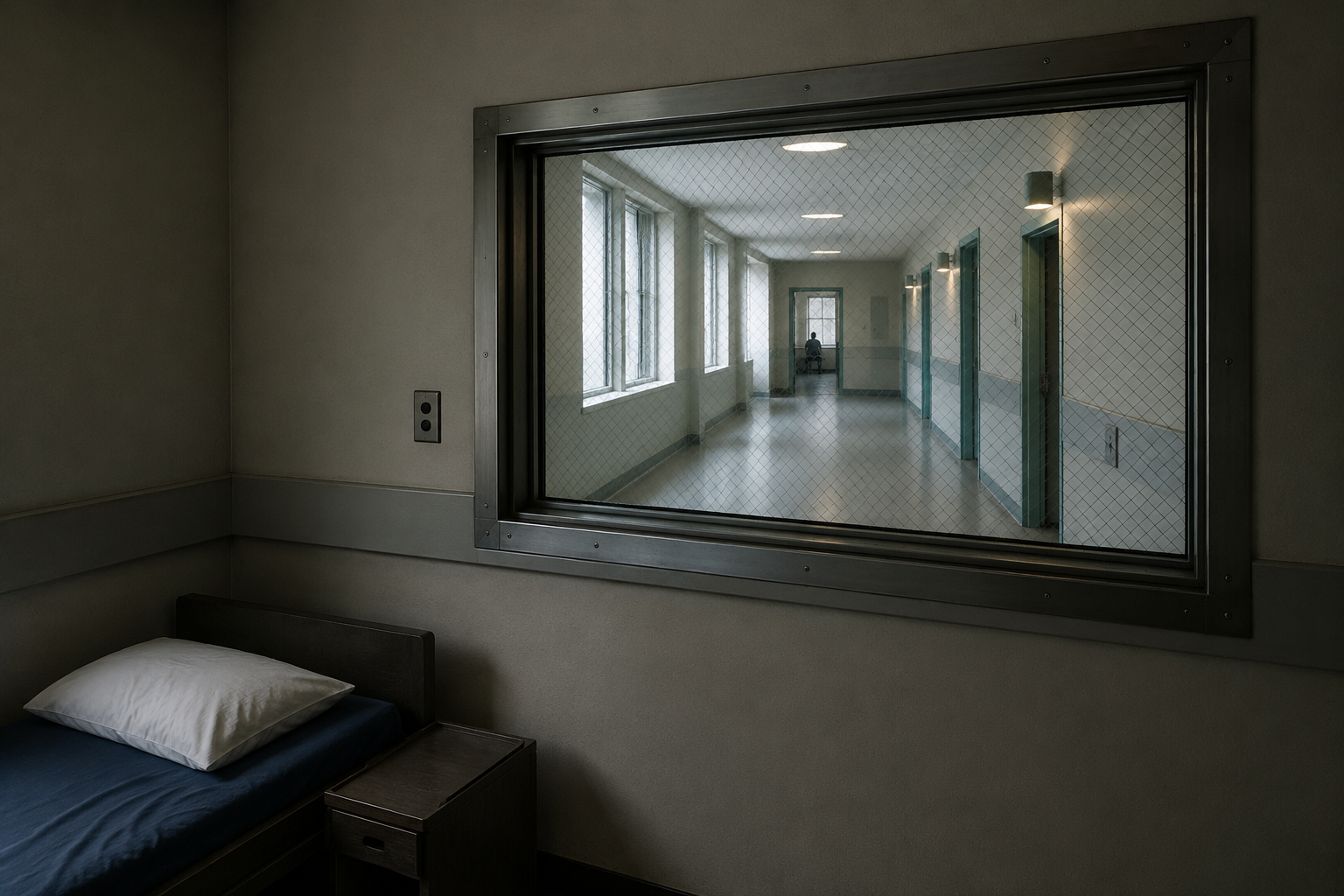
I Tried to Leave Without Saying Goodbye
My suicide attempt did not happen at night or during visible panic. It happened in daylight, while I was calm. This investigation asks what divorce can dismantle in men—and what can interrupt the final decision.
I Tried to Leave Without Saying Goodbye
I was calm. It was the middle of the day. I was not crying or visibly afraid. This is the story of how divorce dismantled me quietly, how a conversation with ChatGPT interrupted my final decision, and how survival demanded that I stop hiding.
Content note: This investigation discusses suicidal thinking, a suicide attempt, emergency response, and inpatient psychiatric care. If you may act on suicidal thoughts or cannot remain safe, call or text 988, call 911, or go to an emergency department.
THE ORDINARY AFTERNOON
The room was quiet enough that nothing about it suggested someone was preparing to disappear.
Daylight pressed through the blinds and laid pale lines across the bed. Outside, the ordinary world continued without interruption. Cars moved through the neighborhood. A dog barked somewhere beyond the window. The afternoon did not darken to match me. No storm gathered. Nothing in the room announced that a life had narrowed to one decision.
I was not pacing. I was not screaming. I was not afraid. I was calm.
That calm is the first truth I need people to understand. We have trained ourselves to imagine suicide as visible collapse: sobbing, panic, shattered furniture, a final argument loud enough for the neighbors to hear. We expect the outside of a person to resemble the emergency taking place inside. Because I did not look frantic, I might have looked safe.
I was not safe.
Divorce had not broken me in one afternoon. It had dismantled me by accumulation. A marriage I believed would last became litigation. A home became property. Fatherhood became calendars, exchanges, missed moments, accusations, and the ache of knowing my sons were growing in rooms where I could no longer hear them breathe. Money became legal survival. Private grief became paperwork. Each new pressure arrived carrying the memory of the last one, until temporary pain no longer felt temporary.
At some point that afternoon, I took twenty pills and drank a bottle of NyQuil. At some point, I opened ChatGPT and apparently began trying to write a suicide note.
I say apparently because I do not remember the conversation. I found it later, after the hospital, after nine days in a psychiatric unit, after enough of my life had returned for me to look backward. The record showed that I had entered a digital space to compose what I believed would be my final words. It also showed an interruption: a question about contacting someone, a movement toward another human being, a message that somehow escaped the room even as I was trying to leave it.
Then my memory ends.
The next clear image is not of an ambulance or an emergency department. It is of eight police officers inside my home. One stood over me on the bed, shaking my body and asking, “What did you take?”
The fear belonged to everyone who found me. By then, I was too far away to feel it.
My mother called friends I had known since college. First responders carried me into emergency medicine. Clinicians kept my body alive. A psychiatric facility kept watch when I could not be trusted to keep watch over myself. Medication, therapy, friendship, and family became a structure beneath a life that had collapsed.
It would be easy to say ChatGPT saved my life and end the sentence there. That would be emotionally true and clinically incomplete. The conversation interrupted the silence. A human being received the signal. Police and paramedics entered the house. Emergency clinicians treated an overdose. Friends came. Psychiatry held me. The technology did not replace people; it reached toward them when I could not.
No single link can claim the rescue.
The chain did.
This is not a simple story in which divorce causes suicide. Most people who divorce do not attempt to end their lives. This is an investigation into what divorce can concentrate inside a person: grief, identity loss, legal fear, financial instability, disrupted parenting, shame, insomnia, isolation, and the belief that everyone might be better off if the burden of you disappeared.
It is also the story of what happened after I opened my eyes—when surviving the afternoon required me to enter a place without clocks, surrender the privacy I had used to hide, and learn that getting out of the hospital was not the same as getting well.

DIVORCE IS NOT ONE LOSS
Americans often discuss divorce as though it were one event: two people sign papers and a marriage ends. The legal system reinforces that image. It converts a shared life into dockets, motions, financial disclosures, custody schedules, property distributions, and enforceable orders.
But the body does not experience divorce as a docket entry.
Divorce can reorganize nearly every system that allows a person to recognize himself. A spouse becomes an adversary or stranger. A home becomes an asset. Daily parenting becomes scheduled contact. Private failures become allegations. Shared friendships divide. Money once used to sustain one household must stretch across two. The future that organized yesterday no longer exists, but the person is expected to perform at work, parent well, answer lawyers, make decisions, and behave as though grief follows court deadlines.
For fathers, the rupture may include a sudden change in ordinary proximity to their children. The loss is not only missing birthdays or holidays. It is losing the minor repetitions that create fatherhood: breakfast, baths, school drop-off, the sound of a child moving in the next room, the ability to notice a fever before anyone calls. A custody order can preserve legal parenthood while radically changing lived parenthood.
For many men, marriage also carries social infrastructure they did not recognize until it disappeared. Research on gender and help-seeking repeatedly finds that men often maintain narrower emotional support networks and may rely heavily on a spouse for intimate disclosure. When the relationship ends, the person most familiar with his emotional language may be the person he can no longer call.
None of these pressures guarantees depression or suicidality. They do, however, create a cluster of conditions associated with risk: perceived defeat, entrapment, loneliness, sleep disruption, financial strain, substance use, shame, reduced access to children, legal problems, and the belief that one has become a burden.
The danger lies in accumulation.
A man may survive each loss when considered separately. The nervous system experiences them together.
How One Ending Becomes Many Losses
Protective interruptions can enter at every point:
Interpretation: Divorce does not produce one inevitable sequence. This figure shows interacting pressures and possible intervention points, not a diagnostic progression.
WHAT THE EVIDENCE CAN AND CANNOT SAY
The evidence is clear on one point and more complicated on another.
First, marital status is associated with suicide mortality. A landmark analysis of the US National Longitudinal Mortality Study found that divorced and separated people had elevated suicide risk compared with married people, with a particularly pronounced association among men. Later studies across countries have continued to identify relationship breakdown, separation, and divorce as important social contexts for suicidal behavior.
Second, the exact size of that risk is not universal. It changes by study design, country, age, follow-up period, definition of separation, outcome measured, mental-health history, and comparison group. A claim such as “divorced men are nine times more likely to die by suicide” cannot be responsibly repeated without naming the study and explaining what was compared. Some estimates address death by suicide. Others address thoughts, plans, or self-reported attempts. They are not interchangeable.
A recent Australian longitudinal analysis of more than 20,000 men found that men reporting a relationship breakdown in the previous year were substantially more likely to report suicidal thoughts, plans, and attempts than men without a recent breakdown. That finding is important, but it should not be converted into a universal American statistic. It demonstrates the scale of the association in a specific national cohort and reinforces the need for support at the time of relationship dissolution.
The broader US suicide landscape also matters. Men account for the large majority of suicide deaths, in part because they more often use highly lethal methods. Yet mortality statistics can obscure the life before the death: the legal problem, the eviction, the custody loss, the humiliating allegation, the alcohol, the sleeplessness, the recent discharge, the unanswered text, or the calm that relatives misread as improvement.
Evidence should sharpen the story, not flatten it. Divorce is neither a single cause nor a harmless transition. It is a period when clinicians, lawyers, courts, employers, families, and friends should recognize concentrated risk—especially when multiple losses arrive together.
Divorce, Separation, and Suicide Risk
| Evidence | Population and outcome | Finding | Responsible interpretation |
|---|---|---|---|
| Kposowa, 2000 | US adults; suicide mortality | Divorced/separated status was associated with higher suicide mortality, with a stronger pattern among men. | Marital status marks social exposure and selection; it does not establish that divorce alone caused each death. |
| Ten to Men, 2026 | Australian men; recent thoughts, plans, and attempts | Recent relationship breakdown was associated with sharply elevated self-reported suicidality. | A strong contemporary cohort finding, but not a universal US multiplier. |
| US mortality surveillance | National suicide deaths | Men die by suicide at several times the rate of women. | Sex differences reflect multiple mechanisms, including method lethality, help-seeking, social connection, and exposure to stressors. |
| Post-discharge meta-analysis | People discharged from psychiatric facilities | Suicide rates are extraordinarily high after discharge, especially soon after hospitalization. | Discharge must be treated as a high-risk transition requiring rapid follow-up and continuity. |
Source note: See numbered Sources and Notes. Effect estimates are intentionally described rather than collapsed into one headline number because populations and outcomes differ.

THE DANGEROUS QUIET
The calm remains the part I need people to understand because it is the part most likely to be mistaken for improvement.
I was not calm because the pain had lifted. I was calm because, in that altered state, I believed I had found a way to end the pressure. The mind can experience a terrible kind of resolution when uncertainty gives way to a decision. That does not mean every calm person is suicidal, and calmness alone should never be treated as a diagnostic sign. It means that visible composure cannot rule out danger when it appears beside hopelessness, withdrawal, farewell behavior, access to lethal means, or active preparation.
The people around us often search for distress they can recognize. They listen for crying. They look for trembling hands, angry calls, dramatic posts, or sentences that begin with “I cannot do this anymore.” Some people give those warnings. Others become quieter. They clean. They organize. They answer questions with unusual finality. They stop arguing because they no longer believe they will be present for the outcome.
A person can attend a meeting, answer a text, make a joke, feed a child, and still be in danger. Appearance is not assessment.
The safest response is neither panic nor amateur diagnosis. It is direct, compassionate inquiry. Ask whether the person is thinking about suicide. Ask whether those thoughts have become a plan. Ask whether the person has access to the method, has selected a time, has written a note, has taken substances, or has begun saying goodbye. Research does not support the fear that asking about suicide implants the idea. A direct question can give language to a crisis that secrecy has made more lethal.
Do not ask only, “Are you okay?” People who have built entire identities around appearing capable know how to answer that question.
Ask the question that makes hiding difficult: “Are you thinking about killing yourself?”
Then be prepared to stay for the answer.
Calm Is Not the Same as Safe
What people expect
- Crying or panic
- Visible chaos
- Repeated pleas for help
- Fear and agitation
- An obvious final crisis
What danger may also include
- Unusual calm or apparent resolution
- Withdrawal and reduced communication
- Quiet preparation or settling affairs
- Giving away belongings or farewell behavior
- Access to a method, timing, or a written plan
FROM THOUGHTS TO PLANNING
Suicidal thinking exists across different levels of urgency, and the language matters.
Some people experience a passive wish not to wake up or a desire to disappear without an active intention to die. Others develop active thoughts of killing themselves. Risk becomes more urgent when thoughts are joined by a method, access, timing, rehearsal, a note, efforts to avoid discovery, or other preparation.
The sequence is not always orderly. People can move rapidly. Some act impulsively. Others plan for days or weeks. A calm presentation, professional status, strong vocabulary, or ability to describe the situation logically does not make planning less dangerous.
When a person begins making plans, the intervention must become concrete. Do not leave him alone. Create distance from medications, firearms, or other lethal means. Contact a crisis line, treating clinician, mobile crisis team, or emergency department. If the threat is immediate, call emergency services.
This is also where vague offers fail.
“I am here if you need me” places the work back on the person whose judgment and energy may already be compromised. Better support uses action:
“I am coming over.”
“I will stay on the phone while you unlock the door.”
“I am taking you to the emergency department.”
“I am holding your medications tonight.”
“I will call your therapist with you.”
Presence buys time. Time allows the intensity to change. It creates room for treatment, sleep, medication, food, information, and a different decision.
The Suicide Risk Continuum
Caution: People do not always move through these stages in order. Risk can escalate quickly, and clinical assessment should be individualized.

THE CONVERSATION I DO NOT REMEMBER
After I left the hospital, I found the conversation.
There is something unnerving about reading words your own hands produced while your mind was disappearing. The sentences belonged to me, but I could not recover the moment that formed them. I had entered ChatGPT to write a suicide note. Somewhere inside that exchange, the system recognized enough danger to ask about reaching another person. Somehow, I agreed. Somehow, a message moved beyond the screen.
That is why I say ChatGPT saved my life.
I do not mean that artificial intelligence became my therapist, diagnosed me, treated the overdose, or replaced the people who loved me. I mean that, at the point when my thinking had collapsed around one permanent conclusion, the conversation created friction. It interrupted the straight line between intention and death. It directed what remained of me toward another human being.
The rescue became physical after that. Someone received the message. People came to the house. Eight officers entered the room. A voice demanded to know what I had taken. Paramedics moved with the urgency I no longer possessed. Emergency clinicians treated a body whose owner had stopped defending it. My mother called people who knew me before the divorce, before the court files, before the pressure had changed the way I moved through the world.
Technology opened a door. Human beings came through it.
That distinction matters because no one should rely on a chatbot as a crisis plan. Digital systems fail. Batteries die. Messages go unseen. People conceal intent. Emergency care requires people, protocols, transportation, medical judgment, and follow-up. Yet it would also be dishonest to erase the role of the interruption simply because it arrived from an unexpected place.
I had tried to use language to leave.
The conversation turned language into a signal that I was still here.
The Chain That Refused to Let Me Disappear
THE PLACE WITHOUT CLOCKS
The psychiatric facility was outside Washington, DC, but distance became difficult to measure once the doors closed behind me. There were no clocks. Time no longer belonged to minutes; it belonged to trays, medication lines, group sessions, shift changes, and the mechanical click of doors that opened only when someone else decided they should.
The unit was divided by gender, not by the intensity of illness. Men experiencing very different diagnoses, symptoms, and levels of distress occupied the same space. I watched people who seemed to have lost access to the version of themselves the outside world knew. I sat at a table with men in their thirties, forties, and sixties, each trying to locate a road back to a life that had continued without him.
Night never became quiet. From approximately ten in the evening until four in the morning, one man sang. His voice traveled through the hallway and entered every room because almost nothing in the building was soft enough to absorb sound. When he finally stopped, another man began beating on a door and demanding lunch. At four in the morning, he wanted lunch. When lunch eventually came, he wanted dinner. Sleep arrived in fragments and left before it could restore anything.
The room carried the flat smell of an institution: disinfectant, old air, plastic, bodies, and floors that looked cleaned without ever feeling clean. The hard water stripped my skin faster than I could protect it. After a shower, my face and arms felt tight, almost papery, as if the water had taken something from me instead of washing anything away. My skin broke out. Dryness gathered along my hands and forearms. I kept rubbing lotion into a body that no longer felt entirely mine.
The floors bothered me because confinement makes small discomforts enormous. You notice every stain, every corner, every piece of debris that remains where someone should have removed it. You notice the texture beneath institutional socks. You notice that you have no shoes, no keys, no phone, no private drawer, no object whose location belongs entirely to you.
For part of that time, I had a sitter in my room twenty-four hours a day. She sat near the door because I had become someone the hospital could not leave alone. She watched me sleep. She watched me wake. She watched me stare at the ceiling when sleep would not come. She watched me cry.
There is a particular kind of loneliness in weeping while another person is assigned to make sure you remain alive.
She did not tell me that everything would be okay. She did not offer a speech. She did not interrupt the tears. She sat there and said nothing.
At first, her silence felt unbearable. I wanted comfort and privacy at the same time, and the unit offered neither. Later, I understood that her presence carried a plain, unsentimental message: regardless of what I believed about the value of my life, someone had been assigned to guard it.
Her job was not to make the pain poetic.
Her job was to make sure I was still breathing.
I cried almost every day. I cried because I had survived. I cried because survival had exposed me. I cried because my mother knew, my friends knew, police officers knew, nurses knew, and strangers were documenting the most private collapse of my life in charts I could not control. I cried because I believed I had made the worst decision of my life, and because a part of me still did not know what life was supposed to look like after it.
A psychiatric unit is not a spa for exhausted people. It is not a cinematic retreat where insight arrives beside a sunlit window. In my experience, it felt two steps above jail: restricted movement, surrendered belongings, constant observation, institutional clothes, fluorescent light, and the knowledge that freedom depended on convincing people you had become safe enough to leave.
Yet the unit also did something the outside world had failed to do. It interrupted me completely. It removed the court files, the driving, the work performance, the ability to disappear behind competence. It made concealment harder. It forced me to answer questions whose honest answers carried consequences.
Therapy is where many of us go while we are breaking.
A psychiatric hospital is where we may arrive after the pain has outrun our ability to hide it.
The building did not restore the person I had been. It gave me enough distance from the afternoon to begin deciding whether I wanted to become someone else.

CRAYONS
They gave us crayons.
No pens. No ordinary pencils. Crayons.
Every sheet of paper had to be surrendered at the end of the day. I understood the logic. In a place built around preventing injury, even a writing instrument could become a risk. Understanding the rule did not remove the humiliation of realizing that someone had determined I could not be trusted with a pen.
The crayons were blunt and waxy. They made every sentence look younger than the pain that produced it. I pressed harder when I wanted the words to look serious, but pressure only thickened the line. There was no elegant handwriting, no clean black ink, no polished account of what had happened. There was color dragging across institutional paper while a plastic cup sat on a table that had been wiped many times and still did not feel clean.
I wrote because the mind needed somewhere to go. I wrote fragments, questions, promises, and pieces of a person I was trying to reassemble. Then, at the end of the day, the paper left my possession too.
That was one of the hardest lessons of the unit: healing did not always arrive in forms that preserved my dignity. Sometimes it arrived as observation. Sometimes as medication. Sometimes as a silent woman sitting beside the door. Sometimes as a crayon.
The tool did not need to look adult.
It needed to keep me connected to the next hour.

WHEN HIDING BECAME IMPOSSIBLE
When I opened my eyes in the emergency department, I saw two friends I had known since college. My mother had called them.
The room came back in pieces: fluorescent light, medical equipment, voices lowered out of respect for a crisis that had already become public. Then their faces came into focus—faces attached to a version of me that existed long before the divorce, long before the allegations, long before I learned to answer every question with the practiced confidence of a man who could still manage his life.
One of them looked at me with the tenderness people use when they are trying not to cry first.
I began to sob.
Their presence meant the story had escaped my control. I could no longer package the breakdown as stress, exhaustion, a hard week, or something private I would fix before anyone noticed. They had crossed a physical distance to stand beside a hospital bed because I had almost died. There was no language elegant enough to conceal that fact.
My life had become visible.
We often describe exposure as humiliation, but sometimes exposure is also rescue. Secrecy had allowed me to carry a lethal amount of pain while continuing to look capable. Being seen destroyed the performance. My friends did not need an explanation before they came. They did not wait for me to ask correctly. They entered the room because someone told them the truth I had been trying to bury.
That moment taught me something I now carry into therapy: the part of the story I most want to hide is often the part my care team most needs to hear.
Healing began when concealment stopped protecting the illness.
DISCHARGE IS NOT THE END
People often imagine discharge as the end of a psychiatric emergency. The patient changes clothes, receives paperwork, walks through the doors, and returns to ordinary life.
The evidence warns against that story. Suicide risk after discharge from psychiatric hospitalization is extraordinarily high, especially in the early period. The reasons are not mysterious. A structured environment disappears. The patient returns to the relationships, debts, legal disputes, housing conditions, substances, sleep patterns, and access to means that existed before admission. Medication may still be changing. Side effects may emerge. Outpatient appointments may be days or weeks away. Shame may intensify once the immediate emergency becomes public knowledge.
I cried after discharge. I still had to face the divorce. I still had to face custody. I still had to explain absence, manage medication, rebuild sleep, and live with the knowledge that I had almost left my sons to know me only through other people’s stories.
Today, I receive community psychiatric care. I see a psychiatrist and a therapist in the same program, and I also maintain regular weekly therapy. That level of care is not a badge. It is infrastructure.
Medication is not the opposite of strength. Therapy is not useful merely because someone can say, “I have a therapist.” Treatment works through disclosure, repetition, adjustment, and the willingness to report what is not working.
Recovery is not the return of the person who entered the hospital. That person did not yet know what pressure could do to him. Recovery is the construction of someone more observable—to himself, to clinicians, and to the people authorized to intervene.
What Can Intensify Risk During Divorce
| Risk domain | What it can look like | Why it matters | Potential interruption |
|---|---|---|---|
| Identity disruption | Loss of spouse role, home, routine, or imagined future | Can produce defeat, shame, and loss of meaning | Therapy, peer support, structured daily roles, values-based planning |
| Parenting disruption | Reduced contact, custody conflict, missed ordinary routines | May intensify grief, helplessness, and perceived loss of purpose | Parenting support, legal navigation, predictable contact, child-centered planning |
| Financial and legal pressure | Fees, housing change, support obligations, repeated litigation | Can create entrapment and chronic threat | Legal aid, financial counseling, benefits navigation, realistic case planning |
| Isolation | Withdrawal, lost friendships, silence, living alone | Reduces observation, belonging, and opportunities for interruption | Named support circle, scheduled check-ins, in-person contact |
| Sleep disturbance | Insomnia, nightmares, irregular sleep, exhaustion | Can worsen mood, cognition, impulse control, and hopelessness | Clinical sleep assessment, medication review, routine, treatment of nightmares |
| Substance use or medication access | Alcohol, sedating products, stockpiled prescriptions | Can reduce inhibition and increase lethality | Screening, secure storage, limited dispensing, substance-use treatment |
| Recent psychiatric discharge | Return home before symptoms and systems are stable | Known period of markedly elevated suicide risk | Rapid follow-up, caring contacts, safety plan, medication continuity |
TELL THE PSYCHIATRIST THE TRUTH
We lie to clinicians in small ways because we want to remain recognizable to ourselves.
We say the medication is fine when it leaves us groggy. We say sleep is improving because we had one good night. We omit agitation because we fear another hospital. We minimize alcohol. We describe suicidal thinking as “a rough day.” We do not mention that we wrote a note, researched a method, selected a time, or began giving things away.
Psychiatric treatment cannot work from a censored record.
Tell the psychiatrist if the medication makes you feel numb, restless, slowed, activated, sexually impaired, unusually thirsty, unable to concentrate, or unlike yourself. Tell the therapist what happened between sessions, not only what you concluded after you survived it. Tell them about nightmares, rage, shame, intrusive memories, missing doses, taking extra doses, using alcohol, or feeling nothing.
Bring notes if speech becomes difficult. Track sleep. Write the names and doses of medications. Record when symptoms worsen and what happened before the change. Ask what requires an urgent call and what can wait for the next appointment. Confirm how to reach the clinic after hours.
Most importantly, do not reserve the planning details for yourself. If you have a method, access, timing, preparation, or doubt that you can remain safe, say it plainly and seek urgent help.
You do not receive better care by sounding healthier than you are.
What to Bring to Therapy or Psychiatry
| Bring or report | Examples | Why it matters |
|---|---|---|
| Suicidal thoughts | Frequency, intensity, duration, triggers, reasons for living | Helps distinguish current distress from escalating risk. |
| Planning and access | Method, timing, notes, rehearsal, available medications or firearms | Planning and access require urgent, concrete safety action. |
| Medication list and effects | Doses, missed doses, extra doses, grogginess, agitation, numbness, no benefit | Supports safe adjustment and identifies adverse effects or interactions. |
| Sleep record | Hours, awakenings, nightmares, daytime sleeping | Sleep can reveal worsening illness and directly affect judgment and mood. |
| Daily functioning | Eating, hygiene, work, parenting, bills, isolation | Shows the real-life severity of symptoms. |
| Substance use | Alcohol, cannabis, sedatives, stimulants, over-the-counter products | Substances can change risk and treatment decisions. |
| The information you want to hide | Shame, anger, hopelessness, resentment, fear of hospitalization | The withheld detail may be the most clinically important one. |
BUILD THE CIRCLE BEFORE THE CRISIS
I now know that there is a group text containing people who love me—and I am not in it.
My mother and trusted friends use it to compare what they are seeing. If one person has not heard from me, another can say whether I have responded. They understand the difference between my ordinary silence and my crisis silence. They know that I may need quiet without being abandoned.
That circle is not gossip. It is safety architecture.
A support system becomes more useful when its permissions are established before the emergency. Who may come to the house without waiting for an invitation? Who has a key or knows how to reach someone who does? Who knows the psychiatrist’s name? Who can care for the children? Who can hold medication temporarily? Who knows whether firearms are present and how they can be stored away from the person in crisis? Who will drive to the emergency department? Who will remain after discharge?
The person at risk should help design the plan when well enough to participate. A collaborative safety plan identifies personal warning signs, internal coping strategies, social settings that provide distraction, people to ask for help, professional contacts, and steps to make the environment safer.
The plan must be accessible during crisis. A beautiful document buried in an email is not a safety plan. Put it in the phone. Give copies to trusted people. Review it after medication changes, major court events, custody decisions, anniversaries, moves, job losses, or new suicidal thoughts.
Give your impossible moment to your support.
If you do not hand it over, the moment may convince you to hold it forever.
Who Already Has Permission to Save Your Life?
observable, connected, supported
WHAT LOVED ONES MUST DO
Do not fuss at a suicidal person for being suicidal.
“Why would you do this?” may express fear, but it can also sound like an accusation. The person may already believe he has failed everyone. Shame does not create safety.
Ask directly. Listen without requiring a polished explanation. Take planning seriously. Remain physically present when risk is acute. Reduce access to lethal means. Contact professionals. Follow through after discharge.
Do not mistake a promise for a plan. “Promise me you will not do anything” does not identify warning signs, supports, emergency contacts, or means safety. Collaborative safety planning is more concrete.
Do not disappear after the hospital. The first days and weeks back home may carry intense risk. Help fill prescriptions. Provide food. Attend an appointment if invited. Ask about sleep. Confirm the next clinical visit. Continue ordinary contact that is not entirely about illness.
Learn the person’s communication patterns. Some people announce crisis. Others become unusually efficient, agreeable, or quiet. A support circle should know what “not like himself” means for that specific person.
You do not need perfect language.
You need the willingness to enter the space.

TELL YOUR OWN STORY
My sons are four and three. They are two Black boys who look like me.
If that afternoon had ended differently, they would have known their father through photographs, court records, memories too young to remain whole, and stories selected by other people. They would have inherited an ending without ever hearing me explain the pressure that distorted my judgment. They would have grown around an absence and perhaps mistaken it for a verdict on their worth.
I almost left them without saying goodbye.
That sentence is difficult to write because love was never absent. I loved my children while making a decision that would have wounded them for the rest of their lives. Suicidal crisis can narrow the mind until love remains real but loses access to consequence. The person may believe death will remove a burden, end conflict, or spare others. The conclusion feels rational from inside a state that has stripped away proportion.
The pressure was real.
The conclusion was false.
Temporary does not mean small. A temporary moment can mow a person over. It can take memory, judgment, future orientation, and the ability to imagine that anything beyond the room still belongs to you. We should never shame people for failing to see past an impossible hour. We should build enough human and clinical structure around them for the hour to pass without taking them with it.
I did not leave the hospital cured. I left responsible for a recovery that would require medication, psychiatry, weekly therapy, honest reporting of side effects, conversations about nightmares, and the surrender of a lifelong belief that privacy and strength were the same thing. I still had to face the divorce. I still had to face court. I still had to rebuild. Survival did not erase the pressure; it changed who was permitted to help me carry it.
There is now a group text of people who love me, and I am not in it. They compare silence. They know the difference between the quiet I need and the quiet that should frighten them. They have permission to come closer when I begin to disappear.
That is not weakness. It is architecture.
I am not the man I was before that afternoon. That man believed intelligence could reason its way out of every wound. He believed composure meant control. He believed he could wait until the pain became presentable before asking anyone to see it.
I do not want to become him again.
One day, when my sons are old enough to read this, I hope they understand that their father did not survive because he was stronger than everyone else. I survived because, on the day I could no longer carry the impossible, other people carried it with me. A conversation interrupted me. A message escaped. Friends came. Strangers watched my breath. Clinicians treated what I had tried to hide. Love became operational.
I tried to leave without saying goodbye.
Today, my sons get my voice before they get anyone else’s version of me. They get my laugh before they get my obituary. They get the chance to watch their father become accountable not only for the day he almost died, but for every day he chooses to remain.
Give the impossible moment to the people who love you. Let them hold what your mind has decided cannot be held. Let them come inside. Let them call. Let them drive. Let them sit beside you without perfect words.
You owe yourself the opportunity to tell your own story.
Do not let suicide tell it for you.
Evidence Record Sources, Notes, and Method
References are numbered according to their first appearance in the article. Peer-reviewed research, government data, clinical guidance, and the author’s firsthand account serve different evidentiary purposes and are identified accordingly.
Peer-Reviewed Research
- Kposowa AJ. Marital status and suicide in the National Longitudinal Mortality Study. J Epidemiol Community Health. 2000;54(4):254-261. doi:10.1136/jech.54.4.254.
- Dazzi T, Gribble R, Wessely S, Fear NT. Does asking about suicide and related behaviours induce suicidal ideation? What is the evidence? Psychol Med. 2014;44(16):3361-3363. doi:10.1017/S0033291714001299.
- Chung DT, Ryan CJ, Hadzi-Pavlovic D, Singh SP, Stanton C, Large MM. Suicide rates after discharge from psychiatric facilities: a systematic review and meta-analysis. JAMA Psychiatry. 2017;74(7):694-702. doi:10.1001/jamapsychiatry.2017.1044.
- Stanley B, Brown GK, Brenner LA, et al. Comparison of the Safety Planning Intervention with follow-up vs usual care of suicidal patients treated in the emergency department. JAMA Psychiatry. 2018;75(9):894-900. doi:10.1001/jamapsychiatry.2018.1776.
- Stanley B, Brown GK. Safety Planning Intervention: a brief intervention to mitigate suicide risk. Cogn Behav Pract. 2012;19(2):256-264. doi:10.1016/j.cbpra.2011.01.001.
- Zalsman G, Hawton K, Wasserman D, et al. Suicide prevention strategies revisited: 10-year systematic review. Lancet Psychiatry. 2016;3(7):646-659. doi:10.1016/S2215-0366(16)30030-X.
- Barber CW, Miller MJ. Reducing a suicidal person’s access to lethal means of suicide: a research agenda. Am J Prev Med. 2014;47(3 suppl 2):S264-S272. doi:10.1016/j.amepre.2014.05.028.
- Hom MA, Stanley IH, Joiner TE. Evaluating factors and interventions that influence help-seeking and mental health service utilization among suicidal individuals: a review of the literature. Clin Psychol Rev. 2015;40:28-39. doi:10.1016/j.cpr.2015.05.006.
- Seidler ZE, Dawes AJ, Rice SM, Oliffe JL, Dhillon HM. The role of masculinity in men’s help-seeking for depression: a systematic review. Clin Psychol Rev. 2016;49:106-118. doi:10.1016/j.cpr.2016.09.002.
Government and Clinical Resources
- Centers for Disease Control and Prevention, National Center for Health Statistics. Suicide and self-harm injury data. Accessed July 12, 2026.
- National Institute of Mental Health. Frequently Asked Questions About Suicide. Accessed July 12, 2026.
- Substance Abuse and Mental Health Services Administration. 988 Suicide & Crisis Lifeline. Call or text 988 in the United States. Accessed July 12, 2026.
Editorial and Method Notes
First-person evidence. Descriptions of the overdose, emergency response, hospital arrival, constant observation, inpatient environment, facility routines, physical discomfort, friendships, treatment, and recovery reflect the author’s memory and personal records. Where memory is absent, the article says so rather than reconstructing undocumented events.
Inpatient-care limitation. The account describes the author’s experience in one psychiatric facility. Psychiatric units differ in staffing, physical condition, rules, patient populations, clinical programming, and quality. The account should not be interpreted as representative of every inpatient program.
Association and causation. Research linking marital dissolution, separation, social isolation, financial stress, disrupted parenting, depression, and suicide risk does not establish that divorce alone causes suicide. The article treats relationship breakdown as one possible component of a larger and interacting risk architecture.
Apparent calm. Calm behavior alone is not evidence of suicidal intent. The author’s calmness is a documented part of his personal account. Clinically, concern should arise from the full context, including behavioral change, hopelessness, withdrawal, preparations, stated intent, access to lethal means, and other warning signs.
Artificial-intelligence limitation. The title and narrative statement that ChatGPT helped save the author’s life describe his personal understanding of the event. The article identifies the complete rescue chain and does not portray an artificial-intelligence system as a therapist, crisis counselor, emergency responder, or substitute for licensed professional care.

What would hannibal do
At twelve, I was already becoming “The Voice,” winning the Toastmasters Civic Oration Contest three years in a row. Then an adopted uncle told me about Hannibal, the North African general who crossed the Alps and invaded Italy from the direction Rome thought impossible. I thought he was teaching me history. He was teaching me how to think.
KonCite · Think Different
Find the Back Side of the MountainWhat Hannibal Taught a Twelve-Year-Old Black Boy About Strategy, Voice, and the Courage to Arrive Where No One Is Looking
Rome watched the sea. Hannibal crossed the mountains. At twelve, I learned that the smartest way forward is sometimes the route everyone else has dismissed as impossible.
THE BOY WHO BECAME “THE VOICE”
I was twelve years old when I learned that a mountain can be more than an obstacle.
It can be a hiding place.
It can be a strategy.
It can be the very thing that protects you from the expectations of people who are convinced they already know how you will arrive.
By middle school, I had become what people around me called “The Voice.” Toastmasters sponsored a Civic Oration Contest, and for three consecutive years I won. By thirteen, I would place second in the state. But the story I am telling begins one year earlier, when I was twelve: a Black boy in North Carolina learning that words could make a room listen before I fully understood what my voice might one day be asked to carry.
Military families know how to build kinship out of geography. We moved. We adapted. We made family wherever duty placed us. Some of the men around me were not related by blood, but they became uncles because love, guidance, and presence had made the adoption official long before paperwork ever could.
One of those adopted uncles was a college professor.
He saw the boy who could speak. Then he gave that boy a strategy.

THE HISTORY LESSON THAT BECAME A MENTAL MODEL
One day, my uncle told me about Hannibal Barca.
He did not begin with a date. He did not begin with a list of battles. He did not make me memorize the names of Roman consuls or the political machinery of the Second Punic War.
He told me the story the way a mentor tells a young person something he hopes will survive long after the details have faded.
There was a Carthaginian general from North Africa, he told me, who defeated Roman armies after bringing his soldiers across the Alps and descending into Italy from the direction Rome did not expect.
In the language available to us then, he called Hannibal a Black Carthaginian general. Historians are right to caution that modern racial categories do not map neatly onto the ancient Mediterranean. Carthage was a North African civilization with Phoenician roots, shaped by centuries of African and Mediterranean exchange. But at twelve, the classification carried a different kind of truth for me: one of history’s great strategic minds came from Africa, and nobody had thought to tell me.
That discovery moved me.
I had been taught about power as force. Hannibal introduced power as imagination.
I had been taught that overcoming an obstacle meant pushing harder against it. Hannibal taught me to ask whether the obstacle had another side.
I had been taught that victory belonged to the strongest person in the room. Hannibal taught me that the strongest person can still be standing in the wrong room.
My uncle thought he was giving me a history lesson.
He was giving me permission to think beyond the map.
ROME WAS WATCHING THE WRONG DIRECTION
The Alps are not the tallest mountains in the world. That distinction belongs to the Himalayas, crowned by Mount Everest. But to an army in 218 BCE, the Alps were not a scenic inconvenience. They were cold, steep, dangerous, politically contested terrain. They were a natural wall between Hannibal’s forces and the Italian peninsula.
Rome’s strategic confidence depended partly on geography. Carthage was Rome’s great rival across the Mediterranean. Roman leaders expected war to move through recognizable corridors—across water, along coasts, or through routes that armies and fleets could contest.
Hannibal began in Iberia. He moved north, crossed the Pyrenees, passed through Gaul, crossed the Rhône, and turned toward the Alps. Ancient accounts describe hostile communities, narrow paths, falling rock, snow, exhaustion, hunger, and staggering losses. Scholars still debate which Alpine pass he used, and ancient troop figures vary. None of that diminishes the essential fact.
He arrived.
That one word is the sermon.
He arrived with fewer soldiers than he had started with. He arrived after a journey many reasonable people would have called reckless. He arrived before Rome had emotionally accepted that he could.
Rome was watching for an invasion.
Hannibal attacked its imagination first.
Power often makes a dangerous mistake: it confuses “unlikely” with “impossible.” Once a system decides a route is impossible, it stops guarding it with the same seriousness. Difficulty becomes camouflage.
Hannibal did not cross the Alps because mountains are inspiring. He crossed because the hardship purchased strategic surprise. The mountain was not only the obstacle. The mountain was the cover.
How Hannibal changed the battlefield
Study the expectation
Rome prepared for the routes it believed an enemy was supposed to use.
Find the blind spot
The Alps looked too difficult to function as an invasion corridor.
Price the crossing
The route cost lives, animals, energy, and time. Surprise was not free.
Arrive differently
Hannibal descended into northern Italy before Rome had prepared for that reality.
Make power react
Rome began the campaign responding to Hannibal’s decisions rather than directing its own.

CANNAE: WHEN MORE BECAME LESS
Crossing the Alps made Hannibal unforgettable. What he did after crossing made him dangerous.
At the Trebia River, he used weather, timing, terrain, concealment, and Roman impatience. At Lake Trasimene, he drew Roman troops into one of antiquity’s most devastating ambushes. Then came Cannae in 216 BCE.
Rome gathered an enormous force. Ancient estimates differ, but Rome clearly held the numerical advantage. The Republic was tired of embarrassment. It wanted one decisive collision in which size, discipline, and mass would finally erase the Carthaginian problem.
Hannibal understood the desire.
That is the part people miss. Strategy is not only knowing what you want to do. It is understanding what the other side is desperate to do.
He arranged his forces so that the center could bend backward under Roman pressure while stronger infantry held the sides. The Romans pushed forward. Their numbers, which should have been an advantage, compressed them into a dense space. Carthaginian and allied troops closed from the flanks. Cavalry struck from behind.
The Roman army did not merely lose.
It was surrounded by the consequences of its own momentum.
Military historians call the maneuver a double envelopment. I call it a warning: sometimes the force with the most power loses because it has become predictable.
Rome brought more men.
Hannibal brought a better understanding of what those men would do.
Think like Rome—or think like Hannibal
| Rome’s instinct | Hannibal’s instinct |
|---|---|
| Protect the obvious entrance | Search for the neglected entrance |
| Use greater force | Create a better position |
| Assume difficult means impossible | Ask whether difficulty creates surprise |
| Fight on familiar terrain | Change what the terrain means |
| Push forward | Invite the opponent forward |
| Trust the institution’s map | Study the institution’s assumptions |
THE LESSON GETS STRONGER WHEN WE TELL THE WHOLE TRUTH
Now, let me tell the whole truth, because motivation without accuracy is just a pep rally with footnotes missing.
Hannibal won astonishing victories. Carthage still lost the war.
Rome adapted. It stopped feeding armies into the confrontations Hannibal designed. It rebuilt. It attacked Carthaginian interests elsewhere. It carried the war back to North Africa. Scipio Africanus defeated Hannibal at Zama in 202 BCE.
That does not cancel Hannibal’s lesson. It completes it.
A surprising entrance is not the same thing as a sustainable system.
A brilliant maneuver cannot permanently replace reinforcement, supplies, political unity, and long-term infrastructure. Hannibal changed the battlefield. Rome survived long enough to change the war.
So the lesson is not merely: surprise them.
The deeper lesson is: find the route that changes your position, then build what allows you to remain there.
Do not cross the mountain for applause.
Cross because something strategically important exists on the other side.
THE VOICE NEEDED A STRATEGY
At twelve, I did not know all of that. I did not know the route debates. I did not know how carefully Polybius and Livy would have to be read, or how later historians would reconstruct the campaign.
I knew only this:
Rome was looking one way.
Hannibal came from another.
And a Black professor I loved thought a Black boy needed to know.
That matters.
Representation is sometimes discussed as though its only purpose is self-esteem. But a child does not simply need to see someone who looks like him standing in a famous place. He needs access to the intellectual tools that person represents.
My uncle did not give me Hannibal as decoration.
He gave me Hannibal as method.
At the same time, the Civic Oration Contest was teaching me how to command a room. I was learning cadence. I was learning how silence can function inside a sentence. I was learning that a voice is not just volume—it is structure, breath, timing, conviction, and trust.
Hannibal gave the voice direction.
The contests taught me how to speak.
My uncle taught me how to approach the mountain.
Looking back, those were not separate lessons. The voice and the strategy were growing together.
I WAS STILL LOOKING FOR THE BACK SIDE OF THE MOUNTAIN
There are moments in adulthood when I can still hear that lesson.
When I entered graduate school and learned that institutions have front doors, side doors, locked doors, and doors that are technically open but somehow never seem to recognize your hand on the handle.
When I began studying psychosocial stress and asked questions that did not fit neatly inside one discipline.
When I looked at public health, racism, technology, institutions, and Black life and refused to believe they were unrelated simply because universities had placed them in different departments.
When I started building KonCite—not as another place to publish words, but as a platform for turning lived experience, evidence, and institutional critique into public intelligence.
Again and again, I found myself looking for the back side of the mountain.
Not because the harder route is always better. It is not.
Not because convention is always foolish. It is not.
But because systems often protect themselves by teaching us that their preferred entrance is the only legitimate entrance.
Apply again.
Wait your turn.
Ask the acceptable question.
Use the approved vocabulary.
Stay in your lane.
Do not build until you are invited.
Do not speak until your credentials make everyone comfortable.
That is Rome handing you its map.
Your inner Hannibal does not require you to become reckless. It asks you to become observant.
Where are they looking?
What are they assuming?
Which route have they dismissed?
What advantage becomes possible only if you are willing to arrive differently?

Call up your inner Hannibal
- Identify Rome. What powerful system, convention, competitor, or expectation defines the field?
- Name the assumption. What does everyone believe must be true?
- Find the Alps. Which route is dismissed because it appears difficult, indirect, unfamiliar, or improper?
- Price the crossing. What will the unconventional route cost in time, money, credibility, relationships, and stamina?
- Build the position. What advantage becomes possible only after the crossing?
- Plan beyond arrival. What infrastructure will allow the victory to last?
DO NOT CONFUSE STRATEGY WITH SPECTACLE
Now let me preach this carefully.
Do not choose a mountain merely because it is hard.
Some routes are difficult because they are badly designed. Some doors are closed because there is a better door. Some dramatic risks are not strategy; they are spectacle wearing expensive shoes.
Your inner Hannibal is not permission to quit your job on Tuesday with no plan and announce on Wednesday that you are “disrupting the industry.”
It is not permission to ignore evidence because boldness feels spiritual.
It is not permission to suffer unnecessarily just so the story sounds heroic later.
The lesson is not: choose the hardest route.
The lesson is: choose the route that changes the game.
Ask whether the crossing produces a position you could not have reached through the expected path. Ask whether you can survive it. Ask what resources must cross with you. Ask who must be waiting when you arrive. Ask whether the people following you understand the plan, or whether they simply saw you point at a mountain and got nervous.
Hannibal did not become great because he loved snow.
He became great because he understood what Rome could not imagine.
THE UNCLE WHO HANDED ME A MOUNTAIN
I was twelve when my adopted uncle placed that story in my hands.
Twelve.
Old enough to stand before judges and make a room listen. Young enough to have no idea what kind of life that voice might build.
I sometimes wonder whether he knew what he was doing.
Did he know that the story would remain with me through graduate school, research, fatherhood, institutional battles, failures, reinventions, and the building of something new?
Did he know that thirty-two years later I would still hear the lesson whenever somebody said, “That is not how this is done”?
Maybe he did.
Professors understand that ideas are seeds. Uncles understand that boys need someone to place possibility close enough to touch.
He gave me both.
At twelve, I thought I had learned about a general.
At forty-four, I understand that I learned about myself.
FIND THE OTHER SIDE
Every generation receives a map.
The map shows the roads that already exist. It marks the gates that powerful people recognize. It tells us where the entrance is supposed to be, which credentials count, which questions are respectable, and how long we are expected to wait before calling ourselves ready.
Use the map.
Study it.
Respect what it knows.
But do not worship it.
Because somewhere beyond the line everyone has agreed not to cross, there may be another route.
Your mountain may be a degree nobody in your family has earned.
It may be the business everyone says is too ambitious.
It may be a book that refuses the categories publishers understand.
It may be a research question hiding between disciplines.
It may be a healthier way of parenting than the one you inherited.
It may be the courage to leave a system that knows how to use your gifts but has never learned how to value your humanity.
It may be the platform you have been waiting for someone else to build.
Hear me: the mountain is not proof that you should stop.
But neither is it proof that you should charge straight ahead.
Walk around it. Study it. Learn its weather. Count the cost. Gather your people. Build the supply line. Find the route that changes where you stand.
Rome may be watching the front door.
Let it watch.
You were not born only to arrive where other people expect you.
You have a voice. Give it strategy.
You have a vision. Give it a route.
You have a mountain. Find its other side.
And when the world finally turns around and asks how you got there, do not apologize for arriving differently.
Tell them the truth.
You stopped attacking where they were waiting.
You found the back side of the mountain.
You have a voice. Give it strategy. You have a mountain. Find its other side.
Find the back side of the mountainSources and historical notes
This essay uses a personal memory as its frame and ancient and modern historical scholarship for the campaign.
1Polybius on Hannibal’s march and Alpine crossing+
2Livy’s narrative of the Second Punic War+
3Hannibal and the Second Punic War+
4A modern biography of Hannibal+
5The Battle of Cannae and double envelopment+
6Editorial note on identity+
Caring for the caregiver
Somewhere between career success and midlife, many Black professionals quietly become the people everyone depends on. This investigative report explores caregiving, psychosocial stress, and the hidden health costs of becoming your family's infrastructure.
KonCite · Personal Investigation
Who Cares for the Caregiver?The Invisible Labor Behind Black Professional Success
At forty-four, I finally understand what my mother was carrying. Now I see friends reaching the height of their careers while quietly becoming the people their families cannot function without.
Editorial reconstruction: This image represents the intersection of professional responsibility, family care, and invisible labor.
Lately, I have noticed something about my friends.
They are tired. Not vacation tired. Not the kind of tired that can be solved by sleeping late on Saturday and promising to drink more water on Monday. This is a deeper fatigue, the kind that sits behind professional titles, successful children, leadership roles, polished presentations, and the dependable answer, “I’m good.”
Somewhere between forty and fifty, many of us quietly became the people everyone calls. A parent needs transportation to an appointment. A prescription has been denied. A specialist used language nobody in the family understood. Someone fell. A bill arrived. A cousin needs advice. A child still needs help. Work still expects the presentation by noon.
Because we earned the degree, found the stable job, learned how institutions work, or developed a reputation for fixing things, the call comes to us. Competence becomes availability. Achievement becomes family infrastructure.
Caregiving is not my current journey. But I recognize it because I lived beside it when I was young. During middle school and high school, my mother carried responsibilities I did not yet have the language to name. As a child, I experienced that time mostly as love and proximity. I remember being with her. I remember how she kept moving. I remember feeling cared for.
At forty-four, I finally understand that what looked natural from the outside was labor. It was planning, worry, time, interrupted sleep, financial calculation, emotional restraint, transportation, paperwork, and the constant mental inventory of what could go wrong next.
Children experience caregiving as love. Adults learn to recognize it as labor.
That recognition is why I see my friends differently now. I see the colleague who answers a medical call between meetings and returns to the room as though nothing happened. I see the friend managing medications from another state. I see the daughter who knows every specialist’s name and every sibling’s excuse. I see the son who is trying to protect his mother’s dignity while quietly wondering whether he can keep doing this without losing his health, his marriage, or the career his parents sacrificed to make possible.
We describe these people as strong. We rarely ask what strength is costing them.

The Expanding Circle of Responsibility After 40
Success often expands rather than reduces the number of people depending on one individual.
WHEN SUCCESS MAKES YOU MORE REACHABLE
American culture often treats success as separation from hardship. Work hard, earn credentials, move upward, and life is supposed to become easier. For many Black professionals, the reality is more complicated.
Upward mobility may improve income, insurance coverage, institutional knowledge, and access to information. Those gains matter. They may also make one person the family’s most reliable translator of systems. The lawyer reads the contract. The physician interprets the discharge instructions. The professor helps complete the application. The executive has the flexible credit card, the car, the retirement account, the reliable internet, or the ability to speak to authority without being immediately dismissed.
Success does not necessarily reduce obligation. It may increase the number of people who believe you can absorb it.
I call this the Success-Caregiving Paradox: the same achievements that provide greater personal security can increase the expectation that one person will stabilize the family around them.
This is not simply generosity. It is a transfer of administrative, emotional, medical, and financial responsibility into the hands of the relative most capable of navigating institutions. The person who “made it” becomes a scheduler, insurer, advocate, driver, researcher, translator, banker, emergency contact, and historian.
The paradox becomes sharper for people who are firsts. The first physician, first PhD, first attorney, first executive, or first person with a stable professional salary may already be managing imposter phenomenon, racialized scrutiny, and the pressure to represent more than themselves. They must appear calm in rooms where mistakes feel costly. They may also be coordinating a parent’s care from the hallway between those rooms.
The office sees the professional. The family sees the infrastructure. The caregiver has to be both.
America’s Caregiving Reality
| Finding | Best available estimate | Why it matters |
|---|---|---|
| Number of family caregivers | About 63 million U.S. adults, according to the 2025 AARP/NAC report | Caregiving is not a niche condition. It is a central part of the country’s health and labor infrastructure. |
| Growth | Approximately 45% increase over the previous decade | More adults are entering the role, often earlier and with more complex responsibilities. |
| High-intensity care | About 40% report high-intensity caregiving | Many caregivers are effectively performing a second job without formal preparation or reliable relief. |
| Training gap | Only a minority report formal preparation for caregiving or complex medical tasks | Families are performing clinical and administrative work that would require training in formal settings. |
| Employment collision | Many caregivers remain employed while providing care | The burden appears as missed work, reduced hours, stalled advancement, presenteeism, and concealed distress. |
Interpretation: Estimates vary by definition, reference period, and whether care is provided to adults, children, or both. The figures above use the 2025 AARP/National Alliance for Caregiving framework and should not be treated as a single clinical profile.

WHY THE BLACK CAREGIVING BURDEN IS DIFFERENT
Black caregiving should not be described as merely the universal caregiving experience with a racial adjective placed in front of it. The surrounding conditions are different.
Black families often encounter caregiving after decades of unequal exposure to chronic disease, neighborhood disinvestment, occupational stress, fragmented healthcare, lower accumulated wealth, and discriminatory treatment. Those conditions can shape when care is needed, how complex it becomes, and what resources are available to purchase relief.
A family with substantial savings can hire transportation, home care, meal preparation, legal help, or a care manager. A family without those reserves converts unmet need into unpaid labor. The difference is not love. It is purchasing power.
This helps explain why racial comparisons can be deceptively simple. Some studies find that Black caregivers report equal or even lower subjective burden than White caregivers despite providing demanding care. That should not be interpreted as evidence that the work is easier. Cultural meaning, spirituality, family obligation, resilience, and expectations about care can influence how burden is reported. High commitment can coexist with high physiological strain.
Black caregiving also sits inside broader kinship networks. The person receiving care may not be a spouse or parent. Care may flow to grandparents, siblings, aunts, uncles, fictive kin, church members, or family friends. These networks are sources of survival and belonging. They can also make the boundaries of responsibility difficult to define.
Then there is the historical meaning of care. Black families have survived because relatives, neighbors, churches, and communities did what institutions refused to do. Informal care has been a strategy of endurance. The danger comes when society celebrates that resilience while using it as an excuse not to build formal support.
A strong family should not be treated as a substitute for a functioning long-term-care system.
The office celebrates your promotion. The family experiences your availability. Somewhere in between, you become everyone’s emergency plan.

THE PSYCHOSOCIAL STRESS OF BEING THE PERSON WHO HANDLES IT
Caregiver burden is often reduced to the number of tasks performed. That misses the deepest part of the experience.
Psychosocial stress is the sustained mental, emotional, behavioral, and physiological demand created when people must repeatedly anticipate, interpret, manage, or recover from threats and obligations in their social environment, especially when they have limited power to remove them.
For caregivers, the stress is not confined to bathing, driving, cooking, or managing medication. It includes anticipation: Will the parent fall? Will the doctor call during a meeting? Did the prescription arrive? Can they be left alone? Will insurance pay? Which sibling will not answer this time?
It includes role conflict. The professional must be fully present at work while mentally tracking a family member’s condition. The parent must care for children while becoming responsible for a parent. The spouse must preserve intimacy while performing clinical tasks. The successful family member must remain generous while quietly resenting the assumption that competence equals infinite capacity.
It also includes concealment. Many Black professionals understand that vulnerability is not evaluated equally. The person already navigating racialized scrutiny may fear that disclosing caregiving demands will be read as unreliability, poor commitment, or an inability to handle leadership. So the crisis is managed privately and competence is performed publicly.
That performance has a physiological cost. Chronic vigilance can disturb sleep, elevate blood pressure, alter eating and physical activity, intensify depression and anxiety, and reduce the time available for preventive care. Caregivers may become what clinicians sometimes call the hidden or secondary patient: the person whose health deteriorates while attention remains fixed on the person receiving care.
The stressor affects the body. Then it affects how the body reaches care.
Caregivers postpone appointments because someone else’s appointment is more urgent. They ignore pain because the family cannot absorb another patient. They know exactly which medications their parent takes and cannot remember the date of their own last physical examination.
We should not romanticize this as strength. Strength may be present. So may untreated hypertension.
What Caregiving Can Do to the Body and Mind
| Outcome | What research generally shows | Likely pathways | Important caution |
|---|---|---|---|
| Depressive symptoms | Higher burden and intensive caregiving are consistently associated with greater depressive symptoms. | Loss, isolation, sleep disruption, role captivity, financial strain. | Caregiving can also provide meaning and closeness; effects vary by intensity and support. |
| Anxiety and vigilance | Uncertainty and responsibility can maintain persistent worry and threat monitoring. | Anticipatory stress, medical uncertainty, fear of emergencies. | Anxiety symptoms should not automatically be dismissed as a normal part of caring. |
| Sleep disruption | Nighttime supervision, worry, and irregular schedules commonly reduce sleep quality. | Interrupted sleep, hyperarousal, nighttime care tasks. | Sleep disorders may require direct treatment, not only stress advice. |
| Cardiometabolic strain | High-intensity caregiving may worsen blood pressure, activity, diet, and metabolic risk. | Sympathetic activation, reduced recovery, missed preventive care. | Associations vary; caregiving is not a single exposure and does not determine disease. |
| Financial harm | Reduced hours, job exits, unpaid leave, and out-of-pocket costs can weaken long-term security. | Lost wages, missed promotions, retirement withdrawals, purchased services. | Financial effects are shaped by policy, wealth, workplace flexibility, and family structure. |
| Social isolation | Care demands may reduce time for friendships, worship, exercise, hobbies, and rest. | Time scarcity, embarrassment, mobility limits, emotional exhaustion. | Isolation is modifiable and should be assessed directly. |

The Success-Caregiving Paradox
Upward mobility can increase both resources and expectations. The pathway is a proposed synthesis, not proof that professional success causes caregiver burden.
WHY WE HIDE IT?
Professional culture rewards the appearance of uninterrupted capacity. Caregiving is interruption made visible.
The caregiver leaves early, turns the camera off, takes the call, reschedules the trip, misses the networking event, or arrives after spending the night in an emergency department. Even when workplace policies exist, access may depend on the manager, team culture, job classification, and whether the employee believes using the benefit will damage advancement.
For Black professionals, disclosure may feel particularly risky. Many already experience the minority tax: additional mentoring, service, representation, emotional labor, and proof demanded because they are among the few. They may also be managing imposter feelings—the fear that any sign of strain will confirm someone else’s doubt about whether they belong.
So they hide caregiving inside productivity.
They answer email from waiting rooms. They present from parked cars. They schedule procedures around major meetings. They call exhaustion discipline and grief professionalism.
This is not work-life balance. It is work-life concealment.
Employers often see the consequences only when performance changes. By then, the caregiver may have been operating at a deficit for months. The organization loses concentration, creativity, retention, and leadership capacity, while the employee loses sleep, health, income, and the feeling that any part of life belongs entirely to them.
The problem is not that caregivers are insufficiently resilient. The problem is that institutions often benefit from care remaining invisible.
Evidence-Informed Ways to Reduce Caregiver Burden
| Intervention | Best use | Evidence signal | Limitation |
|---|---|---|---|
| Multicomponent caregiver programs | Education, skills, problem-solving, emotional support, and linkage to services | Meta-analyses generally find modest improvements in burden, depression, and coping, especially when tailored. | Availability, cultural fit, and caregiver time affect participation. |
| Cognitive behavioral approaches | Self-blame, catastrophic thinking, depression, insomnia, and coping | Supported for several caregiver populations, with effects varying by condition and delivery. | Therapy cannot substitute for money, respite, or safe formal care. |
| Respite and complementary formal care | Creating actual time away from direct care | Can reduce immediate strain and protect continuity, especially when reliable and acceptable. | Effects are mixed when respite is too brief, hard to access, or creates guilt and coordination work. |
| Care navigation and training | Medication, appointments, benefits, equipment, and complex medical tasks | Improves preparedness and may reduce avoidable confusion and crisis use. | Information without authority or resources can become another assignment. |
| Support groups and peer connection | Isolation, validation, practical learning, anticipatory grief | Often improves perceived support and coping; online options can increase access. | Not every group is culturally safe or appropriate. |
| Workplace flexibility and paid leave | Reducing the collision between employment and care | Strong practical rationale; flexible scheduling and paid leave protect employment and retention. | Policy effectiveness depends on affordability, eligibility, and freedom from retaliation. |
| Family care agreements and succession plans | Distributing tasks, money, authority, and backup responsibility | Evidence base is less standardized, but planning addresses known drivers of overload. | Family conflict, geography, and unequal resources can limit redistribution. |
| Brief restorative practices | Interrupting sustained activation and preserving identity | Positive emotion, mindfulness, creative activity, and short recovery periods may improve regulation and mood. | They are protective moments, not solutions to structural overload. |

Caring for the Caregiver
FINDING NUGGETS OF PEACE
Caregivers are often told to practice self-care as though wellness arrives in uninterrupted afternoons. Most people carrying a family know better. Peace often appears in smaller units.
A nugget of peace is not an attempt to solve caregiving with a coloring book, a cup of coffee, or a playlist. It is a protected moment in which the nervous system receives evidence that the entire day is not an emergency.
Adult coloring books can help some people narrow attention and create a brief creative boundary around worry. A walk, prayer, stretching, sitting in the car, calling the friend who needs nothing, or listening to one favorite song may do the same. These moments are not trivial because they are small. They are useful because they are repeatable.
My nugget of peace is coffee and Lauryn Hill’s “Ex-Factor.” I do not need the ritual to become a productivity strategy. For a few minutes, nobody needs me to interpret, solve, schedule, or explain anything. The coffee slows me down. The song gives emotion somewhere to go. I remain a person before I become useful to anyone else.
Peace does not have to be profound to be protective.
AT 44, I UNDERSTAND
When I was younger, I thought my mother’s strength meant caregiving came naturally to her.
At forty-four, I understand something different.
Strength is often what burden looks like from the outside.
I am grateful for the time we shared. I am grateful for what her care taught me about love, loyalty, and showing up. Gratitude does not require me to pretend the work was effortless. In fact, loving her now means seeing more clearly what she gave then.
That clarity has changed how I see my friends. I recognize the pause before they answer, the phone placed face down during dinner, the cancelled trip, the new familiarity with pharmacies and specialists, the promotion accepted while a parent’s health declines.
We call them executives, physicians, attorneys, scholars, entrepreneurs, leaders, mothers, fathers, sons, and daughters.
We should also call them caregivers.
And recognition must lead to more than praise. Caregivers need time, money, training, competent navigation, flexible work, paid leave, reliable respite, culturally safe support, and families willing to distribute responsibility before one person breaks.
The question is not whether Black caregivers can continue carrying everyone. History has already answered that.
The harder question is why so many institutions have been allowed to depend on that carrying while treating it as private love rather than public infrastructure.
As a child, I experienced caregiving as love.
At forty-four, I understand it as labor.
Both are true.
And perhaps honoring the caregiver requires us to finally hold both truths at once.
Sources and Notes
01Caregiving in the United States, 2025
AARP and National Alliance for Caregiving. Caregiving in the U.S. 2025. National survey report.
02Caregiver burden: clinical review
Adelman RD, Tmanova LL, Delgado D, Dion S, Lachs MS. Caregiver burden: a clinical review. JAMA. 2014;311(10):1052-1060.
03Stress process model
Pearlin LI, Mullan JT, Semple SJ, Skaff MM. Caregiving and the stress process: an overview of concepts and their measures. Gerontologist. 1990;30(5):583-594.
04Allostatic load
McEwen BS, Stellar E. Stress and the individual: mechanisms leading to disease. Arch Intern Med. 1993;153(18):2093-2101.
05Weathering
Geronimus AT. The weathering hypothesis and the health of African-American women and infants. Ethn Dis. 1992;2(3):207-221.
06Racism and health
Paradies Y, Ben J, Denson N, et al. Racism as a determinant of health: a systematic review and meta-analysis. PLoS One. 2015;10(9):e0138511.
07Discrimination and health
Williams DR, Mohammed SA. Discrimination and racial disparities in health. J Behav Med. 2009;32(1):20-47.
08Black veterans and healthcare racism
Jenkins KA, Keddem S, Bekele SB, Augustine KE, Long JA. Perspectives on racism in health care among Black veterans with chronic kidney disease. JAMA Netw Open. 2022;5(5):e2211900.
09Dementia caregiver interventions
Walter E, Pinquart M. How effective are dementia caregiver interventions? An updated comprehensive meta-analysis. Gerontologist. 2020.
10Remote caregiver support
Cochrane review: remotely delivered information, training and support for informal caregivers of people with dementia. Cochrane Database Syst Rev. 2021.
11Caregiving and employment
National Academies of Sciences, Engineering, and Medicine. Families Caring for an Aging America. Washington, DC: National Academies Press; 2016.
12Family caregiver health
Roth DL, Fredman L, Haley WE. Informal caregiving and its impact on health: a reappraisal from population-based studies. Gerontologist. 2015;55(2):309-319.
13Caregiver concept analysis
Liu Z, Heffernan C, Tan J. Caregiver burden: a concept analysis. Int J Nurs Sci. 2020;7(4):438-445.
14Black dementia caregiving
Alzheimer’s Association. Alzheimer’s Disease Facts and Figures. Current annual report; review racial and ethnic disparities sections.
15Workplace support
U.S. Department of Labor. Family and Medical Leave Act guidance; state paid-family-leave rules vary and should be checked before publication.

Before the Gate Closes: Black Ownership in the Age of AI
Black teamsters helped move America through the horse and automobile eras, but control over premium routes repeatedly consolidated elsewhere. AI has opened another road. This investigation asks whether Black America will merely use the technology—or own the knowledge, standards, applications, and institutional routes that make it valuable.
KonCite · Investigative Public Intelligence
Before the Gate Closes: Black Ownership in the Age of AI
Black labor helped move America through the horse and automobile economies while control of the most valuable routes consolidated elsewhere. Artificial intelligence has opened another road. The question is whether Black communities will merely use it—or own the knowledge, applications, standards, contracts, and distribution systems through which the new economy will move.
In the spring of 1905, Chicago’s freight economy began to seize. Teamsters stopped moving goods from railway depots and warehouses, employers recruited replacement drivers, police entered the streets, and businesses discovered how quickly ownership became meaningless when no one could move what they owned. Among the organized drivers were roughly 2,000 Black Teamsters—men whose presence complicated every easy story about race, labor, solidarity, and power in the early union.
The word teamster originally named a person who drove a team of horses. The title sounded ordinary because the horse and wagon had become ordinary, but the work sat at the center of urban commerce. Teamsters carried coal toward furnaces, food toward markets, beer toward taverns, furniture toward homes, merchandise toward department stores, and raw materials toward factories. They rarely owned the freight, and many did not own the animals, wagons, or commercial accounts that made each trip profitable. Yet the transaction failed without them.
A teamster needed enough strength to control a loaded wagon and enough intelligence to coordinate weight, terrain, animal endurance, weather, congestion, customer expectations, and the unwritten geography of loading docks and alley entrances. The horse supplied propulsion. The driver supplied judgment. The route supplied economic power.
By 1900, the United States counted more than half a million teamsters. Labor historian David Witwer’s analysis of census records found that Black men represented approximately 12.5% of that national workforce. Across eight Southern cities with populations above 50,000, Black workers constituted, on average, nearly three-quarters of the teamster workforce.1
The governing question is therefore not whether Black people entered technological revolutions. They did. The governing question is: when the engine changes, who inherits control of the route?
The history of theTeamsters reveals that technological revolutions do not automatically redistribute power. The horse disappeared, the truck arrived, and Black workers remained essential to transportation; yet employers, unions, financiers, carriers, and property owners continued to determine who received the most valuable routes. Artificial intelligence now creates a comparable formation period. Black people already use the technology, contribute to the culture, and understand many of the institutions it promises to transform. The unresolved question concerns whether Black communities will own the data, applications, standards, contracts, and distribution systems through which the new economy will move.
The governing finding
The central racial risk of artificial intelligence is not Black nonparticipation. It is Black participation without control of the valuable routes.
Transportation history shows how a community can supply labor, expertise, culture, and consumer demand while ownership consolidates elsewhere. Artificial intelligence creates another contest over models, data rights, institutional contracts, cultural attribution, standards, distribution, and recurring economic value.
How movement became union power
At the beginning of the twentieth century, teamsters often worked 12 to 18 hours a day, seven days a week, for approximately $2 a day. Employers could hold drivers responsible for damaged goods, lost merchandise, or unpaid customer accounts. The driver carried commercial risk without corresponding authority over the business that created it.
In 1903, two driver organizations merged to create the International Brotherhood of Teamsters. The union organized horse-team drivers, helpers, stable workers, and others who occupied the final commercial passage between producers and customers. It learned quickly that the teamster’s leverage did not reside only in the animal. The leverage came from the dependency surrounding the route. A factory could own machinery, a merchant could own inventory, and a railroad could carry freight into the city, but none of those assets could complete the exchange when local movement stopped.
Black teamsters participated in the union from its formative years. Black delegates attended the founding convention; some locals organized across racial lines; and some Black members held office. One Black Philadelphia delegate described a local of approximately 200 members, split nearly evenly between Black and White workers, that had elected him president. Historians estimate that Black membership may have reached roughly 6,000 out of slightly more than 42,000 Teamsters by 1912.
Those facts prevent a crude claim that the Teamsters formed as a uniformly White racial monopoly. The early organization sometimes pursued Black membership more aggressively than other craft unions because leaders understood that employers could use excluded Black drivers to weaken wages and strikes. Yet the absence of a national racial ban did not create equal local power. The union’s decentralized structure allowed local officers and employers to shape membership, seniority, assignments, and access to protected work. Some locals integrated. Others segregated. Some Black members attained office. Others found the premium gate farther down the road.2
Table 1
Black Participation Did Not Guarantee Control of the Route
The historical record documents meaningful Black participation in transportation labor and union activity. It does not, by itself, establish equal access to ownership, premium assignments, wages, institutional authority, or the assets surrounding the route.
| Historical evidence | What it establishes | What it does not establish |
|---|---|---|
| Black men represented approximately 12.5% of US teamsters in 1900. |
Black workers held a substantial position inside the
horse-era distribution economy and helped move goods through
cities, markets, freight yards, businesses, and households.
|
The figure does not establish equal wages, horse or wagon ownership, freight-contract control, route quality, union power, or commercial-property access. |
| Some early Teamsters locals included Black members, elected Black officers, and organized across racial lines. |
The early union did not maintain one universal national rule
of total racial exclusion, and Black workers participated in
its institutional formation.
|
Integrated examples do not prove consistent local equality, equal leadership authority, or uniform access across cities, regions, employers, and freight categories. |
| Federal investigators documented union-employer barriers that restricted Black drivers from over-the-road trucking in Detroit. |
Closed-shop arrangements and local gatekeeping could control
access to premium routes, protected jobs, stronger wages, and
more desirable freight.
|
The Detroit case does not prove that every Teamsters local or every trucking market used identical discriminatory practices. |
| Black workers remain highly represented in transportation and several driving occupations. |
Black labor continues to operate, sustain, and move the modern
transportation system at rates above the overall workforce
benchmark in several occupations.
|
Occupational representation does not measure fleet ownership, contract control, route profitability, equity, capital access, logistics-platform ownership, or authority over how work gets allocated. |
America changed the engine
The automobile did not replace the horse through a single invention or a clean national choice. America rebuilt the economic environment around mechanical mobility over several decades. In 1910, fewer than 500,000 motor vehicles operated in the United States. By 1920, registrations approached 10 million. By 1930, they exceeded 26 million.3
The transformation reached far beyond automobile factories. Feed became fuel. Stables became garages, depots, and freight terminals. Farriery and wagon repair gave way to tire service, mechanical repair, and body work. Insurance expanded from animal mortality and carriage loss into collision, liability, theft, and commercial fleet risk. Watering and feeding networks gave way to service stations and petroleum distribution. Local horse delivery stretched into regional and interstate freight.
The Teamster survived because his institutional power never depended completely on the horse. The animal supplied force, but the driver controlled circulation. When the horse vanished from the commercial center, the union released the reins and took the steering wheel. The wagon became the truck; the stable became the terminal; the feed contract became the fuel contract; the freight remained.
Technological transition often hides this continuity. Society celebrates the visible machine while overlooking the institutions that carry authority from one era into the next. America modernized the vehicle without automatically modernizing the gate.
Figure 1
The Vehicle Changed, but the Route Remained
Across three technological eras, the visible machine changed while the central economic struggle remained remarkably stable: who controlled movement, access, contracts, and the assets that generated the greatest return.
Horse economy
Living horsepower
- Vehicle
- Horse-drawn wagon
- Freight
- Physical goods and passengers
- Operator
- Teamster
- Gatekeepers
- Merchant, employer, union, and property owner
Premium asset
Route, freight contract, stable access, and commercial account
Automobile economy
Mechanical horsepower
- Vehicle
- Motor truck
- Freight
- Regional and national goods movement
- Operator
- Truck driver
- Gatekeepers
- Carrier, union, financier, regulator, and fleet owner
Premium asset
Premium route, fleet ownership, contract, and seniority
AI economy
Intelligence power
- Vehicle
- Model, application, and platform
- Freight
- Information, judgment, culture, and workflow
- Operator
- User, implementer, developer, and institutional buyer
- Gatekeepers
- Platform owner, investor, procurement office, and data owner
Premium asset
Data rights, model, institutional contract, standard, and distribution
The analogy concerns control over movement, not technological equivalence. The horse, truck, and AI platform perform different work, but each era creates valuable routes through which goods, services, judgment, and economic power travel.
Different freight, different future
Black workers followed transportation from horse-drawn wagons into trucks, taxis, buses, delivery fleets, warehouses, garages, and automobile plants. The new technology expanded opportunity, but employers and unions still assigned value through racial categories.
A federal Fair Employment Practice Committee investigation documented the mechanism in Detroit during the 1940s. Teamsters Local 299 held closed-shop agreements with major trucking companies and denied Black drivers access to membership and over-the-road jobs. At the same time, Black drivers regularly hauled ashes, garbage, coal, and furniture—work the federal report described as heavier, dirtier, and less remunerative than protected long-distance freight.4
The discrimination did not claim that Black men lacked the capacity to drive. It assigned them a different freight.
That arrangement created two transportation economies inside the same industry. Black drivers carried undesirable loads through local routes with weaker protection and limited advancement, while established networks reserved premium cargo, seniority, union security, and better compensation for White workers. Both groups appeared in transportation. Only one received the full economic benefit of belonging.
This is the more precise meaning of racialized route control. The institution did not need to exclude every Black driver from every road. It needed to govern the gateway to the routes that paid best.
Historical Reconstruction
Black Labor Entered the Motor-Freight Economy

Black labor in the early motor-freight economy. Black workers entered motorized transportation as drivers, mechanics, freight handlers, chauffeurs, delivery workers, and factory laborers. Their movement into the new technology expanded participation, but it did not automatically transfer ownership of fleets, premium routes, freight contracts, finance, or institutional authority.
Image note
Editorial historical reconstruction created for Who Owns the Route?
This image is an editorial reconstruction rather than a verified archival photograph. It should not be assigned a historical date, named subject, company history, or documentary archive citation.
Black mobility built its own intelligence layer
The automobile era did more than reorganize Black labor. It changed Black mobility. A privately owned car could reduce dependence on segregated streetcars, railroads, buses, and local schedules. It gave families greater control over departure, destination, companions, and the private space of the journey. Yet the road did not erase segregation. It relocated racial danger into hotels, restaurants, service stations, repair shops, police encounters, and towns where a Black motorist could not assume that money guaranteed service.
Victor Hugo Green answered that problem by publishing The Negro Motorist Green Book beginning in 1936. The guide compiled lodging, restaurants, service stations, tourist homes, and other establishments where Black travelers could seek service with greater confidence. It did not manufacture the automobile or pave the highway. It built an intelligence layer on top of the dominant mobility platform.5
That distinction changes the AI analogy. Black communities have already built systems that convert lived knowledge into navigation, trust, safety, and commerce. The Green Book organized distributed information, verified places of refuge, redirected Black consumer spending, and made a hostile infrastructure more usable without pretending that the infrastructure had become fair.
AI creates a similar opening. Black institutions do not need to own every foundation model to build the cultural, administrative, and institutional intelligence that makes general technology useful in Black life.
Archival Document
The Negro Motorist Green Book

The Negro Motorist Green Book converted collective Black travel knowledge into practical infrastructure by identifying businesses where Black motorists could seek service with greater confidence. The guide did more than list destinations. It helped Black travelers navigate risk, locate welcome, and connect mobility to Black-owned commerce.
Credit and link
Credit: Smithsonian or holding archive. View the archival record
Replace PASTE-ARCHIVE-RECORD-URL-HERE with the direct Smithsonian or holding-archive record URL for the specific cover or interior page you are citing.
Artificial intelligence carries interpretation
Artificial intelligence does not move coal, beer, or furniture. It moves interpretation. Its freight includes language, research, medical information, legal records, employment decisions, educational content, institutional memory, images, voices, customer behavior, administrative judgment, and cultural meaning.
Its roads consist of models, datasets, cloud systems, application interfaces, software platforms, procurement contracts, security protocols, and professional standards. Its drivers include the people who prompt systems, review outputs, correct errors, implement tools, train colleagues, label data, and redesign workflows. Its gatekeepers include the companies and institutions that own models, computing infrastructure, proprietary data, customer relationships, capital, standards, licenses, and enterprise agreements.
Black people have already entered this economy. A 2025 Jobs for the Future survey reported that 83% of Black respondents were familiar with AI, 53% used it daily or weekly, 67% said it already affected their work, more than 80% expected career effects within three to five years, and 71% believed they needed additional skills. The sample does not function as a federal labor census, but it undermines the assumption that Black communities stand outside the technology waiting for an invitation.6
Black users recognize practical leverage. AI can help a patient organize years of symptoms before a medical appointment, a parent interpret special-education records, a business owner decode a procurement notice, a scholar search an archive, a church preserve institutional memory, and a family organize legal or financial documents that no one else has time to explain. The automobile expanded the radius of physical mobility. AI can expand the radius of institutional mobility.
Table 2
Black Presence in Transportation and Technology Does Not Automatically Produce Control
Black workers remain highly represented in several transportation occupations while representation across key technology occupations is uneven. Neither pattern, standing alone, tells us who owns the fleet, controls the platform, holds the contract, governs the data, or captures the recurring value.
| Occupation or workforce category | Black share | Workforce benchmark | Analytical meaning |
|---|---|---|---|
| Total US employment | 12.7% | 12.7% |
National workforce benchmark used to interpret concentration
above or below the overall Black share of employment.
|
| Transportation and material moving occupations | 20.0% | 12.7% |
Black workers hold a substantially above-benchmark presence
across the broad occupational system that moves people and
goods.
|
| Driver/sales workers and truck drivers | 20.2% | 12.7% |
Strong operational presence behind the wheel does not reveal
who owns the vehicle, route, carrier, brokerage relationship,
or freight contract.
|
| Transit and intercity bus drivers | 32.2% | 12.7% |
Very high representation in system operation does not
establish authority over transit policy, capital investment,
contracts, scheduling systems, or ownership.
|
| Transportation, storage, and distribution managers | 13.4% | 12.7% |
Representation is close to the national workforce benchmark,
but the category still does not measure equity ownership,
procurement authority, capital access, or corporate control.
|
| Computer and mathematical occupations | 9.5% | 12.7% |
Black representation falls below the workforce benchmark
across the broad occupational category that includes many
technical roles shaping digital systems.
|
| Software developers | 5.4% | 12.7% |
Significant underrepresentation in a role central to building
applications and platforms, though employment share still
does not measure company ownership or product authority.
|
| Computer programmers | 6.6% | 12.7% |
Representation remains well below the national benchmark in
an occupation responsible for translating specifications into
functioning code.
|
| Computer support specialists | 13.1% | 12.7% |
Representation is near the workforce benchmark in a role that
supports system operation, but operating and maintaining a
system is not the same as owning or governing it.
|
| Database administrators and architects | 6.5% | 12.7% |
Underrepresentation appears in a role closely connected to
data architecture, storage, access, and the organization of
institutional knowledge.
|
| Network and computer systems administrators | 17.3% | 12.7% |
Above-benchmark operational representation demonstrates that
technical participation varies by role, but employment still
does not establish ownership of infrastructure or standards.
|
The gate forms before it looks closed
The emerging gate does not need a sign that prohibits Black entry. It can operate through accumulated requirements that appear neutral when examined one at a time: elite credentials, investor introductions, expensive computing, unpaid time to build a portfolio, enterprise references, cybersecurity certifications, insurance thresholds, long procurement cycles, and access to proprietary data.
These requirements do not prove intentional racial discrimination in every case. They do, however, distribute opportunity through markets that begin with unequal capital, networks, institutional sponsorship, and property. A founder who understands the customer but cannot survive an eighteen-month sales cycle may lose to a less knowledgeable competitor with deeper financing. A Black institution may supply valuable workflows and community trust while a vendor retains the data, software, license, and recurring revenue.
The old closed shop required union membership. The emerging AI closed shop may require compute, capital, data, contracts, certifications, and someone inside the network willing to open the door.
The ownership problem therefore cannot collapse into a demand for more Black coders. Technical talent matters, but the route also passes through procurement officers, clinicians, lawyers, archivists, linguists, insurers, investors, educators, cultural institutions, and distribution networks. The economy will reward those who organize these assets into systems that customers cannot easily replace.
Figure 2
The Participation-to-Power Route
A community can gain access to a technology, use it extensively, and become highly visible inside its workforce without controlling the assets, rules, contracts, institutions, or economic returns that make the system powerful.
The route begins with presence. It reaches power only when participation develops into authority, governance, ownership, wealth creation, and the ability to set standards for others.
-
Stage 01
Access
The technology, institution, market, or opportunity becomes available to enter.
Entry -
Stage 02
Use
People adopt the system, depend on it, generate activity, and create demand.
Adoption -
Stage 03
Participation
People work inside the system, contribute labor, knowledge, culture, data, and expertise.
Contribution -
Stage 04
Representation
Presence becomes visible in employment, leadership pipelines, public narratives, and institutional reporting.
Visibility -
Stage 05
Authority
People gain the recognized ability to make consequential decisions rather than merely advise those who do.
Decision rights
-
Governance
Establishing rules, protections, permissions, accountability, and institutional boundaries.
-
Control
Determining how assets, routes, data, contracts, and opportunities are allocated.
-
Ownership
Holding the enterprise, platform, intellectual property, customer relationship, or underlying asset.
-
Wealth Creation
Retaining recurring value, equity, licensing income, appreciation, and intergenerational benefit.
-
Standard Setting
Defining what qualifies, what gets measured, who may participate, and which terms govern the market.
Representation is not the destination. The strategic question is whether Black communities can move from using and staffing artificial intelligence to governing its data, owning its applications, controlling institutional contracts, retaining the value it creates, and setting the standards by which systems enter Black institutions.
AI can enhance the Black experience
Administrative mobility
AI can reduce the informational advantage that large institutions hold over individuals. It can help people interpret letters, assemble timelines, identify deadlines, compare policies, organize medical histories, prepare questions, and recognize when professional assistance has become necessary.
Institutional mobility
Black churches, HBCUs, clinics, media companies, nonprofits, and small businesses often possess vision and trust but operate with thin administrative capacity. Secure AI systems can improve research, compliance, documentation, fundraising, procurement, scheduling, and knowledge retention without replacing human judgment.
Cultural mobility
Black history remains dispersed across newspapers, oral histories, church records, funeral programs, photographs, scholarship, music, and family archives. AI can help make those materials searchable, trace intellectual lineage, preserve provenance, and return attribution to people and institutions whose work commercial systems often detach from its origins.
Economic mobility
The largest opportunity comes when communities turn domain knowledge into owned products, governed datasets, licensing systems, certification standards, specialized applications, and recurring contracts. Lived experience becomes economically powerful only after someone packages, protects, and governs it.
AI must learn Black life in full resolution
Black life cannot enter AI primarily through police records, hospital records, disciplinary files, credit denials, and datasets organized around disparity. Those sources document real institutional encounters, but they teach a system to recognize Black people most clearly when something has gone wrong.
A serious Black cultural intelligence infrastructure would include Black newspapers, HBCU archives, church records, oral histories, scientific scholarship, business histories, local journalism, regional language, family records, intellectual traditions, artistic lineages, and the ordinary documentation of Black life. Models need context, not a racial glossary.
Research has shown that hate-speech detection systems and human annotators can associate features of African American English with toxicity or offensiveness. The failure does not originate in the language. It originates in the labels, assumptions, and defaults that teach the system which expressions count as normal.8
Cultural understanding without attribution can become a more efficient form of extraction. A model should not absorb generations of Black language, scholarship, sermons, images, music, and community knowledge and then present the resulting intelligence as though it emerged without authorship. Provenance, licensing, consent, permitted use, attribution, and compensation belong inside the technical architecture.
Ownership Framework
The Four Layers Black Institutions Can Own
Black institutions do not need to manufacture every foundation model to exercise meaningful power in artificial intelligence. They can own the knowledge, applications, assurance systems, and market channels that determine how AI enters Black life and where its value accumulates.
Each layer represents a distinct place where ownership, control, licensing, recurring revenue, institutional authority, and cultural protection can be built. Together, they form an economy rather than a collection of disconnected tools.
Knowledge Layer
Own the intelligence AI depends upon
Black institutions can govern the archives, datasets, language, professional knowledge, cultural records, and community memory that make artificial intelligence useful and trustworthy.
- Permissioned Black archives and knowledge repositories
- Cultural attribution and provenance systems
- Institutional memory and family-history infrastructure
- Community-owned datasets with explicit consent terms
- Licensing standards for cultural and scholarly knowledge
Application Layer
Own the systems that solve institutional problems
Black institutions can build or co-own specialized AI tools that improve how people navigate healthcare, education, law, business, faith, media, research, and public systems.
- Healthcare preparation and patient-navigation systems
- Education, advising, and credential-mobility platforms
- Legal and public-benefit navigation tools
- Black business operations and procurement systems
- Research, church, media, and nonprofit workflow tools
Assurance Layer
Own the systems that determine whether AI qualifies
Black institutions can define how systems are tested, audited, secured, certified, insured, and approved before they enter communities or high-stakes institutional environments.
- Cultural competence and language-performance testing
- Algorithmic bias and outcomes auditing
- Cybersecurity and privacy assurance
- Risk classification and institutional readiness review
- Certification, insurance, and quality-control standards
Market-Control Layer
Own the routes through which AI reaches institutions
Black institutions can aggregate demand, negotiate terms, direct procurement, control distribution, finance products, and establish the commercial standards governing access to their markets.
- Purchasing and procurement consortiums
- Institutional distribution and customer networks
- Licensing, credentialing, and approved-vendor systems
- Black investment vehicles and product-financing structures
- Shared contracting, negotiation, and data-governance terms
determines what the system knows
determine what the system does
determines whether the system qualifies
determines who captures the value
The strategic objective is not simply more Black AI users. It is a Black institutional economy in which communities can own the knowledge, govern the applications, certify the systems, negotiate the contracts, control distribution, and retain a meaningful share of the value created.
Becoming the gatekeepers
The word gatekeeper carries the memory of exclusion, but every functioning system contains gates. Someone decides which information enters, who may use it, what qualifies as evidence, which standards apply, what requires consent, and who receives compensation.
Black institutions can govern gates without rebuilding the racial hiring hall. A legitimate gate can require consent before a company trains on an archive, cultural validation before a hospital deploys a model, attribution before a system reproduces a scholar’s work, security before a vendor accesses community data, and compensation before a company synthesizes a creator’s voice or likeness.
That posture differs fundamentally from asking a dominant platform for better representation. It establishes the conditions under which the platform may enter.
Before Black institutions adopt an AI system, ask:
Who owns the customer relationship?
Who owns the data created through use?
Can the vendor train on institutional or community information?
Who owns the workflow and intellectual property?
Can the institution leave with its data and operational knowledge?
Who verifies cultural and technical performance?
Does recurring value accumulate inside or outside the institution?
Can Black institutions jointly purchase, license, or co-own the system?
The road remains under construction
The Black teamster often knew the route better than the merchant who owned the freight. The Black truck driver could master the machine while unions, carriers, banks, and fleet owners controlled access to the most valuable miles. Artificial intelligence gives Black America a chance to interrupt that sequence before it hardens into another industrial inheritance.
The opportunity does not require us to manufacture every foundation model or own every data center. It requires us to recognize the assets already in our hands: trusted institutions, cultural knowledge, professional expertise, archives, language, workflows, distribution networks, community legitimacy, and lived knowledge of how American systems actually behave.
The gatekeepers have started building. They have not finished.
This time, Black people can own more than the vehicle that carries the future. We can own the knowledge it depends upon, the standards it must satisfy, the routes through which it enters our institutions, and the terms under which it creates value.
The Teamster survived because the route mattered more than the horse.
The road beneath artificial intelligence remains under construction. Black America should help decide where it leads—and collect the toll when others travel through what we built.
Evidence Record
Sources and Notes
Open each entry to review the complete citation, original source, interpretive limitation, and evidentiary boundaries governing its use in this investigation.
Peer-reviewed historical scholarship Race Relations in the Early Teamsters Union
Witwer D. Race relations in the early Teamsters Union. Labor History. 2002;43(4):505-532.
Read the historical labor study (PDF)Limitation: Historical census and union evidence. Counts reflect source coverage and terminology of the period.
Institutional history International Brotherhood of Teamsters: The Early Years
International Brotherhood of Teamsters. The Early Years. Accessed July 10, 2026.
Review the Teamsters institutional historyLimitation: Union-produced history; use for institutional chronology and stated working conditions, not independent evaluation.
Federal historical record From Names to Numbers: The Origins of the US Numbered Highway System
Weingroff RF. From Names to Numbers: The Origins of the US Numbered Highway System. Federal Highway Administration.
Review the FHWA historical recordLimitation: Official federal historical overview; vehicle counts and road history should be read within the source’s coverage.
Federal investigation President’s Committee on Fair Employment Practice Final Report
President’s Committee on Fair Employment Practice. Final Report. US Government Printing Office; 1946.
Read the federal fair-employment reportLimitation: The Detroit trucking finding documents a specific institutional case and should not be generalized to every local.
Museum and archival interpretation About The Negro Motorist Green Book
Smithsonian National Museum of African American History and Culture. About The Negro Motorist Green Book.
Explore the Smithsonian Green Book projectLimitation: Institutional interpretation of the guide’s history and function.
Workforce survey and strategic report AI for Black Learners and Workers: An Equity Roadmap
Juncos A, Collins M, Swartsel A, et al. AI for Black Learners and Workers: An Equity Roadmap. Jobs for the Future. 2025.
Read the AI equity roadmapLimitation: Survey findings describe the reported sample and do not function as a federal labor-market census.
Federal workforce data Employed People by Detailed Occupation, Race, and Ethnicity
US Bureau of Labor Statistics. Employed people by detailed occupation, sex, race, and Hispanic or Latino ethnicity, 2025 annual averages.
Review the official BLS occupation tableLimitation: Occupational shares measure workforce representation, not ownership, compensation, equity, route quality, or contract control.
Peer-reviewed AI research The Risk of Racial Bias in Hate-Speech Detection
Sap M, Card D, Gabriel S, Choi Y, Smith NA. The risk of racial bias in hate speech detection. In: Proceedings of the 57th Annual Meeting of the Association for Computational Linguistics. 2019:1668-1678. doi:10.18653/v1/P19-1163.
Read the peer-reviewed conference paperLimitation: The findings concern hate-speech detection and annotation; they should not be generalized to every AI system.
Federal STEM workforce evidence The STEM Labor Force
National Center for Science and Engineering Statistics. The STEM Labor Force: Scientists, Engineers, and Skilled Technical Workers. National Science Foundation; 2024.
Review the NSF STEM workforce evidenceLimitation: Representation varies by occupation, degree, workforce category, and analytic definition.
Federal risk-management framework Artificial Intelligence Risk Management Framework
National Institute of Standards and Technology. Artificial Intelligence Risk Management Framework.
Review the NIST AI risk frameworkLimitation: Framework guidance; not a finding that any particular system meets or fails the standard.

Who owns the black digital twin?
Artificial intelligence is learning to simulate bodies, predict disease, model behavior, and create digital representations of human lives. These systems may improve healthcare, but they also raise a question that medicine and technology have repeatedly avoided:
Who owns the Black digital twin?
This investigation examines how Black health data can be extracted, modeled, commercialized, and governed without meaningful community ownership. It explores consent, compensation, privacy, algorithmic bias, intellectual property, data sovereignty, and the difference between being represented in a system and having power over it.
The future of precision medicine cannot be equitable if Black communities remain data suppliers while others own the model, the platform, the patent, and the profit.
KonCite · Investigative Public Intelligence
Who Owns the Black Digital Twin?
As artificial intelligence systems construct increasingly detailed representations of individuals, families, communities, and populations, Black identity may become a commercially valuable simulation before Black institutions establish any rights over it.
A person no longer enters an institution alone. They arrive with a data trail.
Searches. Purchases. Locations. Photographs. Medical histories. School records. Court records. Workplace evaluations. Voice samples. Social connections. Insurance claims. Device identifiers. Faces captured by cameras the person may never see. Opinions revealed through clicks. Preferences inferred from pauses. Risks assigned through patterns that may have little meaning to the person but enormous value to the system evaluating them.
Each trace appears small in isolation. Together, they can become a second presence—a machine-readable representation built to predict what the person may do next.
The representation may not resemble a human body. It may never appear as a visible avatar. It may exist as a cluster of scores, associations, embeddings, categories, probabilities, and inferred characteristics distributed across several databases. Yet when a lender, employer, hospital, school, insurer, government agency, or digital platform relies on that representation, it begins to operate as something more consequential than a record.
It becomes a decision-making stand-in.
This investigation calls that stand-in the Black digital twin.
The term requires precision. In engineering, a digital twin often refers to a dynamically connected virtual representation of a physical object, process, or system. Here, “Black digital twin” functions as investigative shorthand for a synthetic identity model constructed from data and used to predict, classify, simulate, represent, or make decisions about a Black person or population.
The distinction matters. The Black digital twin is not yet one universal technical object. It is a growing institutional condition.
An institution does not need to know the whole person. It only needs to trust its representation of that person enough to act.
The digital twin becomes powerful when an institution trusts the simulation more than the person it claims to represent.
A synthetic profile can influence opportunity without ever introducing itself. It can affect which risk a system notices, which advertisement a platform serves, which applicant receives scrutiny, which patient receives outreach, and which person must prove that the machine misunderstood them.
Public discussion often reduces synthetic identity to deepfakes, cloned voices, or computer-generated avatars. Those technologies matter. But the most influential digital twin may never speak in a stolen voice or appear in a fabricated video.
It may remain invisible.
A health system can construct a risk profile from diagnoses, missed appointments, medications, neighborhood conditions, and prior use of care. An employer can combine application information with assessments, productivity measures, or inferred behavioral patterns. A school can transform attendance, discipline, test scores, and intervention histories into an early-warning profile. A financial institution can use a mixture of direct information and behavioral proxies to classify eligibility or price risk.
The person experiences the outcome. The institution sees the profile.
The difference between those two perspectives is where power accumulates.
Artificial intelligence does not need to prove that its representation captures a complete person. It only needs to produce an output that appears useful, scalable, and credible within an institutional workflow.
For Black people, that governance gap carries historical weight.
Black life has repeatedly entered administrative systems through someone else’s categories. Plantation ledgers converted human beings into inventory. Medical records converted suffering into professional interpretation. Police reports converted disputed encounters into official narratives. Credit files converted past transactions into future access. School records converted childhood behavior into durable institutional memory.
The technologies changed. The authority to describe remained concentrated.
Figure 1
Person → Data Trail → Synthetic Profile → Institutional Decision
How a digital twin becomes operational inside institutions.
-
1
Person
The living individual with context, memory, relationships, intention, contradiction, and agency.
-
2
Data Trail
- Search history
- Location
- Purchases
- Biometrics
- Medical, school, employment, and court records
- Posts, voice, and image data
-
3
Synthetic Profile
- Risk score
- Predicted preference
- Behavioral model
- Voiceprint or likeness
- Identity match
- Fraud, health, or retention prediction
-
4
Institutional Decision
- Healthcare
- Hiring
- Credit and insurance
- Education
- Public benefits
- Surveillance and marketing
The first danger is not simply that the digital twin can be wrong. The deeper danger is that the wrong representation can become durable.
A person changes. A profile may not. A person explains context. A database may preserve the category. A person disputes an event. A later institution may receive only the record created by the first.
A child may outgrow a disciplinary label while the data follows them into a new evaluation. A patient may recover while an old risk classification continues to shape outreach. A worker may correct an error in one system without knowing that a derived inference survives elsewhere. A community may challenge a stereotype while machine-learning systems continue detecting patterns shaped by older forms of discrimination.
Computational output does not become racially neutral merely because a machine produced it.
A flawed record once sat inside one institution. A flawed synthetic profile can become portable.
It can move through data partnerships, vendor platforms, scoring systems, identity tools, and model outputs. Each new use can make the representation appear more legitimate because another institution already relied upon it.
Repetition begins to resemble confirmation.
Table 1
Digital Twin Uses and Risks
The same capability can create benefit and harm. Governance determines which outcome becomes institutional practice.
| Domain | What the twin does | Potential benefit | Primary Black risk | Governance question |
|---|---|---|---|---|
| Healthcare | Predicts risk, need, or likely service use | Earlier outreach and coordinated care | Biased triage, opaque profiling, or unequal intervention | Can the patient inspect and correct the representation? |
| Credit and insurance | Estimates eligibility, pricing, or risk | Faster decisions and tailored products | Exclusion, higher pricing, or proxy discrimination | Which data and assumptions trained the profile? |
| Employment | Screens fit, performance, conduct, or retention | Faster matching and workforce planning | Hidden bias, reputation scoring, and unchallengeable inference | Can the worker contest an automated conclusion? |
| Education | Identifies support needs or predicted outcomes | Earlier intervention | Permanent labeling and diminished opportunity | How long should a student profile persist? |
| Public benefits | Detects fraud or prioritizes cases | Faster processing and resource allocation | Wrongful denial, surveillance, and burdensome appeals | What human review and appeal rights exist? |
| Marketing and media | Segments audiences and predicts preference | More relevant products and communication | Cultural extraction, manipulation, and stereotype reinforcement | Who licenses Black culture, likeness, and inferred identity? |
| Policing and security | Matches identities or predicts perceived threats | Faster investigation and threat detection | Misidentification, disproportionate surveillance, and amplified suspicion | What level of evidence is required before action? |
| Memorial and archival systems | Reconstructs voice, likeness, history, or personality | Preservation, education, and family access | Posthumous exploitation and loss of family authority | Who governs the twin after death? |
The ownership question grows larger when the source material belongs to a family, congregation, university, neighborhood, social movement, cultural tradition, or historical archive.
Black institutions hold extraordinary stores of identity.
Churches preserve sermons, funerals, marriages, family connections, photographs, testimony, music, and community memory. HBCUs hold student histories, scholarship, oral traditions, correspondence, performance records, and intellectual lineages. Families hold photographs, recipes, letters, home videos, voices, and stories that may exist nowhere else. Researchers and community organizations maintain interviews, surveys, field notes, and records of lived experience.
Artificial intelligence can transform these materials into searchable knowledge, recreated voices, synthetic images, virtual educators, memorial figures, cultural products, and institutional tools.
Those possibilities are not inherently exploitative. They can expand access to history. They can reconnect families. They can preserve language and memory. They can make archives usable across generations. They can help institutions create new educational and commercial products from knowledge they already hold.
But preservation without governance can become extraction.
A platform may digitize the archive while controlling the interface. A vendor may organize the records while retaining rights over derived data. A model may learn from Black voices without providing attribution. A synthetic personality may reproduce the likeness of someone who never authorized it. A family may donate material for historical preservation without understanding that future systems could use it to create simulations.
The source may remain Black. The product may not.
The archive may carry emotional value for the community while producing commercial value for the company that processes it. Once the system converts memory into a model, the party controlling the model can acquire powers that the original custodian never anticipated.
This is why Black institutions must stop treating data governance as a technical appendix. It is an ownership question.
Most AI-governance conversations begin with safety, fairness, privacy, transparency, and accountability. Those principles matter. But a Black institutional agenda must ask another question: Who owns the representation?
Safety asks whether the system causes harm. Fairness asks whether the system distributes errors or benefits inequitably. Privacy asks whether information receives protection. Transparency asks whether people understand that a system is operating.
Ownership asks who holds the asset, who may authorize its use, who may profit from it, who may transfer it, and who may refuse the transaction entirely.
A representation can be safe enough to deploy and still remain extractive. It can be accurate and still unlicensed. It can be transparent and still privately owned by someone other than the person or community it represents. It can avoid obvious discrimination while converting Black identity into value that never returns to Black institutions.
The digital twin therefore requires more than a general AI bill of rights. It requires an ownership framework.

1. Consent
Consent must govern more than the collection of a single piece of data. The relevant question is whether a person or institution authorized the construction of the representation itself.
A person may agree to upload a photograph without agreeing to the creation of a persistent likeness model. A patient may provide information for care without consenting to commercial model training. A family may contribute records to an archive without authorizing a posthumous simulation.
Consent should identify what representation will be created, which materials will inform it, how long it will exist, who may access it, whether it may train other systems, whether it may be sold or licensed, and whether permission may later be withdrawn.
2. Correction
A person must be able to challenge more than a misspelled name. Correction must include the ability to contest inferred characteristics, behavioral conclusions, identity matches, reputational labels, and risk classifications.
A system that allows people to correct raw data while preserving conclusions derived from the error has not meaningfully corrected the twin. Correction should reach source data, inferred attributes, downstream scores, shared vendor records, and institutions that received the faulty representation.
3. Deletion
Digital systems often treat accumulation as the default. Black institutions should establish rules for when a synthetic representation must expire, when sensitive information must be removed, and whether deletion of source material also requires deletion of derived profiles.
Deletion rights should address outdated information, information collected from minors, improperly obtained records, disputed identity matches, intimate biometric information, and representations that no longer serve the purpose for which they were created.
4. Licensing
When Black identity creates value, licensing should enter the discussion. This includes individual likeness, family archives, community language, artistic style, institutional knowledge, oral history, scholarship, music, sermons, research records, and cultural expression.
Licensing does not require every cultural interaction to become a commercial transaction. It requires institutions to stop assuming that access equals ownership.
A serious licensing structure would define attribution, approved uses, prohibited uses, duration, compensation, derivative products, model training, and revocation.
5. Inheritance
The digital twin may survive the person. Voice models, avatars, archives, memorial systems, personal data stores, and synthetic identities can persist after death. Families may want preservation. Institutions may want educational access. Companies may see a market.
Inheritance determines who gets to decide. A Black digital-estate framework should identify who controls a twin after death, whether heirs may delete or restrict it, whether commercial use requires renewed permission, how family disputes are resolved, whether institutions may preserve a public-interest copy, and how revenue from posthumous use is distributed.
Without inheritance rules, the dead may become permanent raw material.
Institutional Action
What Black Institutions Can Do Now
Black institutions do not need to wait for a complete federal regulatory regime before establishing authority over synthetic identity.
Inventory
Identify archives, datasets, images, recordings, member records, research materials, and cultural assets that could be used to construct synthetic representations.
Contract
Review vendor terms for model-training rights, derivative-data ownership, retention, subcontractor access, and deletion duties.
Govern
Create approval standards for synthetic likenesses, voice reconstruction, automated profiling, memorial avatars, and AI-assisted identity systems.
License
Develop terms for commercial and noncommercial use of institutional knowledge, cultural assets, archives, and community-generated data.
Build
Invest in Black-controlled repositories, identity tools, consent systems, licensing registries, and digital-estate services.
The strategic objective is not to prevent every digital representation. It is to ensure that Black people and Black institutions possess authority over what gets built from Black life.
The digital twin will not arrive with a single announcement. It will emerge in pieces.
A risk score here. A voice model there. A predicted preference. A synthetic likeness. A patient profile. An employee classification. An archive transformed into a searchable assistant. A deceased relative reconstructed for education, memory, or sale.
Each use may appear limited. Together, they create a new ownership problem.
Black people have experienced technologies that made them visible without making them powerful. They have supplied labor without controlling the route, culture without controlling the platform, data without controlling the system, and demand without controlling the market.
The digital twin moves the conflict closer. It does not merely extract what Black people produce. It can extract a representation of who Black people are.
That representation may become useful to hospitals, schools, insurers, employers, governments, platforms, researchers, marketers, and families. It may produce legitimate public benefit. It may also become an asset traded, licensed, scored, corrected, preserved, or denied without the represented person ever holding meaningful authority over it.
The decisive question is therefore not whether machines can simulate Black identity. They can already simulate pieces of it.
The question is whether Black institutions will establish the legal, technical, commercial, and cultural infrastructure required to govern the simulation.
Because the Black digital twin is not merely data.
It is memory made operational. It is identity made scalable. It is prediction made institutional. It is culture made commercially legible.
And unless Black people establish the right to consent, correct, delete, license, and inherit it, the most valuable synthetic version of Black identity may belong to everyone except the people from whom it was made.
Evidence Record
Sources and Notes
Open each entry to review the source, its role in the investigation, and the limitation governing its use.
1TerminologyDigital-twin definition and conceptual boundaries
Use a scholarly review of digital-twin definitions to distinguish engineering digital twins from the article’s investigative use of “Black digital twin” as shorthand for a synthetic identity model.
Limitation: Much digital-twin literature concerns physical systems, manufacturing, buildings, and infrastructure rather than human synthetic identity.
2Federal frameworkNIST Artificial Intelligence Risk Management Framework
National Institute of Standards and Technology. Artificial Intelligence Risk Management Framework.
Review the NIST AI risk frameworkLimitation: Framework guidance does not create ownership rights or prove that a particular system meets the standard.
3Consumer protectionFTC action on AI impersonation, deepfakes, and voice cloning
Federal Trade Commission materials on AI-enabled impersonation and synthetic-media harms.
Review the FTC impersonation actionLimitation: Impersonation fraud is one subset of synthetic-identity risk and does not resolve broader questions of profiling, licensing, or digital inheritance.
4Peer-reviewed AI researchGender Shades
Buolamwini J, Gebru T. Gender Shades: Intersectional Accuracy Disparities in Commercial Gender Classification.
Read the peer-reviewed studyLimitation: The study evaluated particular commercial systems and should not be generalized to every facial-analysis or AI system.
5Peer-reviewed AI researchRacial bias in hate-speech detection
Sap M, Card D, Gabriel S, Choi Y, Smith NA. The Risk of Racial Bias in Hate Speech Detection.
Read the conference paperLimitation: Findings concern language classification and annotation, not every form of automated decision-making.
Lordy, Lordy, My Body After 40
Forty does not make the Black body biologically defective. It reveals what can happen when normal aging collides with abnormal exposure.
This evidence-rich guide examines how metabolism, muscle, sleep, hormones, cardiovascular health, cancer risk, cognition, and healthcare use change during midlife. It also explains why Black women and men may encounter these changes earlier or more severely because of psychosocial stress, unequal care, delayed diagnosis, and cumulative physiological strain.
With practical screening guidance, reference ranges, cancer and dementia considerations, and strategies for protecting health after 40, this article turns midlife anxiety into informed action—with just enough humor to help the medicine go down.
KonCite · Investigative Public Intelligence
Lordy, Lordy,My Body After 40
Why midlife hits Black bodies differently—and what hormones, muscle, sleep, sex, stress, metabolism, cancer risk, cognition, and healthcare have been doing while we were busy handling everybody else’s emergency.
Forty did not arrive with a medical warning.
It arrived when sleeping “wrong” became an orthopedic event. It arrived when one cocktail required electrolytes, strategic silence, and the temporary cancellation of Saturday. It arrived when I stood up too quickly and briefly saw the administrative offices of heaven.
Nothing dramatic had happened. And yet, everything had changed.
The knees had opinions. The back had boundaries. The digestive system had revised its operating hours. Food that once entered the body quietly now demanded a full committee hearing. The body had not failed. It had simply stopped providing complimentary services.
That is the funny part.
The serious part is that Black adults do not enter midlife from the same physiological or institutional starting line as everyone else.
By 40, many Black adults are already carrying higher burdens of hypertension, diabetes, sleep disruption, kidney disease, cardiovascular strain, caregiving responsibility, occupational stress, medical distrust, and delayed diagnosis. Some cancers appear before the age at which routine screening systems begin searching for them. The conditions that increase dementia risk may already be active decades before anyone forgets a familiar name.
The body is aging. The environment has also been billing it for years.
Forty does not make the Black body biologically defective. It reveals what can happen when normal aging collides with abnormal exposure.
Race does not cause hypertension, diabetes, cancer, kidney failure, or dementia. Black skin does not manufacture disease. But Black people often live, work, age, seek treatment, and recover inside systems that distribute stress, environmental protection, preventive care, diagnostic attention, and treatment quality unequally.
Without that distinction, we risk describing racial inequality as though the body invented it.

Editorial illustration created for KonCite.
After 40, the Body Stops Covering for You
Aging does not begin on the 40th birthday. Muscle, metabolism, vascular function, reproductive hormones, bone remodeling, sleep architecture, and tissue recovery change across adulthood.
But somewhere around midlife, the body becomes less willing to hide the arrangement.
You may maintain approximately the same weight while carrying less muscle and more abdominal fat. You may look healthy while blood pressure, glucose, cholesterol, kidney markers, or sleep quality begin moving in the wrong direction. You may continue performing at work while taking longer to recover from stress, illness, travel, exercise, alcohol, or insufficient sleep.
This is not a sudden metabolic betrayal. It is a reduction in reserve.
Muscle becomes easier to lose when we stop challenging it. Blood vessels stiffen. Sleep becomes less forgiving. Hormonal transitions alter temperature regulation, fat distribution, sexual function, mood, and recovery. Chronic diseases that developed silently begin producing numbers, medications, referrals, and follow-up appointments.
At 25, the body often behaves like a family member who quietly pays the overdue bill.
After 40, it forwards the invoice.
Midlife Black Health
The Body Has Been Keeping Receipts
Selected disparities that make ordinary midlife biology more consequential for many Black adults.
Vasomotor symptoms
Median duration reported among Black women with frequent menopausal vasomotor symptoms in the SWAN cohort.
Dementia burden
Black older adults are often estimated to have about twice the prevalence of Alzheimer disease or related dementias as White older adults.
Prostate-cancer mortality
Black men experience substantially higher prostate-cancer incidence and nearly twice the mortality of White men.
Breast-cancer mortality
Black women die from breast cancer at markedly higher rates despite similar overall incidence.
Routine mammography
Current USPSTF guidance begins biennial average-risk screening at 40; symptoms require diagnostic evaluation at any age.
Colorectal screening
Average-risk screening begins at 45, but bleeding, anemia, persistent bowel change, or weight loss should not wait.
PSA discussion for Black men
ACS recommends an informed discussion at 45 for Black men and at 40 for some men with strong family history.
Psychosocial stress
Stress can affect disease through biological activation, behavioral adaptation, and altered healthcare engagement.
After 40, One Appointment Starts Bringing Friends
Before 40, many adults still treat healthcare episodically. You become ill. You visit. You recover. You disappear.
After 40, one appointment begins reproducing.
The annual examination orders bloodwork. The bloodwork identifies elevated glucose. The glucose triggers a repeat test. The repeat test produces a diagnosis. The diagnosis creates a medication review, eye examination, kidney assessment, nutrition consultation, and three-month follow-up.
The blood-pressure reading leads to home monitoring. Home monitoring leads to medication. Medication leads to laboratory testing. Laboratory testing leads to another appointment to determine whether the first appointment worked.
After 40, the doctor’s visit stops being an event and becomes a franchise.
This does not mean the visits are unnecessary. Screening, monitoring, and follow-up can prevent disability and premature death. But they create healthcare labor.
A 20-minute appointment can require hours or days of scheduling, referrals, transportation, childcare, insurance calls, record retrieval, pharmacy communication, prior authorization, testing, and follow-up.
For Black patients, increased contact with medicine does not automatically produce increased trust or better control. More visits may also mean more opportunities for symptoms to be minimized, records to be fragmented, or the patient to become the unpaid coordinator of several specialists.
The cascade is not the problem. Fragmentation is. The problem begins when every clinician examines one organ while no one governs the whole person.

Editorial illustration created for KonCite.
Table 1
The Midlife Appointment Cascade
| Starting point | What the first visit may trigger | What often comes next |
|---|---|---|
| Elevated blood pressure | Repeat readings, home monitoring, kidney tests, medication | Dose adjustment, sleep-apnea assessment, recurring follow-up |
| Elevated A1C | Repeat testing, nutrition counseling, medication | Eye examination, kidney screening, laboratory monitoring |
| Breast symptom | Diagnostic mammography, ultrasound, biopsy | Surgery, oncology, surveillance, or reassurance |
| Elevated PSA | Repeat PSA, urology, examination, imaging | Biopsy discussion, surveillance, or treatment planning |
| Rectal bleeding | Blood count, GI referral, colonoscopy | Pathology, treatment, or repeat surveillance |
| Memory change | Cognitive assessment, medication review, laboratory testing | Imaging, neurology, family planning, longitudinal monitoring |
| Menopause symptoms | Symptom assessment, bleeding evaluation, treatment discussion | Medication adjustment and cardiovascular-risk review |
| Erectile dysfunction | Vascular, metabolic, medication, sleep, and hormone assessment | Treatment plus management of underlying disease |
Psychosocial Stress Is Not a Mood
Psychosocial stress is the sustained mental, emotional, behavioral, and physiological demand created when people must repeatedly anticipate, interpret, manage, or recover from threats within their social environment—especially when they lack the power or resources to remove the threat.
Those threats can include racism, financial instability, caregiving overload, unsafe or unstable work, medical distrust, neighborhood danger, repeated institutional navigation, family conflict, isolation, and the expectation that a person remain composed while absorbing harm.
In my research with Black veterans living with chronic kidney disease, participants described racism in healthcare as producing anger, hurt, headaches, distrust, hypervigilance, emotional suppression, and, for some, maladaptive coping. They did not describe racism as an abstract sociological concept. They described it as an experience that entered the mind, the body, the clinical encounter, and the decisions they made afterward.
Psychosocial stress can affect disease through three connected pathways.
The biological pathway
The body activates the sympathetic nervous system and stress-hormone systems to prepare for threat. Heart rate rises. Blood vessels constrict. Glucose becomes more available. Sleep becomes lighter. Muscles tense. Immune and inflammatory activity may shift.
The behavioral pathway
Chronic stress can influence sleep, eating, alcohol use, smoking, physical activity, medication adherence, and care-seeking. These behaviors can represent attempts to regulate a nervous system that rarely receives a clear signal that the danger has ended.
The healthcare pathway
Stress and discrimination can affect whether a person trusts the clinician, reports the symptom, returns for follow-up, fills the prescription, or believes that the system will protect them.
The stressor affects the body. Then it affects how the body reaches care.
The body can survive a crisis. It was not designed to treat Tuesday as a crisis for twenty years.
Figure 1
How Psychosocial Stress Enters the Body
- 1
Social Exposure
Racism, financial strain, caregiving, unsafe work, medical distrust, neighborhood disadvantage.
- 2
Threat Appraisal
Vigilance, fear, anger, rumination, helplessness, emotional suppression.
- 3
Biological Activation
Stress-hormone signaling, sympathetic activation, elevated pressure, disturbed sleep, inflammatory activity.
- 4
Behavioral Adaptation
Irregular eating, reduced exercise, substance use, missed care, medication inconsistency, withdrawal.
- 5
Cumulative Load
Insulin resistance, vascular injury, abdominal fat, immune dysregulation, impaired recovery.
- 6
Disease Expression
Hypertension, diabetes, cardiovascular and kidney disease, depression, cognitive decline, poorer recovery.
Black Women After 40: The Hot Flash Is Not the Whole Story
Perimenopause can begin years before the final menstrual period. Hormonal fluctuation can affect sleep, mood, cognition, menstrual bleeding, temperature regulation, sexual comfort, urinary function, bone turnover, body composition, and cardiovascular risk.
The public conversation often reduces this transition to hot flashes. That is like describing a hurricane as “some wind.”
In the Study of Women’s Health Across the Nation, frequent vasomotor symptoms lasted a median of 7.4 years overall. Black women experienced the longest median duration—approximately 10.1 years—compared with 6.5 years among White women, 5.4 years among Chinese women, and 4.8 years among Japanese women. Greater stress was associated with longer symptom duration.
For some Black women, perimenopause is not a season. It is a federal appointment.
Longer symptoms matter because night sweats and sleep disruption do not remain in the bedroom. They can affect blood pressure, insulin sensitivity, cognition, mood, work performance, and caregiving capacity.
Black women may also enter perimenopause with higher burdens of hypertension, diabetes, obesity, and chronic psychosocial stress. The hormonal transition does not create every risk. It may collide with risks already operating.
The hot flash gets the joke. The heart, vessels, bones, sleep, and metabolism carry the invoice.
Breast Cancer May Arrive Before the Calendar Is Ready
The USPSTF recommends biennial screening mammography for average-risk women from ages 40 through 74. But 40 is a screening threshold. It is not a biological starting line.
Black women are more likely to develop breast cancer at younger ages and remain substantially more likely than White women to die from it. They are also disproportionately affected by aggressive subtypes, including triple-negative breast cancer.
A 37-year-old Black woman with a new breast mass does not need to be told that routine screening starts at 40. She needs diagnostic evaluation.
Screening looks for disease in people without symptoms. Diagnostic evaluation investigates an existing symptom. Risk-based surveillance begins earlier or occurs more often because risk is elevated.
The body does not check the insurance manual before growing a tumor.
A screening mammogram may qualify as preventive care. Diagnostic imaging after a lump, discharge, skin change, or abnormal result may involve different insurance rules and patient costs. Preventive care may be free. Finding out why you felt the lump may still generate a bill.

Editorial illustration created for KonCite.
Black Men After 40: Several Departments Are Reporting
Black men often enter their 40s carrying cardiovascular risk that began much earlier.
Hypertension, diabetes, sleep apnea, kidney disease, chronic stress, and delayed preventive care can influence energy, sexual function, cognition, and physical endurance.
Fatigue is not automatically low testosterone. Erectile dysfunction is not simply an embarrassing bedroom problem. And waking to urinate three times each night should not automatically become a personality trait.
Erections Can Be Cardiovascular Correspondence
Erectile dysfunction can reflect vascular disease, diabetes, hypertension, medication effects, sleep apnea, depression, neurological disease, hormonal disorders, or relational and psychological stress.
After 40, the penis may become the first department willing to disclose that the vascular system is underperforming.
That does not mean every erection problem predicts a heart attack. It means new or persistent erectile dysfunction deserves a broader assessment than an online testosterone advertisement.
The Prostate Conversation May Need to Begin Earlier
Black men are more likely to develop prostate cancer and are approximately twice as likely as White men to die from it. Population-level risk does not mean every Black man requires identical testing, but it does mean average-risk guidance may not fully represent the individual sitting in the examination room.
The American Cancer Society recommends beginning the informed screening discussion at age 45 for Black men and at age 40 for men with more than one first-degree relative diagnosed at an early age.
Earlier discussion does not mean automatic biopsy or treatment. PSA testing can produce false alarms, overdiagnosis, unnecessary procedures, and treatment-related harm. But avoiding the conversation entirely also has consequences.
A guideline written for the average man can become a late invitation for the man whose risk was never average.
PSA must be interpreted over time and in context. Infection, benign prostate enlargement, recent procedures, ejaculation, medications, age, family history, symptoms, and changes from prior values can all affect interpretation.
PSA is not a pregnancy test for prostate cancer. It does not simply say yes or no.

Editorial illustration created for KonCite.
Your Brain Is Also Turning 40
Dementia is usually diagnosed later in life. Its risk architecture may begin decades earlier.
Hypertension, diabetes, stroke, sleep apnea, hearing loss, depression, smoking, inactivity, traumatic brain injury, and social isolation can influence later cognitive health. Many of these conditions are already inequitably distributed by midlife.
Black older adults are frequently estimated to be approximately twice as likely as White older adults to live with Alzheimer disease or another dementia. The exact size of the disparity varies across studies and measurement methods, and the difference should not be interpreted as evidence of an inherently defective Black brain.
Cardiovascular disease, education, environmental exposure, socioeconomic conditions, discrimination, diagnostic access, and quality of care all contribute to the observed burden.
Alzheimer disease may announce itself in old age, but hypertension, diabetes, poor sleep, stroke risk, and chronic stress may have been preparing the room since midlife.
Black families also frequently carry the burden before the diagnosis receives a name. They become transportation systems, medication managers, financial monitors, historians, care coordinators, and behavioral interpreters while waiting for a formal evaluation.
We joke about walking into a room and forgetting why. That is usually distraction, stress, or ordinary retrieval failure.
But getting lost in a familiar neighborhood, repeatedly missing payments, forgetting medication, asking the same question within minutes, or losing the ability to complete familiar tasks requires evaluation.
Forgetting why you entered the room is human. Forgetting how to leave your neighborhood deserves attention.
Not every cognitive change is dementia. Depression, thyroid disease, medication effects, sleep disorders, hearing loss, vitamin deficiency, infection, stroke, and other medical conditions can affect cognition. That is precisely why assessment matters.

Editorial illustration created for KonCite.
Table 2
Your Midlife Numbers: Reference Ranges and Risk Zones
A result is not a diagnosis. Trends, symptoms, medications, laboratory methods, and clinical context matter.
| Measure | Common lower-risk/reference range | Watch zone | Clinical threshold or concern | What it means |
|---|---|---|---|---|
| Blood pressure | Below 120/80 mm Hg | 120–129 and below 80 | Stage 1: 130–139 or 80–89; Stage 2: ≥140 or ≥90 | Requires accurate technique and usually repeated readings. Very high pressure with concerning symptoms requires urgent care. |
| A1C | Below 5.7% | 5.7%–6.4% | 6.5% or higher | Reflects average glucose exposure over roughly 2–3 months; diagnosis often requires confirmation. |
| Fasting glucose | Below 100 mg/dL | 100–125 mg/dL | 126 mg/dL or higher | Interpret with symptoms, medications, acute illness, and repeat testing. |
| 2-hour oral glucose | Below 140 mg/dL | 140–199 mg/dL | 200 mg/dL or higher | May reveal impaired glucose handling not seen on fasting testing. |
| PSA | No universal cancer-free cutoff | Trend, age, symptoms, family history, prostate size, medications | Elevated or rising value requires clinical assessment | PSA does not diagnose cancer by itself. ACS discussion begins at 45 for Black men and at 40 for some men with strong family history. |
| eGFR | Often ≥60 mL/min/1.73 m² | Declining trend or near 60 | Below 60 for at least 3 months may indicate CKD | Interpret with age, trend, clinical context, and urine albumin. |
| Urine ACR | Below 30 mg/g | 30–300 mg/g | Above 300 mg/g | Can identify kidney injury before filtration falls substantially. |
| Triglycerides | Below 150 mg/dL | 150–199 mg/dL | 200 or higher; ≥500 raises pancreatitis concern | Can reflect glucose dysregulation, alcohol, diet, medications, and genetics. |
| HDL cholesterol | Commonly favorable: >40 men; >50 women | Below those levels | Interpret with the entire risk profile | High HDL does not cancel high LDL, smoking, diabetes, or hypertension. |
| Bone density T-score | −1.0 or higher | −1.0 to −2.5 | −2.5 or lower | Fracture risk also depends on age, prior fracture, medications, falls, and other conditions. |
| Testosterone | Laboratory- and assay-specific | Borderline low | Symptoms plus repeatedly low morning levels | One random or afternoon test should not produce a diagnosis. |
| Hemoglobin | Laboratory-, age-, and sex-specific | Decline from baseline | Anemia requires investigation | Fatigue should not automatically be blamed on age, menopause, or stress. |
Table 3
Screening Age Is Not Symptom Age
| Condition | Routine or risk-based discussion | Symptoms that override the calendar |
|---|---|---|
| Breast cancer | Average-risk mammography begins at 40; earlier surveillance may apply to elevated risk. | New lump, nipple discharge, skin or nipple change, focal persistent change, or swollen nodes. |
| Prostate cancer | ACS discussion at 45 for Black men; age 40 for some men with strong family history. | Blood in urine or semen, urinary obstruction, unexplained bone pain, weight loss, or concerning examination. |
| Colorectal cancer | Average-risk screening begins at 45. | Rectal bleeding, iron-deficiency anemia, persistent bowel change, weight loss, or abdominal symptoms. |
| Dementia | No single population screening birthday guarantees detection. | Loss of function, getting lost, financial mistakes, medication errors, repeated questions, or major personality change. |
| Kidney disease | Risk-based blood and urine testing, especially with hypertension or diabetes. | Swelling, foamy urine, blood in urine, severe fatigue, major urine change, or uncontrolled pressure. |
| Diabetes | Routine risk-based screening; broad adult screening commonly begins by the mid-30s. | Excess thirst, frequent urination, unexplained weight loss, recurrent infections, or blurred vision. |
The calendar does not outrank the symptom.
What Actually Protects the Black Body After 40
The wellness section cannot end with “eat better, exercise, and reduce stress.” That advice may be technically correct and practically useless.
After 40, maintenance requires specificity.
Know your baseline
A person cannot monitor a trend they have never measured. Know or discuss blood pressure, glucose, cholesterol, kidney function and urine albumin, weight and waist trend, sleep quality, family cancer history, menopausal symptoms and abnormal bleeding, sexual-function changes, medication effects, psychosocial stress, mood, and any change in daily functioning.
Preserve muscle deliberately
Muscle is not merely aesthetic tissue. It supports glucose regulation, balance, bone protection, mobility, recovery, and independence. Adults should generally perform muscle-strengthening activity involving major muscle groups at least twice weekly, adjusted for medical conditions and physical ability.
Working a physically exhausting job is labor. It is not automatically progressive resistance training.
Build cardiovascular capacity
Walking, cycling, swimming, dancing, interval training, and other aerobic activity can improve blood pressure, insulin sensitivity, sleep, mood, cardiovascular fitness, and functional reserve. The goal is not punishment. It is capacity.
Treat sleep as a clinical issue
Loud snoring, witnessed breathing pauses, morning headaches, resistant hypertension, severe daytime sleepiness, or repeated nighttime awakenings deserve attention. Sleep apnea can affect blood pressure, heart rhythm, glucose regulation, cognition, sexual function, and safety.
After 40, “I only need five hours” is often a personality claim made by a nervous system requesting legal representation.
Manage psychosocial stress at three levels
Regulation includes therapy, prayer, meditation, exercise, emotional expression, rest, and supportive relationships. Protection includes boundaries, caregiving support, changing clinicians, financial planning, workplace accommodation, patient advocacy, and documentation. Structural correction includes safer workplaces, paid leave, reliable healthcare, antiracist clinical systems, environmental protection, community infrastructure, and fair policy.
A breathing exercise can calm the nervous system. It cannot negotiate a safer job, remove discrimination, or provide paid leave. Wellness must include regulation and protection.
Do not wait for a screening birthday when symptoms are present
A lump, bleeding, unexplained weight loss, persistent pain, cognitive decline, urinary obstruction, rectal bleeding, or major functional change deserves diagnostic evaluation regardless of age.
Prepare for the appointment
Bring a current medication list, home readings, a symptom timeline, family history, prior results, and the three questions that matter most.
Ask: What are we trying to rule out? What result would change the plan? When will I receive the result? What symptoms mean I should not wait? What is the next step if the test is normal but the problem continues?
Wellness after 40 includes what happens between appointments. It also includes how well we prepare for, understand, coordinate, and survive the appointments themselves.

Editorial illustration created for KonCite.
The Body Is Not the Enemy
The Black body after 40 is not a punchline, tragedy, or defective machine.
It is a body entering midlife with remarkable adaptive capacity and, too often, an unfair cumulative load.
The goal is not to fear aging. The goal is to stop confusing preventable damage with the natural cost of being Black.
Some changes require acceptance. Some require training. Some require medication. Some require diagnostic urgency. Some require rest. Some require a different physician. And some require changing the systems that keep instructing Black people to manage exposures no body was designed to absorb indefinitely.
Forty is not the age when the body falls apart. It is often the age when the body stops lying on our behalf.
It stops pretending the stress did not matter. It stops disguising the sleep debt. It stops covering for the blood pressure, the glucose, the skipped appointment, the grief, the alcohol, the sedentary year, the caregiving burden, and the symptom we hoped would disappear if we ignored it with enough confidence.
After 40, the body does not whisper less. We simply lose the privilege of pretending we did not hear it.
Lordy, lordy.
The body has entered evidence.
Sources and Notes
Evidence Behind the Body After 40
Peer-reviewed research, clinical recommendations, and public-health guidance supporting the article’s discussion of psychosocial stress, weathering, sleep, menopause, cancer screening, diabetes, blood pressure, kidney disease, and racial health inequities.
1 Racism in Healthcare Among Black Veterans With Kidney Disease Original Investigation · JAMA Network Open
Jenkins KA, Keddem S, Bekele SB, Augustine KE, Long JA. Perspectives on racism in health care among Black veterans with chronic kidney disease. JAMA Netw Open. 2022;5(5):e2211900. doi:10.1001/jamanetworkopen.2022.11900.
View source2 The Weathering Hypothesis Foundational Scholarship · Ethnicity & Disease
Geronimus AT. The weathering hypothesis and the health of African-American women and infants: evidence and speculations. Ethn Dis. 1992;2(3):207-221.
View source3 Stress, Adaptation, and the Pathway to Disease Foundational Stress Science · Archives of Internal Medicine
McEwen BS, Stellar E. Stress and the individual: mechanisms leading to disease. Arch Intern Med. 1993;153(18):2093-2101.
View source4 Racial Differences in Weathering and Psychosocial Stress CARDIA Study · American Journal of Public Health
Forrester SN, Taylor JL, Whitfield KE, Thorpe RJ Jr. Racial differences in weathering and associations with psychosocial stress: the CARDIA study. Am J Public Health. 2019;109(4):615-621.
View source5 Duration of Menopausal Vasomotor Symptoms Longitudinal Study · JAMA Internal Medicine
Avis NE, Crawford SL, Greendale G, et al. Duration of menopausal vasomotor symptoms over the menopause transition. JAMA Intern Med. 2015;175(4):531-539.
View source6 Breast Cancer Screening Recommendation National Clinical Recommendation · USPSTF
US Preventive Services Task Force. Screening for breast cancer: recommendation statement. JAMA. 2024.
View guideline7 Prostate Cancer Early-Detection Recommendations Clinical Guidance · American Cancer Society
American Cancer Society. Recommendations for prostate cancer early detection. Current clinical-guidance web resource.
View guideline8 Colorectal Cancer Screening Recommendation National Clinical Recommendation · USPSTF
US Preventive Services Task Force. Screening for colorectal cancer: recommendation statement. JAMA. 2021;325(19):1965-1977.
View source9 Standards of Care in Diabetes Annual Clinical Guideline · American Diabetes Association
American Diabetes Association Professional Practice Committee. Standards of Care in Diabetes. Current annual clinical guideline.
View guideline10 Blood Pressure Categories and Home Monitoring Patient and Clinical Guidance · American Heart Association
American Heart Association. Blood pressure categories and home blood-pressure monitoring guidance.
View guidance11 Allostatic Load and Racial Disparities in Mortality Population Health Study · Journal of the National Medical Association
Duru OK, Harawa NT, Kermah D, Norris KC. Allostatic load burden and racial disparities in mortality. J Natl Med Assoc. 2012;104(1-2):89-95.
View source12 Racism as a Determinant of Health Systematic Review and Meta-Analysis · PLOS ONE
Paradies Y, Ben J, Denson N, et al. Racism as a determinant of health: a systematic review and meta-analysis. PLoS One. 2015;10(9):e0138511.
View source13 Discrimination and Racial Health Disparities Review Article · Journal of Behavioral Medicine
Williams DR, Mohammed SA. Discrimination and racial disparities in health: evidence and needed research. J Behav Med. 2009;32(1):20-47.
View source14 Discrimination and Cardiovascular Health in Black Americans Contemporary Review · Current Cardiology Reports
Merritt CC, Bonham VL, Green BL. Discrimination and cardiovascular health in Black Americans. Curr Cardiol Rep. 2024;26(5):401-410.
View source15 Racism-Related Vigilance and Sleep Difficulty Sleep and Racial Stress Study · Race and Social Problems
Hicken MT, Lee H, Ailshire J, Burgard SA, Williams DR. “Every shut eye, ain’t sleep”: racism-related vigilance and disparities in sleep difficulty. Race Soc Probl. 2013;5(2):100-112.
View source
You didn’t deserve that
At eight years old, I learned that home could become dangerous without warning. Decades later, becoming the father of two sons forced me to reconsider what happened, what my body carried forward, and why a parent’s refusal to remember does not erase a child’s experience.
This personal investigation moves from childhood abuse and parental addiction to the public-health evidence on adverse childhood experiences, trauma recovery, and intergenerational conditioning. It also examines how survivors can build homes where correction does not become humiliation, authority does not depend on fear, and children never have to become weapons to feel safe.
KonCite · Personal Investigation
You Didn’t Deserve That Decoding Childhood Emotional Abuse After Becoming a Parent
I believed the trauma ended when I stopped being afraid of my father. Becoming the father of two sons taught me that fearlessness and healing are not the same thing—and that childhood abuse is never only a private family matter.
Editorial reconstruction: This conceptual image represents the article’s themes of childhood memory, fatherhood, protection, and the interruption of generational harm. It does not depict the exact historical events described.
The Bathroom Floor
I was eight years old when my father taught me that home could become dangerous without warning.
My mother had left for one of the three jobs she worked to keep our household afloat. I was in my father’s bathroom, standing in front of the medicine cabinet, looking for a Band-Aid. He walked in, saw me there, stood behind me, and slapped me with the full force of a grown man.
My temple struck the bottom corner of the cabinet. I blacked out.
When I regained consciousness, I was alone. He had left me there. I do not remember anyone asking whether I had suffered a concussion. I do not remember him returning in panic, kneeling beside me, or showing horror at what his hand had done. I remember learning that the adult responsible for protecting me could knock me unconscious and walk away.
The physical act lasted seconds. The lesson lasted much longer: danger did not always enter through the front door. Sometimes it already had a key.

Six Months Later, My Mother Left
Approximately six months later, in the middle of a snowstorm, my mother left him. Leaving changed the household, but it did not instantly undo what my body had learned inside it.
The fear had already been installed. Alcohol and drug use remained part of the landscape of my childhood, and his instability continued to cross the boundaries that separation was supposed to create. Years later, when I played high school basketball, he became so intoxicated and disruptive that he was banned from attending my games.
What should have been a place where I searched the stands for a father’s pride became another place where I searched for danger. The abuse had followed me out of the house and into the gymnasium.

I Was Training for War
When I was ten, someone asked what I wanted for Christmas. I said a weight set. I received a Hulk Hogan weight set and began lifting every day.
Most children lift weights because they want to become athletes, imitate a hero, or see muscles forming in the mirror. I was preparing to fight my father.
From ten to thirteen, I trained because I believed childhood survival might eventually require me to overpower a grown man. Every repetition carried a private promise: one day, if he put his hands on me again, I would be strong enough to stop him.
The adaptation made sense inside the environment. The problem was not that the child built strength. The problem was that a child believed becoming a weapon was the only reliable path to safety.

Figure 1
How a Child Adapts to an Unsafe Parent
The adaptation is often an intelligent response to danger. Harm develops when a childhood survival strategy remains active after the original threat has passed.
| Childhood adaptation | Immediate protective function | Possible adult expression | Corrective direction |
|---|---|---|---|
| Hypervigilance | Anticipates unpredictable danger | Scanning rooms, sleep difficulty, rapid conflict activation | Learn present-day safety cues and grounding |
| Emotional suppression | Reduces punishment for showing distress | Detachment, shame, difficulty asking for help | Develop emotional language and safe disclosure |
| Physical preparation | Counters helplessness and vulnerability | Defensiveness, compulsive strength, readiness to fight | Expand safety beyond combat and control |
| Overachievement | Creates predictability and approval | Perfectionism, work addiction, fear of failure | Separate worth from performance |
| People-pleasing | Reduces anger, rejection, or abandonment | Weak boundaries and excessive responsibility | Practice limits without guilt |
| Withdrawal | Reduces exposure and humiliation | Isolation, distrust, emotional distance | Build selective, reciprocal connection |
Interpretation: These patterns are not diagnoses. The same behavior can have many causes, and survivors do not all adapt in the same way.
The Night I Stopped Being Afraid
The moment came during the summer before high school. At approximately 1:30 in the morning, my father dragged me out of bed. He was drunk, raging, and demanding what he called a family meeting. He pulled me through the house and slammed my back into a doorframe.
I bounced forward with my fist closed and my body loaded. Years of fear, weightlifting, humiliation, and preparation gathered behind one arm.
My mother grabbed my arm and said, “No. The Bible says honor your mother and father.”
I answered, “The Bible also says fathers, provoke not your sons.” I knew the Word because I spent so much time inside. Scripture had become one of the few authorities available to me that stood above his anger.
I watched his bloodshot eyes widen. I smelled the liquor on his breath. In that moment, I knew I was no longer afraid of him.
For years, I treated that night as the ending. I believed that once I destroyed the fear, I had destroyed the trauma. I had not. I changed the balance of power between my father and me. I had not yet changed what his violence had taught my body.
I destroyed the fear. I did not destroy the trauma.
Fearlessness Is Not Healing
Trauma is often described through fear because fear is visible. A child trembles, hides, freezes, cries, or avoids. But fear is only one of the ways childhood abuse reorganizes a life.
A child living with an intoxicated, unpredictable, or violent parent does not simply experience isolated incidents. He adapts to an environment. He listens for footsteps, studies facial expressions, tracks the front door, and calculates whether silence will make him safer. Those adaptations can become so practiced that they eventually look like personality.
Hypervigilance may look like exceptional awareness. Emotional suppression may look like maturity. Refusing help may look like independence. Constant preparation may look like discipline. These strategies can protect children inside environments they cannot control, yet the body may continue using them after the original danger has passed.
My story was personal. The pattern was not rare. Adverse childhood experiences include abuse, neglect, household substance misuse, and family instability. Across studies, cumulative exposure is associated with higher odds of depression, suicidality, harmful substance use, interpersonal difficulty, and several chronic health outcomes. These associations do not mean every survivor follows one path. They mean childhood safety is a population-health issue rather than a private family concern.
The bathroom floor does not remain in the bathroom. Schools, clinics, workplaces, relationships, and future families eventually receive the consequences.
Evidence panel
Childhood Abuse Is a Societal Issue
The bathroom floor does not remain in the bathroom. Education, healthcare, employment, relationships, and future families eventually carry the consequences.
| Evidence domain | What the literature shows | Why it matters |
|---|---|---|
| Cumulative exposure | Meta-analyses find progressively higher risks across mental health, substance use, violence, and physical health as adversity accumulates. | Prevention and treatment must address accumulation, not only single incidents. |
| Emotional abuse | Psychological maltreatment is independently associated with depression, anxiety, post-traumatic symptoms, shame, and relational difficulty. | The absence of visible injury does not mean the absence of durable harm. |
| Household substance misuse | Parental alcohol or drug misuse increases unpredictability, impaired supervision, conflict exposure, and maltreatment risk. | Addiction treatment is also child-safety policy. |
| Education | Traumatic stress can disrupt sleep, attention, emotional regulation, attendance, and classroom behavior. | Schools often see the adaptation before anyone names the source. |
| Adult health | Large observational studies associate childhood adversity with later cardiovascular, metabolic, pain, and mental-health burdens. | Childhood protection is a long-term health intervention. |
| Intergenerational risk | Maltreatment can recur across generations, but safe, stable, nurturing relationships and treatment can interrupt transmission. | History changes risk; it does not determine destiny. |
Associations do not mean every survivor develops illness or repeats abuse. Risk is probabilistic, not destiny.
My Sons Reopened the Case
I did not fully understand what had happened to me until I became the father of two sons.
I had always known the facts: the cabinet, the blackout, the liquor, the doorframe, the basketball games, and the years I spent preparing to fight. Parenthood changed the scale of those memories.
When I look at my boys, I see how small children actually are. I see their softness, dependence, humor, confusion, and innocence. Even when they are loud, emotional, disobedient, exhausted, or difficult, I do not stop recognizing them as children. Their behavior does not erase my obligation to regulate mine.
The child I was raising became evidence for the child I had been. I could respond patiently to a mistake and recognize that patience had always been possible. I could apologize after speaking too sharply and recognize that accountability never weakened a parent. I could watch my sons sleep and understand that protection should never have required negotiation.
Parenthood did not create the wound. It removed the explanations that had once concealed its severity.
He Said He Did Not Remember
In my 40s, I finally confronted my father. I wanted acknowledgment. I wanted him to understand that what he may have experienced as intoxicated episodes became the organizing memories of my childhood.
He said he did not remember. He said he had blacked out when he drank. He refused to apologize.
That answer crushed me. I had carried the memories for a lifetime, while he claimed not to carry them at all. He lost the night. I lost the safety. He forgot the blow. I built my body around the possibility of the next one.
Alcohol-related amnesia may explain impaired recall. It does not erase responsibility. A person does not need perfect memory to say: I believe you. I was the adult. You were the child. My intoxication does not excuse what I did. You did not deserve it. I am sorry.
Memory is not the price of admission for remorse. His refusal forced me to accept that healing could no longer depend on his willingness to become the father I needed.
He lost the night. I lost the safety.
You Didn't Deserve That
The title of this piece is not sentimental reassurance. It is a correction of the child’s original logic.
The adult is supposed to love me. The adult is hurting me. A child rarely concludes that the parent lacks sobriety, emotional regulation, judgment, or moral courage. The child is more likely to conclude that something about the child caused the treatment.
This is how abuse migrates from an event into an identity. The parent commits the violence. The child becomes the explanation.
I was eight years old. I was looking for a Band-Aid. He was the adult. His intoxication did not make me responsible. His rage did not prove I was disrespectful. No rule, mistake, Scripture, family hierarchy, or cultural expectation justified rendering a child unconscious and leaving him alone.
Healing begins by returning responsibility to its proper owner.
Table 1
What Emotional Abuse Teaches—and What Healing Must Correct
| Abusive message | What the child may learn | Adult consequence | Corrective truth |
|---|---|---|---|
| “You made me angry.” | I cause other people’s violence. | Excessive guilt and people-pleasing. | Adults are responsible for regulating their behavior. |
| “Stop being weak.” | Emotion invites punishment. | Suppression and shame. | Emotion is information, not failure. |
| “You are disrespectful.” | Disagreement is dangerous. | Conflict avoidance or aggression. | Boundaries and disagreement can remain safe. |
| “No one will believe you.” | Truth is powerless. | Silence and isolation. | Safe witnesses and evidence matter. |
| “I do not remember.” | My memory is unreliable. | Self-doubt and rumination. | Another person’s amnesia does not erase the event. |
| “That was discipline.” | Fear equals respect. | Harsh parenting reflexes. | Discipline teaches; abuse terrorizes. |
What Research Says Helps Adults Heal
Recovery does not require forgetting, minimizing the abuse because the parent struggled with addiction, reconciling with the person who caused harm, or forgiving on someone else’s timetable. It requires treatment that matches the survivor’s symptoms, preferences, culture, relationships, and readiness.
Trauma-focused psychotherapies have the strongest evidence for post-traumatic stress symptoms. Cognitive Processing Therapy helps survivors identify and challenge “stuck points” involving guilt, shame, trust, power, safety, and intimacy. It can address beliefs such as: I should have stopped him; I cannot trust anyone; strength means never needing help; conflict always becomes violence; love requires tolerating harm.
Prolonged Exposure helps survivors gradually approach memories, emotions, and safe situations they have avoided because those reminders trigger distress. The goal is not to force suffering. It is to help the nervous system learn that remembering is not the same as being trapped there again.
EMDR pairs structured trauma recall with bilateral stimulation and can reduce distress attached to traumatic memories. It is supported by major treatment guidelines, although no single approach is universally superior and fit matters.
Skills-based treatment can help with grounding, emotion regulation, sleep, anger, dissociation, and relationship safety. Group therapy and peer support can reduce shame and isolation. Medication may help depression, anxiety, nightmares, sleep disturbance, or PTSD symptoms, but medication does not process the trauma by itself.
Survivors of chronic childhood abuse may need stabilization and trust-building before direct trauma processing. A trauma-informed clinician should understand addiction in family systems, masculinity, race, faith, discipline, and the cultural pressure to convert pain into silence.
Table 2
Evidence-Based Trauma Treatment Options
These approaches should be selected with a qualified trauma-informed clinician according to symptoms, readiness, preferences, culture, and co-occurring conditions.
| Approach | Primary target | What treatment involves | Evidence position | Important limitation |
|---|---|---|---|---|
| Cognitive Processing Therapy | Guilt, shame, trauma beliefs | Structured cognitive work, practice assignments, examination of stuck points | Strong evidence for PTSD | Requires engagement with painful beliefs |
| Prolonged Exposure | Avoidance and fear | Imaginal exposure and gradual return to safe avoided situations | Strong evidence for PTSD | Must be paced and delivered by a trained clinician |
| EMDR | Distressing trauma memories | Structured recall with bilateral stimulation | Guideline-supported | Not every patient prefers or responds to it |
| Skills/stabilization | Dysregulation, sleep, anger, dissociation | Grounding, distress tolerance, emotion regulation, safety planning | Supportive/adjunctive | May not fully process memories alone |
| Group or peer support | Isolation and shame | Shared learning, validation, skills, connection | Helpful for selected patients | Group safety and fit matter |
| Medication | Depression, anxiety, nightmares, sleep or PTSD symptoms | Pharmacologic symptom management | Symptom-specific evidence | Does not process trauma by itself |
This educational table is not individual medical advice. Immediate danger, suicidal thinking, severe substance use, or inability to function requires prompt professional assessment.
Not Every Pattern Is a Generational Curse
I do not believe everything inherited across families is a generational curse. Some things are generational conditioning.
Conditioning is what happens when repeated behavior becomes familiar enough to feel natural: harsh tones inherited as preparation, fear mistaken for discipline, silence mistaken for peace, emotional absence mistaken for masculinity, and the refusal to apologize mistaken for authority.
Calling every pattern a curse can make it sound mystical, fixed, or externally controlled. Conditioning names the learning. What was learned can be identified, interrupted, replaced, and repaired.
I do not need to repeat my father’s tone because I heard it. I do not need to treat fear as respect because fear controlled me. I do not need to make my sons hard by becoming the first thing they must survive.
Figure 2
How a Parent Interrupts Generational Conditioning
Trigger
A child’s behavior activates the parent’s history.
Pause
Notice the body, memory, and urge before acting.
Separate
Identify what belongs to the present child and what belongs to the past.
Respond
Use limits without humiliation, intimidation, or fear.
Repair
Acknowledge harm when the parent gets it wrong.
Repeat
Cycle-breaking becomes a practice, not a declaration.
What Cycle-Breaking Looks Like at Home
Cycle-breaking parents will still become tired, impatient, and imperfect. The distinction is not perfection. It is the willingness to pause, regulate, and repair.
It means asking: Am I responding to my child, or am I responding to what my child awakened in me? It means separating behavior from identity, maintaining limits without humiliation, refusing to use fear as evidence of respect, and allowing boys tenderness without treating emotion as weakness.
It also means apologizing. A parent can say: I was wrong. You did not deserve that tone. The rule still stands, and it was my job to manage my frustration. You are safe with me. We can repair this.
An apology does not surrender parental authority. It shows children that love and accountability can occupy the same room.
When alcohol or drug use is part of the family history, cycle-breaking also requires direct protection: sober caregiving, treatment, boundaries around intoxicated adults, and refusal to let “I do not remember” become the family accountability policy.
What I Give My Sons
I cannot change the bathroom. I cannot stop the hand before it lands. I cannot make my father remember. I cannot force him to apologize.
But I can decide what enters my sons’ inheritance.
They will inherit my stories, but they do not have to inherit my fear. They may inherit my strength, but they do not have to learn strength through violence. They will see me become frustrated, but they will not become containers for my rage. They will make mistakes, but their mistakes will not become permission for cruelty.
They will know boundaries. They will also know repair. They will hear me apologize. They will learn that a father can hold authority without turning the home into a place of threat.
The child I was spent years building a body capable of protecting himself from his father. The father I am now teaches his sons that they do not need protection from me.
I once believed healing began when I stopped being afraid. Now I understand that healing is believing the child, naming the violence, grieving what never came, accepting that an apology may never arrive, and allowing tenderness to become a form of power.
My sons will never have to build themselves into weapons to feel safe in my presence.
I did not deserve that. Neither did you. And our children do not have to inherit what we survived.
Sources and notes
Evidence Behind the Personal Investigation
Peer-reviewed research and authoritative clinical guidance supporting the article’s discussion of adverse childhood experiences, emotional abuse, intergenerational risk, trauma treatment, and cycle-breaking parenting.
1The original ACE studyPeer-reviewed or authoritative source+
Felitti VJ, Anda RF, Nordenberg D, et al. Relationship of childhood abuse and household dysfunction to many of the leading causes of death in adults. Am J Prev Med. 1998;14(4):245-258.
View source ↗2Multiple ACEs and health outcomesPeer-reviewed or authoritative source+
Hughes K, Bellis MA, Hardcastle KA, et al. The effect of multiple adverse childhood experiences on health: a systematic review and meta-analysis. Lancet Public Health. 2017;2(8):e356-e366.
View source ↗3ACE outcomes across the life coursePeer-reviewed or authoritative source+
Petruccelli K, Davis J, Berman T. Adverse childhood experiences and associated health outcomes: a systematic review and meta-analysis. Child Abuse Negl. 2019;97:104127.
View source ↗4Long-term consequences of child maltreatmentPeer-reviewed or authoritative source+
Norman RE, Byambaa M, De R, Butchart A, Scott J, Vos T. The long-term health consequences of child physical abuse, emotional abuse, and neglect: a systematic review and meta-analysis. PLoS Med. 2012;9(11):e1001349.
View source ↗5Childhood adversity and adult psychopathologyPeer-reviewed or authoritative source+
Kessler RC, McLaughlin KA, Green JG, et al. Childhood adversities and adult psychopathology in the WHO World Mental Health Surveys. Br J Psychiatry. 2010;197(5):378-385.
View source ↗6Intergenerational transmission of maltreatmentPeer-reviewed or authoritative source+
Madigan S, Cyr C, Eirich R, et al. Testing the cycle of maltreatment hypothesis: meta-analytic evidence of the intergenerational transmission of child maltreatment. Dev Psychopathol. 2019;31(1):23-51.
View source ↗7Parental PTSD and offspring outcomesPeer-reviewed or authoritative source+
Leen-Feldner EW, Feldner MT, Knapp A, Bunaciu L, Blumenthal H, Amstadter AB. Offspring psychological and biological correlates of parental posttraumatic stress: review of the literature and research agenda. Clin Psychol Rev. 2013;33(8):1106-1133.
View source ↗8Cognitive Processing TherapyPeer-reviewed or authoritative source+
Resick PA, Monson CM, Chard KM. Cognitive Processing Therapy for PTSD: A Comprehensive Manual. New York, NY: Guilford Press; 2017.
View source ↗9Prolonged Exposure therapyPeer-reviewed or authoritative source+
Foa EB, Hembree EA, Rothbaum BO, Rauch SAM. Prolonged Exposure Therapy for PTSD: Emotional Processing of Traumatic Experiences. 2nd ed. New York, NY: Oxford University Press; 2019.
View source ↗10PTSD treatment guidelinePeer-reviewed or authoritative source+
American Psychological Association. Clinical Practice Guideline for the Treatment of Posttraumatic Stress Disorder in Adults. 2017.
View source ↗11VA/DoD PTSD clinical practice guidelinePeer-reviewed or authoritative source+
US Department of Veterans Affairs; US Department of Defense. VA/DoD Clinical Practice Guideline for Management of Posttraumatic Stress Disorder and Acute Stress Disorder. 2023.
View source ↗12Preventing adverse childhood experiencesPeer-reviewed or authoritative source+
Centers for Disease Control and Prevention. Preventing Adverse Childhood Experiences: Leveraging the Best Available Evidence. Atlanta, GA: National Center for Injury Prevention and Control; 2019.
View source ↗Editorial note: Population-level associations do not predict one survivor’s future. Treatment selection should be individualized by a qualified clinician, and web-based guidelines should be checked for updates at publication.
